Used Kia Sportage for Sale: What to Check Across Model Years
Shopping for a used Kia Sportage for sale? Compare model year, powertrain, features, condition, records, and costs before arranging a test drive.
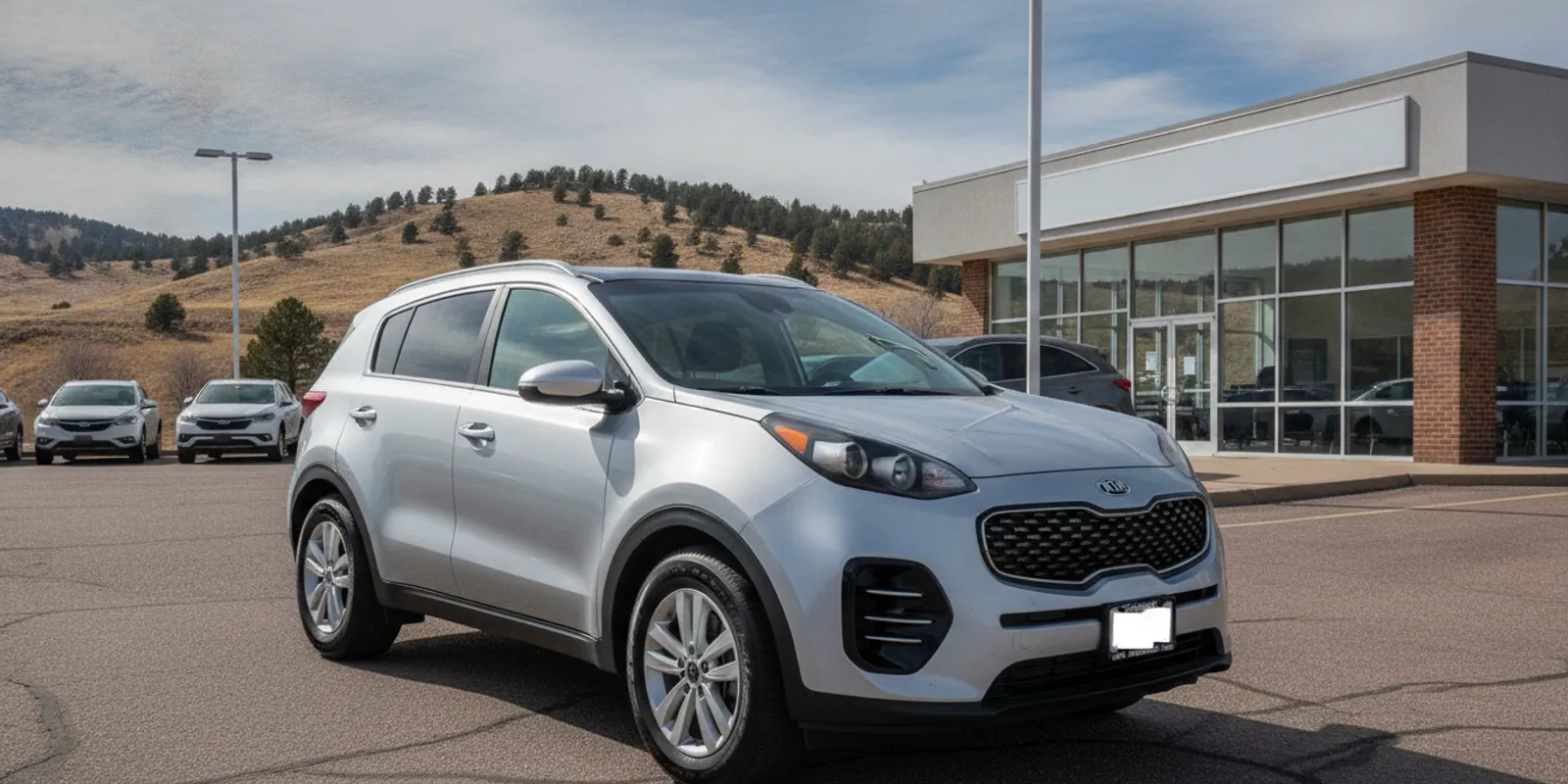
When comparing a used Kia Sportage for sale, do not let model year or a trim label make the decision for you. Compare each specific vehicle's configuration, equipment, condition, available records, and disclosed costs against how you plan to use it. A clear worksheet helps you spot missing information, ask focused questions, and decide whether a visit is worthwhile.
Ask Royal Automotive about a Sportage
What is the best way to start comparing listings?
Begin with the same set of facts for every candidate. Record the model year, odometer reading, trim as stated in the listing, drivetrain, engine and transmission information if provided, asking price, advertised equipment, visible condition notes, and any available service-history information. Add the date you reviewed the listing. Inventory pages can change, so the date helps you remember when you saw the information rather than assuming it is still current.
Use three labels in your notes: confirmed, observed, and unknown. A trim shown in a listing is a stated detail; a feature you have personally tested is an observed detail; and a detail not shown is unknown until someone confirms it. This simple distinction prevents assumptions from becoming facts. If a photo appears to show a feature, record it as a question unless the listing or vehicle documentation clearly identifies it.
Before comparing candidates, make a short list of your own priorities. Separate must-haves from preferences and optional extras. A must-have might be enough seating for your household or a specific type of drivetrain you have decided you need. A preference could be a particular cabin feature. An optional extra is something you would enjoy but would not pay more for by itself. Your list gives the comparison a purpose and keeps an impressive-sounding feature from distracting you from essentials.
Keep your list practical. Write down your usual passengers, regular cargo, common route types, parking situation, and a comfortable spending limit. These are not abstract shopping questions. They help determine what to test in person and which missing details matter enough to follow up on.
How should model year influence the choice?
Model year is a useful starting point, but it is not a complete measure of condition, value, or fit. A newer Sportage may have a different set of equipment or configuration than an older candidate, but you should verify the actual vehicle rather than assume that every vehicle from one year has the same features. Equipment can depend on trim, options, and the specific vehicle. Year alone does not tell you how the vehicle was maintained or how it operates today.
Compare year alongside odometer reading, visible wear, service information, confirmed equipment, and asking price. If one candidate is newer but has limited documentation, and another is older with records that answer more of your questions, neither detail decides the matter on its own. Note what you know and what remains uncertain. Then decide whether the difference matters for your priorities.
When comparing different model years, look up the exact trim and configuration using information tied to the vehicle. Ask for clarification if a listing uses a broad model name but does not identify the trim or drivetrain. Do not infer a feature from an online image, a generic model description, or what you remember from a different Sportage. If a feature is important, confirm that it is present on the specific vehicle and try it during a visit.
It can help to write down a reason for including each year in your shortlist. For example, you might be comparing a newer candidate for its listed equipment with an older candidate because its documented service history and price fit your plan. This is a comparison hypothesis, not a conclusion. Check both vehicles against their actual records, condition, and costs before deciding whether the difference is meaningful.
What do trim names and equipment tell you?
A trim name is a clue to investigate; it is not a substitute for a vehicle-specific equipment check. Listings sometimes summarize equipment differently, and a vehicle's actual configuration should be confirmed. Make a separate feature list for each candidate. Record "present," "not present," or "not confirmed," rather than leaving an empty box that you might later mistake for a no.
Start with features that affect daily use. Depending on your priorities and what the individual vehicle includes, you might check the infotainment screen, smartphone connectivity, audio controls, climate settings, seat adjustments, heated seating, driver-assistance functions, lights, camera views, or cargo-area conveniences. Try each feature you care about. Check that it responds as expected and ask how an unfamiliar control works. Do not assume that a feature operates simply because it appears in a menu or is named in a trim description.
For a feature that is important to your decision, note exactly what was confirmed and by whom. If a listing names a driver-assistance system, ask which functions the specific vehicle has and whether any warning indicator is present. A general phrase such as "safety technology" may not identify the individual functions. Similarly, if connectivity matters, pair or connect a compatible device only with permission and confirm the actual setup rather than relying on a generic equipment list.
Build a priority score only after you have confirmed the facts. You could mark each item essential, helpful, or not important, then compare candidates on the essential items first. Avoid giving a vehicle a high score merely because it has more features. A long equipment list does not prove good condition, complete records, or suitability for your budget.
Which powertrain details should you verify?
Use "powertrain" as a prompt to identify the engine, transmission, and drivetrain configuration of the individual vehicle. Listings may provide some of these details and omit others. Record what is stated, then ask about any gaps. Do not guess from a badge, a photo, or a general description of the Sportage model line. Confirm the vehicle's configuration through its listing and documentation.
Think about what you expect from the vehicle in ordinary use. Consider the routes you drive, how often you carry passengers or cargo, the road conditions you commonly encounter, and what kind of operation feels comfortable to you. This turns an abstract choice among configurations into a question about your own use. It does not require assuming that one configuration is right for every shopper.
If two candidates have different powertrain configurations, compare the details in writing and ask how those differences affect the vehicle's listed equipment and your intended use. A salesperson or the available documentation may help clarify specifications, but the important point is to verify the individual vehicle. Do not let a model-year description stand in for confirmation of the engine, transmission, or drivetrain on the candidate you are considering.
A test drive can help you evaluate how a vehicle feels and operates during ordinary driving, but it cannot answer every mechanical question. Pay attention to your comfort, visibility, steering response, braking feel, shifting behavior, and any unfamiliar sound or warning indicator. Describe observations rather than diagnosing a cause. If something concerns you, write it down and ask what information is available before making a decision.
How do you decide whether a drivetrain fits your routes?
Start with your real driving pattern, not a slogan about a drivetrain. Write down where you drive most often, whether you regularly encounter steep roads or poor weather, how frequently you leave paved roads, and what you expect the vehicle to do. Then compare those needs with the exact drivetrain configuration shown for each candidate. Front-wheel drive and all-wheel drive can be different considerations for different shoppers; neither label alone proves that a vehicle is right for you.
Do not infer the drivetrain from a photograph or assume that all vehicles with the same model and trim have an identical setup. Confirm it through the listing and vehicle-specific details. If the answer matters to your decision, ask the dealership to clarify before you travel. On a visit, note how the vehicle feels on a safe, ordinary route. A test drive is an opportunity to assess comfort and operation, not a guarantee about performance in every road or weather condition.
Drivetrain is one part of a broader driving decision. Tires, their condition, and the way a vehicle is driven also matter. Check the tires during your walk-around and ask about anything you cannot evaluate. Do not conclude that a particular drivetrain eliminates the need to respond carefully to changing road conditions or to use appropriate tires.
For shoppers uncertain between configurations, make a simple comparison: list the routes and conditions that matter, note which candidates match the confirmed configuration you want, and mark any remaining question. If the difference is not important for your daily use, give more attention to condition, records, equipment, and total disclosed costs. If it is important, do not compromise based on an unverified assumption.
How can you test whether the Sportage fits your household?
Think through a normal week. How many people ride with you most often? Do you regularly carry a stroller, work equipment, groceries, sports gear, mobility aids, or luggage? Do you have a garage or parking space with a tight entrance? The answers help turn "Will this SUV work for me?" into a set of things you can actually check.
During a visit, sit in the driver's seat and adjust it to a position you would use every day. Check whether you can reach the controls comfortably and see the road clearly from that position. Make sure you understand the mirrors and any camera display. If more than one person will drive the vehicle, ask each regular driver to try the seating position. A setting that works for one person may not work equally well for another.
If passengers will regularly ride in the back, have them check entry, seating position, headroom, legroom, and access to seat belts. Their experience is more useful than guessing from a photograph. If you use child seats, mobility equipment, or other specialized items, bring them or their measurements if practical and permitted. Verify fit and safe installation separately; do not assume that a general cargo or seating description answers a specific fit question.
For cargo, think in terms of the objects you actually carry. Measure bulky items in advance or bring a representative item when reasonable. Check the cargo opening, floor, and available space, and consider whether you need room for both passengers and gear. A vehicle may look spacious online yet arrange differently for your particular load. Do not force an item into the vehicle or make a safety compromise just to see whether it fits.
Finally, assess the vehicle in the places that matter to you. If parking is a concern, consider the vehicle's dimensions from reliable vehicle-specific information and whether you are comfortable maneuvering it. A test drive around a familiar kind of street can help you judge visibility and handling. Keep your conclusions personal and specific: "I can see the curb clearly from my driving position" is more useful than a broad claim that the vehicle is easy for everyone to park.
How should you compare candidates side by side?
Use one worksheet for all of the vehicles you are considering. The purpose is not to reduce a complicated purchase to a score. It is to make differences visible, identify missing information, and keep your questions consistent. Fill in what a listing states before a visit, then update the worksheet with observations and answers. Leave a field marked unknown if you do not have reliable confirmation.
| Comparison point | Candidate A | Candidate B | What to verify |
|---|---|---|---|
| Year and odometer | Record listing details | Record listing details | Match details to the vehicle |
| Trim and equipment | List confirmed items | List confirmed items | Confirm presence and operation |
| Engine, transmission, drivetrain | Record stated configuration | Record stated configuration | Clarify missing or conflicting details |
| Condition and records | Note observations and documents | Note observations and documents | Ask about gaps and concerns |
| Price and transaction costs | Record the disclosed amount | Record the disclosed amount | Review applicable fees and terms |
Do not fill the worksheet with unsupported estimates. If you do not know an answer, put "ask" next to it. If a listing has an advertised price, record it as the advertised figure and do not treat it as the final out-the-door total. If you are comparing the amount you expect to pay, obtain the specific transaction details and review what the figures include and exclude.
Once the facts are in place, compare each vehicle against your must-haves. A simple method is to eliminate candidates that fail a confirmed essential requirement, then compare remaining vehicles on condition, records, comfort, equipment, and cost. If the evidence is incomplete, do not give an unverified vehicle a perfect score. Keep the uncertainty visible and decide whether you need more information before moving forward.
For example, imagine Candidate A is listed as newer but its service records are incomplete, while Candidate B is older and has more documentation available. The worksheet should not announce a winner. Instead, it should show the year difference, what records each one has, what remains unknown, and which features you have confirmed. You can then ask focused follow-up questions and decide how much weight to give each difference.
How should you review mileage, age, and visible condition together?
Odometer reading is one piece of context, not a verdict. Compare it with model year, visible wear, available service records, and how the vehicle operates during a safe test drive. A lower reading does not prove that maintenance was complete, and a higher reading alone does not prove that a vehicle has a problem. Treat mileage as a fact to consider alongside the rest of the evidence.
During an exterior walk-around, look at the vehicle from several angles in good light when possible. Note visible damage, differences you want explained, glass condition, lights, mirrors, and tire condition. Check that doors and the liftgate open and close normally if appropriate. Your job as a shopper is to document what you observe, not to determine the cause of every mark or sound. Phrase a question neutrally: "Can you explain this area?" is better than deciding what happened without evidence.
Look at the cabin with the same care. Check seat surfaces, belts, windows, locks, interior controls, dashboard indicators, and cargo area. Notice any odor, water mark, unusual wear, or control that does not appear to work as expected. A single observation may have an ordinary explanation, but it is worth recording if it affects your comfort or raises a question. Ask what information is available rather than relying on a quick visual impression.
Compare wear patterns with the rest of the information without treating them as proof of a particular history. For instance, visible wear may lead you to ask about use or care, but it does not independently establish how or when the vehicle was driven. Likewise, a clean appearance is not evidence that every system is in the condition you want. Combine the walk-around, records, listing facts, and any inspection information you can review.
What should you listen and look for on a test drive?
Arrange a test drive if the dealership confirms that it can be accommodated. Before setting off, adjust the seat, mirrors, and steering position, and make sure you understand the controls you plan to use. Confirm that you are comfortable with the visibility and seating position. Follow the dealership's directions and all applicable rules, and choose an ordinary, safe route rather than trying to force an extreme test.
During the drive, notice the way the vehicle starts and operates under normal conditions. Pay attention to steering, braking feel, acceleration response, transmission behavior, visibility, cabin noise, and ride comfort. Note any warning lights or unfamiliar sounds. Do not attempt unsafe maneuvers or use a short drive to draw conclusions that require a professional diagnosis. If you notice something, record when it happened and what you were doing at the time.
Try the controls and features you expect to use. Check climate settings, audio, connectivity, cameras, and other relevant equipment while parked or with a passenger's help, so you can keep attention on driving. If a feature is not easy to verify during the visit, ask for an explanation or additional information. An item that you cannot confirm should stay marked as unknown on your worksheet.
After the drive, take a few minutes to write down your impressions while they are fresh. Separate comfort from mechanical questions. For example, "the driver's seat felt comfortable after 20 minutes" is an impression; "the steering made a noise on a turn" is an observation that deserves clarification. Neither observation alone tells you the full condition of the vehicle. Ask what information the dealership can provide and whether any further review is appropriate.
Why ask for service and inspection information?
Ask which service records are available, what dates and odometer readings they show, and what work is documented. A record may help you understand the vehicle's maintenance history, but the amount of paperwork can vary. Missing records do not prove that maintenance was skipped; they mean you have less documentation to review. Note the periods that are covered and any gaps that remain.
Compare the paperwork with the specific vehicle and with information in the listing. Confirm that the vehicle identification number shown on documents matches the vehicle. If dates, mileage, or descriptions appear inconsistent, ask for clarification before drawing a conclusion. Keep questions precise: "Are there records for this period?" or "Can you explain this entry?" gives the dealership a clear issue to address.
Royal Automotive describes a pre-sale inspection process. Ask what inspection information is available for the particular Sportage and what that information covers. A general description of a dealership process does not establish the condition of every system on an individual vehicle, guarantee that no future repairs will be needed, or replace your own review. Read any available inspection information carefully and ask what a term means if it is unclear.
If you want another perspective, ask whether an independent inspection can be arranged and what the arrangements would be. Do not assume that it is permitted, included, or available without confirming the details. An independent professional may be able to assess matters beyond a shopper's walk-around, but the scope and findings depend on the inspection. Use any report as additional information, and ask questions about findings you do not understand.
When evaluating records, focus on what the documents actually say. Avoid interpreting a list of service entries as a guarantee about future reliability, or treating a missing document as proof of neglect. Your aim is to understand the evidence, identify uncertainties, and decide whether you are comfortable proceeding with the information available.
How do vehicle history information and maintenance records differ?
Maintenance paperwork and a vehicle history report are different sources of information. Maintenance records document services or work shown in the paperwork available to you. A history report may provide other reported events, depending on its sources and coverage. Neither should be treated as a complete record of every repair, use, or event. Ask what information is available and read the scope or limitations of each source.
Use these documents together with the vehicle itself. Check that identifying information matches, compare recorded odometer readings where provided, and note any entry you want explained. If a report has no entry for a particular period, that absence does not automatically prove that nothing occurred. If service paperwork has a gap, it does not establish that work was not done. It tells you that the records you reviewed do not document that period.
Write down the source of each fact. For example, note "shown on service receipt," "reported on history document," or "stated in listing." That small habit makes it easier to resolve a difference. If two sources conflict, ask for clarification and avoid choosing whichever answer sounds more reassuring without support.
A report is not a substitute for a physical review, a test drive, or a qualified inspection when you decide one is appropriate. It is also not an assurance that every issue has been found. Consider it one part of a broader decision that includes configuration, condition, service history, operation, your priorities, and disclosed costs.
How can you compare the asking price and the costs you will pay?
Record the advertised amount exactly as shown, along with the date you reviewed it. Do not assume the amount is current, final, or the total you will pay. Ask the dealership to explain the transaction figures for the particular vehicle and review the written disclosure. Taxes, government fees, title fees, licensing fees, and other applicable charges may affect the total.
Royal Automotive's published price disclosure says advertised prices include a $499 D&H fee and exclude taxes, government fees, title fees, licensing fees, and other testing fees. Do not add the D&H fee again if it is already included in the advertised amount, and do not call that advertised amount an out-the-door total. Review the current disclosure and the transaction details that apply to the specific vehicle. This guide does not quote a Sportage price or determine a final amount.
When comparing two candidates, compare like with like. An advertised price for one vehicle and an estimated monthly payment for another are not equivalent measures. Ask what each figure represents, what is included, and whether it assumes a down payment, financing, or a particular term. Keep the vehicle comparison separate from any financing proposal so you can understand both the vehicle's disclosed price and the terms you may be offered.
Think through your budget beyond the purchase figure. Consider the amount you can comfortably direct toward a vehicle, the other costs you are responsible for, and the flexibility you want to preserve. Do not rely on a payment estimate without understanding the amount financed, the term, and the total borrowing cost. The written terms and your own budget matter more than a quick monthly-payment comparison.
If a figure is unclear, ask for the explanation in writing and take time to review it. A clear comparison does not require you to make a decision during the first conversation. It requires you to know which number is an advertised amount, which costs are additional, what the financing terms say if applicable, and what remains unconfirmed.
How should financing fit into your Sportage comparison?
First decide whether a specific Sportage fits your needs and whether the disclosed costs make sense for your budget. Then review financing as a separate part of the decision. A monthly payment by itself does not show the full amount financed, the length of the term, or the total borrowing cost. Compare written terms, not just one payment figure, and avoid assuming approval, a rate, or a payment before a lender has reviewed an application.
Royal Automotive provides a financing information page. Review the information there, then ask questions about the process and any terms that are not clear. A financing or pre-approval path does not make Royal the lender and does not establish that any application will be approved. Financing depends on application and lender review. Do not treat general information as a promise of particular terms.
The dealership also has a Spanish-language credit application. The availability of that link does not establish that all inventory pages, communications, follow-up, or staff interactions are bilingual. If you prefer to discuss questions in Spanish, clarify what assistance is available before beginning. The application requests sensitive personal, residence, employment, and credit-related information, so review the relevant information and privacy details before submitting it.
You do not have to use an online application simply because you are comparing vehicles. Keep contact and test-drive questions separate from financing if you are not ready to apply. If you decide to apply, use the dealership's current process and review what information is requested. Make sure you understand any consent or disclosure before you provide personal information.
What should you confirm before traveling to see a listing?
Listings are a starting point, not a guarantee that a vehicle remains listed or can be viewed at a particular time. Check the dealership's current inventory and contact Royal Automotive to confirm the status and details of the specific Sportage before traveling. Do not assume availability from an older saved link, screenshot, search result, or past conversation.
Prepare a short set of questions before calling or writing. Confirm whether the specific vehicle is still listed and whether it can be viewed. Ask which year, trim, odometer reading, drivetrain, engine, transmission, and equipment details have been verified. Ask what service or inspection information is available, and whether a test drive or independent inspection can be arranged. For any question that would change your decision, ask for clarification before making the trip.
Have the listing open while you ask, and refer to the exact details that need confirmation. This is more efficient than asking broad questions about every possible feature. For example, if the listing shows a trim but not the drivetrain, ask specifically about the drivetrain. If the listing identifies a feature you consider essential, ask whether it is present on that vehicle and can be demonstrated.
Write down the date and the answer you receive. If the answer is that a detail still needs checking, mark it as unconfirmed rather than treating it as settled. If the vehicle's status changes before your visit, update your plan. A useful visit begins with shared expectations about which vehicle you want to see and what you want to review.
How should you handle a vehicle you might sell or trade?
If you may sell or trade a vehicle you own, keep that decision distinct from your Sportage comparison at first. Make notes about the Sportage's configuration, condition, records, and disclosed costs. Separately gather the details about your current vehicle that may be relevant to a sell-or-trade discussion. Keeping the two sets of information separate makes it easier to understand how each part of a potential transaction is being described.
Royal Automotive's sell-or-trade information provides a place to review that process. Ask what information is needed about your current vehicle, what the dealership can evaluate, and how any applicable amount would be presented. Do not treat a trade figure as a reduction in the Sportage's listed price unless the written transaction documents show how the figures are applied.
Before a conversation, gather basic facts about your vehicle, such as its identifying information, odometer reading, condition, and any records you have. Be accurate about what you know and state what you do not know. If you have a payoff or loan balance, clarify how that information is handled rather than assuming how it affects a potential trade. The dealership's process and the final terms need to be confirmed for your situation.
Do not make a decision based on an isolated trade estimate or an advertised payment. Review the Sportage costs and any sell-or-trade amount together in the written terms, while still understanding each line separately. This helps you compare the vehicle itself and the transaction structure without blending them into a single number you cannot evaluate.
What can two different shopping situations teach you?
Consider a shopper who wants a Sportage for daily commuting and occasional weekend errands. The shopper's must-haves may be a comfortable driving position, usable cargo space, and a particular feature they rely on. The shopper can compare listings by first confirming year, trim, drivetrain, and mileage, then testing the seating position and cargo fit in person. If the desired feature is not confirmed in the listing, it becomes a question to answer before the visit, not a reason to assume the vehicle has it.
Now consider a household that regularly carries several passengers and bulky gear. Its checklist may give more weight to rear-seat comfort, entry and exit, and whether passengers and cargo can fit at the same time. A quick glance at a specification sheet may not answer how the cabin works for that household. Bring passengers or representative items when practical, and test the arrangement without compromising safety. The same Sportage may suit one household better than another because their daily needs differ.
A third shopper might focus on documentation and condition. That person can compare service records and inspection information, note the periods covered, and ask about anything inconsistent. One vehicle may have more paperwork available while another has a different year or equipment mix. The correct next step is not to declare one automatically superior. It is to understand exactly what is documented and decide how much uncertainty the shopper is comfortable accepting.
These examples show why a generic "best year" or "best trim" answer cannot replace a vehicle-by-vehicle review. Define your use, confirm the facts, and examine the specific candidate. If two vehicles still seem close, rank the differences that matter most to you and identify which unanswered question could change your choice. Then focus the next conversation or visit on resolving that question.
What mistakes make used Sportage comparisons less useful?
- Choosing by model year alone. Year is relevant, but does not establish a vehicle's condition, service history, configuration, or value for your needs.
- Assuming every trim has the same equipment. Verify features on the specific vehicle and test the ones that matter to you.
- Guessing the drivetrain from a photo or badge. Ask for confirmation from vehicle-specific information.
- Treating mileage as a complete condition report. Compare it with wear, maintenance information, operation, and other evidence.
- Interpreting missing paperwork as proof of neglect. A gap means the records available to you do not document that period; ask what else can be confirmed.
- Relying only on a test drive. A drive can help you assess comfort and ordinary operation, but does not establish complete mechanical condition.
- Comparing an advertised amount with a payment estimate. Ask what each figure includes and review the written transaction details.
- Assuming an online listing is current. Confirm the vehicle's status before traveling.
- Letting an unanswered question disappear from your notes. Mark unknowns clearly and decide whether they matter to the choice.
Each of these mistakes can be avoided with a short routine: record the listing facts, separate confirmed details from assumptions, write down your requirements, and ask focused questions. A careful process does not need to be complicated. It needs to make uncertainty visible before you treat a candidate as the right fit.
What checklist should you use before deciding?
Before a visit, review the listing and your own priorities. Confirm that the Sportage is currently listed and ask whether it can be viewed. Write down the year, stated trim, odometer reading, drivetrain, engine and transmission information, advertised equipment, and any price disclosure. Mark missing information as unknown. Bring a short list of questions so that you can use your time on the details that matter most.
During the visit, check the exterior and cabin, try the controls you care about, and assess seating and cargo fit. If a safe test drive is arranged, note comfort and ordinary operation. Ask what service records and inspection information are available, and clarify any mismatch between the listing, the vehicle, and documents. Do not diagnose a mechanical issue from a brief observation; record it and ask what further information is available.
After the visit, compare what you learned with your worksheet. Update each item as confirmed, observed, or still unknown. Review the applicable disclosed costs and, if relevant, any written financing terms separately from your assessment of the vehicle. If an independent inspection matters to you, confirm whether it can be arranged and what it covers before you commit to a next step.
Finally, ask yourself whether the specific vehicle fits your needs, whether the evidence answers your important questions, and whether the disclosed terms fit your budget. If one of those answers is unclear, identify the exact information you still need. You can contact Royal Automotive with questions or use the dealership's contact page to discuss a visit, without assuming that a particular vehicle or price will remain unchanged.
Frequently asked questions
Is a newer Sportage always the better choice?
No. Compare the specific vehicle's configuration, equipment, condition, mileage, available records, and disclosed costs. A newer model year does not by itself establish that the vehicle is the right fit or in better condition.
Does a trim name confirm every feature?
No. Use the trim as a starting point, then confirm the individual vehicle's equipment and try important features when you see it. If the listing does not identify a feature clearly, ask rather than assume.
Does lower mileage prove that a vehicle was better maintained?
No. Mileage is one part of the comparison. Consider it with model year, visible wear, available service information, and how the vehicle operates. Neither a lower nor higher reading answers every condition question by itself.
Does a vehicle history report include every repair?
No. A history report and maintenance records can provide useful information, but neither should be treated as a complete record of every service or event. Review the documents alongside the vehicle and ask about gaps or conflicts.
Can I rely on an online listing to confirm availability?
No. Inventory can change. Check the current inventory and contact the dealership to confirm the status and details of the specific Sportage before traveling.
Can I apply for financing in Spanish?
A Spanish-language credit-application link is available. That link does not confirm that every dealership interaction or follow-up is bilingual, so clarify what assistance is available if you want to discuss the process in Spanish.
Contact Royal Automotive about your questions
Make a comparison you can explain
A good decision does not depend on finding a universal winner among Sportage years or trims. It comes from matching the specific vehicle's confirmed details to your routes, passengers, equipment priorities, comfort, records, and budget. Keep the facts and unknowns separate, ask clear questions, and review the written costs and terms before deciding. That process helps you compare patiently and choose based on the vehicle in front of you.
Contact Royal Automotive about your questions
Before traveling, confirm the listing status and arrange any visit or test drive directly with the dealership.