Used Jeep Wrangler for Sale: What to Compare Before You Buy
Shopping for a used Jeep Wrangler? Compare model years, drivetrain, condition, history, and ownership costs, then plan a careful test drive before you buy.
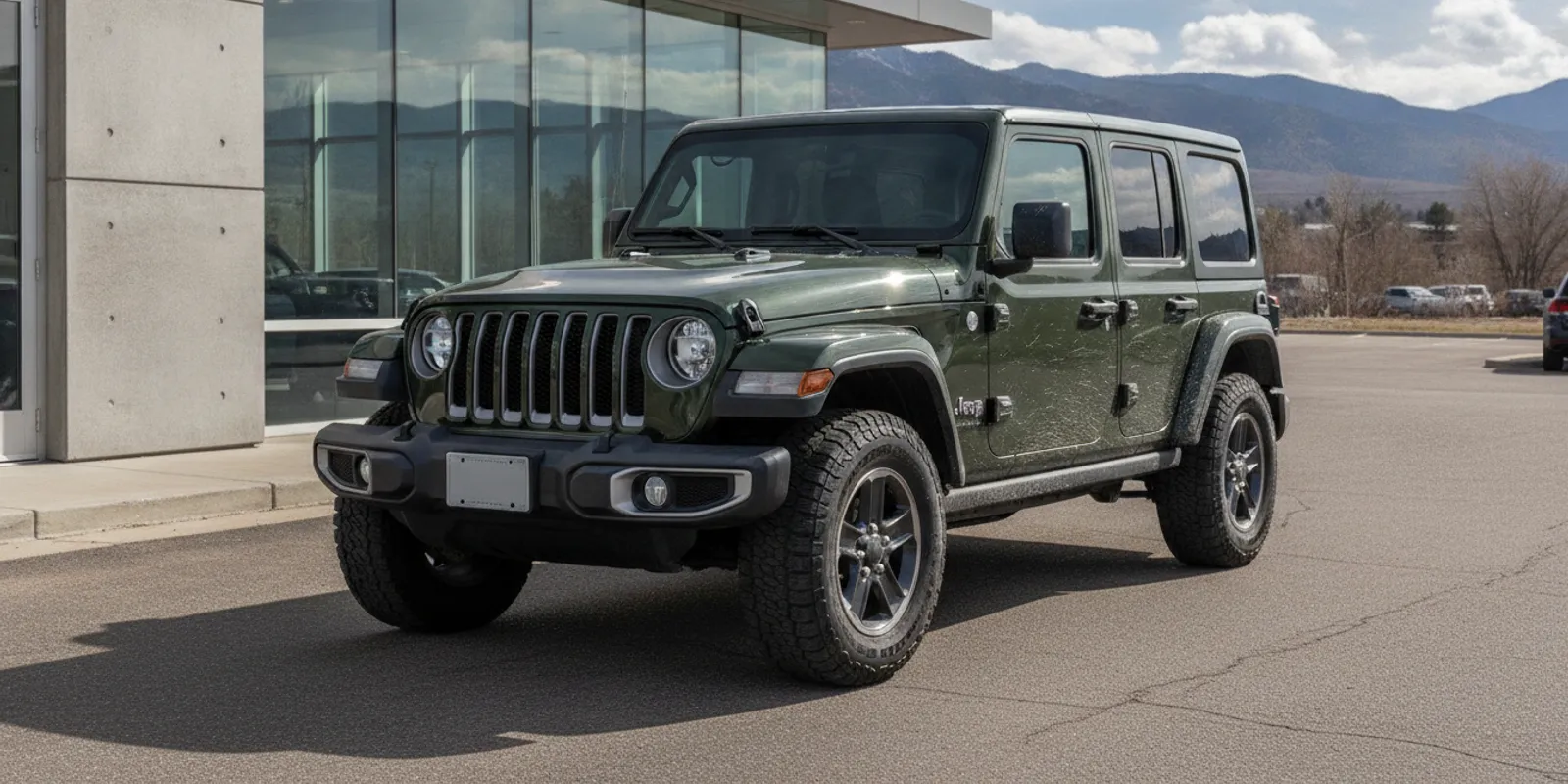
A used Jeep Wrangler for sale can appeal to shoppers for different reasons: open-air driving, distinctive design, trail-oriented equipment, or a versatile vehicle for everyday use. Those are good reasons to begin a search, but the name alone does not establish that one specific Wrangler fits your passengers, commute, budget, weather, or weekend plans. Compare year, trim, body style, equipment, drivetrain, condition, and records. Royal Automotive is a family-owned used-vehicle dealership in Englewood serving Denver and the wider metro area. Start with the current used vehicle inventory; listings and availability can change.
Start with the way you will use the Wrangler
Before comparing trim names, write down the jobs the vehicle must do. A Wrangler used mainly for recreation may have different priorities from one expected to carry passengers and belongings every day. When those priorities are explicit, it is easier to distinguish a useful feature from one that merely looks appealing in a listing.
Describe a typical week rather than an imagined perfect trip. How many days will you commute? How long is the drive? Do you routinely park in a garage or crowded lot? How often will you carry passengers in the back? Will the vehicle spend most of its time on pavement, or do you regularly drive on rough or unpaved routes? These practical questions shape what to inspect and what to test.
- Daily driving: Consider the length of your commute, highway time, traffic, parking, and the ride you prefer. A test drive on a familiar kind of road is more informative than a short loop that does not resemble your routine.
- Passengers: Count the people you regularly carry and check access to the rear seating area. Bring the people who will ride often, if practical, and have them get in and sit comfortably.
- Cargo: Think of actual items-groceries, sports gear, luggage, a stroller, or work equipment. Check the opening and usable space with the seats in the configuration you expect to use.
- Weather and roads: Note snow, grades, gravel, and rough surfaces in your routine. Verify the exact drivetrain and tires rather than inferring capability from a model badge.
- Open-air use: If a removable roof or panels matter, identify precisely what components are included and ask how the top, seals, and hardware have been maintained.
- Ownership costs: Budget beyond the asking figure. Include insurance, fuel, maintenance, tires, registration, taxes, and a reserve for repairs.
Separate must-haves from preferences. You might require a particular seating arrangement, a verified four-wheel-drive system, and room for a specific item. A color or audio feature may be desirable but optional. If you make a short list, you can compare two candidates fairly: an appealing option does not get a pass on a must-have, and a vehicle should not be ruled out just because it lacks a minor preference.
Turn needs into a quick checklist
Write each requirement as something observable. Instead of "good for trips," say "the driver seat feels comfortable after a 30-minute drive" or "the luggage fits behind the seats without blocking needed visibility." Instead of "good in winter," specify the routes, tire type, drivetrain, and driver confidence you need to investigate. This turns a vague impression into a question you can answer.
Assign each item one of three statuses: confirmed, not present, or unresolved. For example, the listing may identify a four-door body style, while the number of roof panels included may remain unresolved until you ask. Keep unresolved items visible. Do not treat a blank listing field as proof that equipment is absent, or as proof that it is included.
Which model year and generation should you compare?
Model year is a useful filter, not a complete description. Equipment, body configuration, powertrain, and features can differ between vehicles from the same year. Trim labels also change over time. Start with the year, then confirm the vehicle identification number, listing details, equipment information, and the exact vehicle in front of you.
When comparing candidates across years, use one consistent set of fields: year, odometer, trim, body style, engine, transmission, drivetrain, roof components, safety and convenience features, modifications, and available records. Ask a seller to clarify anything incomplete or unclear. A model-year guide can help form questions, but it cannot establish what is installed on a particular used vehicle.
Newer does not automatically mean more suitable, and older does not automatically mean unsuitable. A newer candidate may have a feature you value. An older one may fit your budget or use case, depending on its condition and documentation. Mileage is similarly incomplete: it should be considered alongside age, service evidence, storage, wear, and how the vehicle was used.
Make sure you are comparing like with like. Two listings with similar names may differ in number of doors, equipment, drivetrain, tires, or modifications. If a feature changes the way you would use the vehicle, confirm it through the listing or a direct conversation rather than relying on a broad description. Royal Automotive's About Us page describes its pre-sale inspection process. That is a helpful starting point for questions, not a substitute for asking about the specific Wrangler and reviewing its available information.
What do trim and equipment tell you?
A trim name is shorthand, not an equipment inventory. Features can differ by year and configuration, and an option may have been added, removed, or changed by a prior owner. Use the trim label to orient your research, then verify the actual vehicle.
Create an equipment checklist that reflects what you will use. Depending on your needs, it may include:
- Body style, seating arrangement, and rear-seat access.
- Roof type, removable panels, doors, hardware, and storage pieces that are included.
- Audio, phone connectivity, navigation, and climate controls you expect to use.
- Driver-assistance or safety equipment shown for that exact vehicle.
- Interior storage, seat adjustment, visibility, and comfort features.
- Wheels and tires, including type, condition, and whether sizes match across the vehicle.
- Accessories or modifications and whether they are included in the sale.
For each feature, look for evidence rather than making an assumption. Check the listing, inspect the relevant control or component, and ask for a demonstration when appropriate. Test the windows, locks, infotainment, climate controls, lights, cameras, and any roof mechanisms that apply. If a control does not work as expected, ask what is known about it before deciding whether it is a minor inconvenience or a cost you need to consider.
For removable roof pieces, ask which panels are included, where the vehicle's storage pieces are, and whether there are instructions or hardware needed to remove and reinstall them. Check edges and seals for visible damage or uneven fit. If you are unfamiliar with the mechanism, do not force a latch or improvise. Ask for a safe demonstration or consult the owner's manual. The same principle applies to accessories: identify what is factory equipment, what was added later, and whether it will remain with the vehicle.
Think about how feature value changes with your routine. A connectivity feature you use every day may matter more than an accessory used once a year. Conversely, an open-air setup may be central to your enjoyment, so missing components would be important. A practical checklist helps you compare utility rather than being swayed by the longest feature list.
Which engine, transmission, and drivetrain should you verify?
Wrangler configurations vary, so confirm the engine, transmission, and drivetrain of the specific vehicle through its listing and vehicle information. Do not assume that all vehicles with the same name have the same equipment. If towing, off-road use, or winter driving is part of your plan, ask what the configuration is designed to support and verify relevant limits and operating procedures in the owner's manual or manufacturer information for that model year.
For four-wheel-drive equipment, ask which system the vehicle has and how it is meant to be operated. Use the instructions for that exact model year; controls and procedures can vary. Do not select a mode simply to test it without knowing the correct conditions. If four-wheel drive is essential to your decision, ask whether the system's operation was checked as part of the dealership's inspection and request an appropriate demonstration.
Consider your usual roads, not only an occasional destination. If your driving is mostly paved, pay close attention to ride comfort, steering feel, road noise, and how the vehicle behaves on the streets and highways you use. If you expect occasional unpaved roads, ask whether the specific configuration, tires, and condition suit that purpose. An equipment label by itself does not determine capability or driver skill.
Tires deserve particular attention because they are part of the vehicle's contact with the road. Look at the type and visible condition. Check whether wear appears even across each tire and whether all four are compatible with the vehicle's setup. Ask about age and replacement history if the information is available. A vehicle may have a drivetrain feature you want, but worn or unsuitable tires can change what you should expect from it. Do not rely on a sales description alone to assess tire condition; ask questions and consider a mechanic's inspection.
Transmission behavior is another item to notice during the test drive. Observe whether shifting feels consistent during ordinary acceleration and deceleration. If you feel a hesitation, vibration, or unusual sound, describe when it happened and ask for an explanation. Do not try to diagnose a mechanical issue from one short drive. The useful outcome is a clear question, an informed response, and-when warranted-professional assessment.
How do you compare mileage, age, and condition?
Compare mileage with the vehicle's age and evidence of care. A low odometer reading does not prove that a vehicle was maintained well or stored appropriately. A higher-mileage candidate may have useful records, but records do not remove the need for a careful assessment. Neither mileage nor a polished exterior establishes mechanical condition.
Walk around the vehicle in good light. Look at paint tone, panel alignment, dents, chips, glass, and visible signs of repair. Differences do not establish the cause, so ask about anything that concerns you and seek documentation where available. Inspect tires for uneven wear and wheels for visible damage. Look beneath the vehicle from a safe position for visible leaks, damage, or corrosion. Do not crawl under an unsupported vehicle or put yourself in an unsafe position.
Inside, check seats, belts, carpets, controls, storage areas, odor, and signs of water intrusion. Pay attention to the roof and door seals, particularly if removable components are part of the design. Inspect headliner and carpet edges for staining or dampness, but remember that a visual check cannot rule out every hidden issue. Ask about any concern and consider an independent professional inspection if you want a more complete assessment.
Look at wear patterns as a set of clues, not a verdict. A worn steering wheel, seat edge, pedal, or cargo surface may be consistent with use, but none tells the whole story by itself. Compare what you see with the odometer, service records, and the seller's explanation. If details do not seem to line up, ask a direct question and take time to understand the answer.
Modifications deserve a separate conversation. Ask what was changed, when it was done, who performed the work, and whether original components are available. Find out whether the modification affects the way the vehicle drives, the maintenance it needs, or its fit with your intended use. A lift, tire change, accessory, or electrical addition may be attractive to one shopper and a drawback to another. Do not assume that a modification is professionally installed or suitable simply because it is present.
A practical walkaround sequence
- Start at the front. Note visible body condition, glass, lights, tires, and any gaps or differences that merit a question.
- Move along each side. View panels from more than one angle, check doors and seals, and note scratches, dents, or evidence that needs explanation.
- Inspect the rear and cargo area. Open and close the doors and hatch if equipped; check the cargo floor and the space you expect to use.
- Check the cabin. Sit in each seating area that matters, adjust the driver position, inspect belts and controls, and note odors or visible moisture.
- Review wheels and tires. Observe visible wear and ask about replacement or repair information that is not apparent.
- Write down questions. Do not rely on memory after viewing several vehicles. Separate observations from assumptions.
This sequence is deliberately simple. It helps you notice details without pretending that an at-home walkaround replaces a technician's inspection. If a concern affects safety or a substantial purchase decision, ask for more information before proceeding.
What should you listen and look for on a test drive?
Use a test drive to assess the specific vehicle, not just to confirm that it starts. Arrange the drive in advance and follow the dealership's instructions. Begin while parked: adjust the seat and mirrors, check your visibility, and make sure you can reach and understand the controls. With permission, start the vehicle and notice warning lights, unusual noises, smoke, or rough operation. Ask about anything that concerns you before continuing.
Choose a route that reflects your ordinary driving, where safe and practical. A mix of lower-speed streets and faster roads can help you assess different conditions. Pay attention to steering response, braking, vibration, shifting, and sounds over bumps. Notice road and wind noise, seating comfort, and whether visibility feels workable in traffic and while parking. Do not test the vehicle beyond normal, safe road use.
Be deliberate about what you are evaluating. During a quiet stretch, listen for sounds that appear at a particular speed or when turning. During braking, note whether the pedal feels consistent and whether the vehicle tracks as expected. On a familiar road surface, pay attention to ride and steering. You do not need to label a symptom or diagnose its cause; record what happened and ask the dealership to address it.
At the end of the drive, park safely and look for warning lights or visible signs of a leak. Ask about noises or behavior you noticed. A short drive cannot predict every future repair, and a normal-feeling drive is not a guarantee of condition. It is one source of information to combine with records, inspection, and your own comfort behind the wheel.
If you are not comfortable assessing the vehicle yourself, consider arranging an independent inspection by a qualified mechanic before committing. Ask in advance how to coordinate it and what the inspection can cover. A professional can evaluate areas you cannot safely or effectively examine in a parking lot. If the inspection identifies an item, use the findings to ask specific questions and understand what, if anything, you would need to address.
How are vehicle history information and service records different?
A vehicle history report and maintenance records answer different questions. A history report may compile events from sources that report to it, but it may not capture every repair, accident, owner, or other event. Service records can show documented maintenance or repairs, but they may not provide a complete history either. Neither replaces a physical inspection or guarantees future reliability.
Ask what information is available for the specific Wrangler. Review dates and odometer readings for consistency. Note gaps, repeated services, and unexplained changes, and ask for context rather than jumping to conclusions. Ask about major repairs, recurring warning lights, water exposure, collision work, and modifications when relevant. These are reasonable topics to clarify; asking about them does not imply that the vehicle has experienced any particular issue.
When a record raises a question, request supporting details if they are available. For example, a service entry may list a component without explaining the symptoms or outcome. Ask whether there is an invoice, a repair description, or later documentation showing follow-up. If a report lists an event, ask what is known about it and whether related repairs were completed. If answers remain unclear, decide whether an independent inspection or additional documentation is important to you.
Keep a simple record as you compare. Note which documents you reviewed, the date and odometer reading on them, the questions you asked, and the answers you received. This is especially helpful if you look at several vehicles over multiple days. It reduces the chance of attributing one Wrangler's records or equipment to another.
How should you compare asking price and ownership costs?
Compare asking figures only after you understand how the candidates differ. A Wrangler with a different year, body style, trim, equipment, mileage, or condition may not be a direct comparison. Maintenance needs, included components, tires, modifications, and documentation also matter. Avoid treating a headline number as the full amount you will spend.
Build a written budget with separate categories: listed price, taxes and government charges, title and licensing costs, insurance, fuel, scheduled maintenance, tires, and repairs you may need to address. Confirm current fee disclosures with the dealership. Royal Automotive's advertised prices include a $499 D&H fee and exclude taxes, government fees, title fees, licensing fees, and other testing fees; do not add the D&H fee a second time or treat a listed figure as an out-the-door total. Current details should be confirmed with the dealership.
Estimate ongoing costs using your own driving and insurance information rather than a generic assumption. If you drive long distances, fuel use can matter more to your budget than it would for a vehicle used occasionally. If tires appear close to replacement, include that possibility in your planning. If a mechanic identifies a repair concern, ask for an estimate from a qualified professional rather than guessing. Keep estimated costs distinct from confirmed costs.
If financing is part of your plan, review the terms presented to you and consider your full monthly budget before deciding. An application is not a promise of approval, a specific rate, or a particular payment. Royal offers an online financing and pre-approval path; terms depend on applicant and lender review. You can also contact the dealership with questions without assuming an application is the only way to proceed. The site provides a Spanish-language credit application; that link should not be taken as confirmation that every interaction or staff service is bilingual.
Compare total budget, not just monthly payment. A payment can obscure the full amount financed, term, and other costs. Review all written terms and fees before agreeing. If you prefer to sell or trade a current vehicle, Royal also has a sell-or-trade information page. Treat any estimate or offer as something to confirm through the dealership's current process.
What should you ask before visiting?
A focused conversation can help you decide whether a trip makes sense. Use the current listing and ask about the exact vehicle, not only the model name. You can prepare questions in advance and make notes as you receive answers.
- Is this specific Wrangler currently listed, and can you confirm its current status?
- What year, trim, body style, engine, transmission, and drivetrain are shown for it?
- Which roof components, keys, accessories, or other equipment are included?
- Can you explain the pre-sale inspection process and share available service or history information for this vehicle?
- Are there known items that need attention, or listing details that should be clarified?
- Can I arrange a test drive and, if I want, an independent inspection?
- What documents or information should I bring if I want to discuss financing or a trade?
- What current fees are included in or excluded from the advertised figure?
Royal Automotive's contact page provides a way to get in touch. Confirm current listing status, location, hours, and visit details before setting out. Inventory changes, so a vehicle seen in an old search or article should not be treated as currently available.
When calling, it helps to identify the listing or vehicle you mean and state your main question first. For example: "I am comparing the listed Wrangler's roof equipment and drivetrain. Could you confirm what is included and what records are available?" This is more useful than asking whether every Wrangler has a particular feature. If you are planning a test drive, say what roads you would like to use and ask how to arrange it.
How can you compare Wrangler candidates side by side?
Put information in one place. A comparison table keeps confirmed details separate from impressions and follow-up questions. Fill in one column for each vehicle using the current listing, a conversation with the dealership, and your own observations. Do not fill gaps with guesses.
| What to compare | Candidate A | Candidate B | What to verify |
|---|---|---|---|
| Year, trim, body style | Record listing details | Record listing details | Match details to the exact vehicle |
| Mileage and condition | Record odometer and observations | Record odometer and observations | Consider age, wear, inspection, and use |
| Engine, transmission, drivetrain | Write stated configuration | Write stated configuration | Confirm equipment and instructions |
| Roof and included equipment | List confirmed pieces and features | List confirmed pieces and features | Ask what is included and test operation |
| Records and history | List documents and open questions | List documents and open questions | Clarify gaps and unresolved details |
| Test drive and inspection | Note observations and next steps | Note observations and next steps | Consider professional assessment |
| Total ownership budget | Estimate purchase and ongoing costs | Estimate purchase and ongoing costs | Confirm fees, taxes, insurance, and terms |
Do not give a vehicle a high score merely because its listing contains more information. A missing detail is a question, not proof of either a problem or an advantage. Prioritize safety, suitability, and budget. If an important item remains uncertain, resolve it before treating the candidates as comparable.
Worked comparison: a commuter and a weekend driver
Imagine one shopper uses a Wrangler for a daily commute, carries two passengers, and parks in a tight garage. Another drives less often and values removable roof components for recreation. Both might search the same phrase, but their decision criteria differ. The commuter would spend more time on visibility, comfort, road noise, maneuverability, everyday seating, and the drive on familiar roads. The weekend driver might give more attention to roof pieces, storage, equipment, and the condition of components used for open-air driving.
Neither shopper should skip the shared checks: confirm configuration, compare records, inspect condition, test the vehicle, and build a complete budget. The example shows why a single "best trim" answer is not useful without context. A feature that is essential to one person's routine may be a low priority to another.
Worked comparison: lower mileage versus fuller records
Suppose Candidate A has a lower odometer reading but sparse documentation, while Candidate B has more miles and a more complete set of service entries. The lower number alone does not settle the choice. Compare how old each vehicle is, what its visible condition suggests, whether the records are consistent, what the inspection finds, and whether either one needs work that changes the budget.
Then identify what you still do not know. Ask about gaps, review the available documents, and consider an independent inspection. The outcome may favor either candidate, or it may show that neither fits. A comparison is useful when it clarifies uncertainty rather than forcing a winner based on one number.
How do you decide whether the Wrangler fits your household?
Return to your original checklist after the viewing and drive. Can the vehicle carry your regular passengers and belongings? Does the seating and visibility feel workable? Is the roof setup right for your routine? Does the confirmed drivetrain suit the roads you drive? Do the condition, records, and overall budget make sense to you?
For each answer, identify the evidence. "It felt comfortable" can be based on a real drive on a familiar route. "It fits our cargo" can be based on testing your actual items. "The feature is included" should refer to a confirmed component, not an assumption from a trim name. This simple discipline helps turn first impressions into a decision you can explain.
Consider trade-offs openly. A vehicle may meet your core needs but lack a convenience feature. Another may have more equipment but cost more to own or leave unanswered questions about its history. Decide which trade-offs are acceptable before excitement or urgency pushes you toward a choice. You do not need to resolve every preference in favor of one vehicle, but you should understand any compromise that affects safety, use, or cost.
It is also reasonable to pause. If a critical detail is unclear, request clarification. If a test drive raises a concern, ask about it. If you want a more thorough mechanical assessment, arrange one before committing. If the vehicle no longer fits your priorities, continue the search. A careful decision includes the option to walk away.
How do you build a focused shortlist?
Start from current listings, then remove candidates that fail a genuine must-have. A shortlist should be small enough to compare carefully, but broad enough to give you alternatives if a vehicle's details do not work out. Do not assume that a listing will remain available while you deliberate; confirm status directly before planning a visit.
For each candidate, capture the same information in the same order: year, body style, trim, mileage, drivetrain, key equipment, price and fee disclosure, records, known questions, and contact status. Use a notes app or a paper sheet. Label each note with the listing or vehicle identifier so that an answer about one Wrangler does not accidentally become attached to another.
Before making a trip, decide what information would change your mind. For one shopper, missing roof hardware may be decisive. For another, a particular seat arrangement or unresolved mechanical concern may matter more. Tell the dealership what you need to verify, then check the answer against the vehicle when you arrive. This keeps the visit focused and avoids asking broad questions that do not address your actual decision.
If two candidates remain close, compare them on your highest priorities rather than counting features. A vehicle with fewer options may still be the better match if it fits your route, passengers, condition expectations, and budget. Conversely, a long equipment list does not compensate for a major unresolved issue. Rank the factors that matter to you and explain why one carries more weight than another.
Frequently asked questions
Is a used Jeep Wrangler suitable for everyday driving?
It depends on the particular vehicle and your preferences. Drive it on roads like the ones you use every day, and consider comfort, noise, visibility, parking, fuel budget, passenger needs, and cargo. A test drive gives you more useful evidence than assuming every Wrangler will suit the same routine.
Does four-wheel drive mean every Wrangler has the same capability?
No. Equipment, configuration, tires, condition, and operating procedures can differ. Verify the drivetrain on the specific vehicle and consult its owner's manual. Safe driving, suitable tires, and good judgment remain important.
Should I choose the Wrangler with the lowest mileage?
Not automatically. Compare mileage with age, maintenance information, visible condition, use, and any work that may be needed. A lower odometer reading does not establish that the vehicle was maintained well or has no issues.
Can I rely on a vehicle history report alone?
No. A report may not contain every event, and it does not assess the vehicle's present condition. Review available records, ask questions, inspect the vehicle, and consider an independent mechanic's assessment if you want additional information.
What should I check if removable roof equipment matters to me?
Confirm exactly which panels or components are included, check visible seals and hardware, and ask for the correct operating procedure. Do not force a mechanism you do not understand. Consider whether the included pieces and storage arrangements fit how you plan to use the vehicle.
How can I check whether a Wrangler is currently available?
Review the current inventory listing and contact Royal Automotive to confirm the specific vehicle and arrange next steps. Listings and availability can change.
Contact Royal Automotive about your search
A sound comparison is built on the exact vehicle, clear questions, and a test drive-not the model name alone. Confirm current details before you make the trip or decide.