Used Hyundai Tucson for Sale: What to Compare Before You Buy
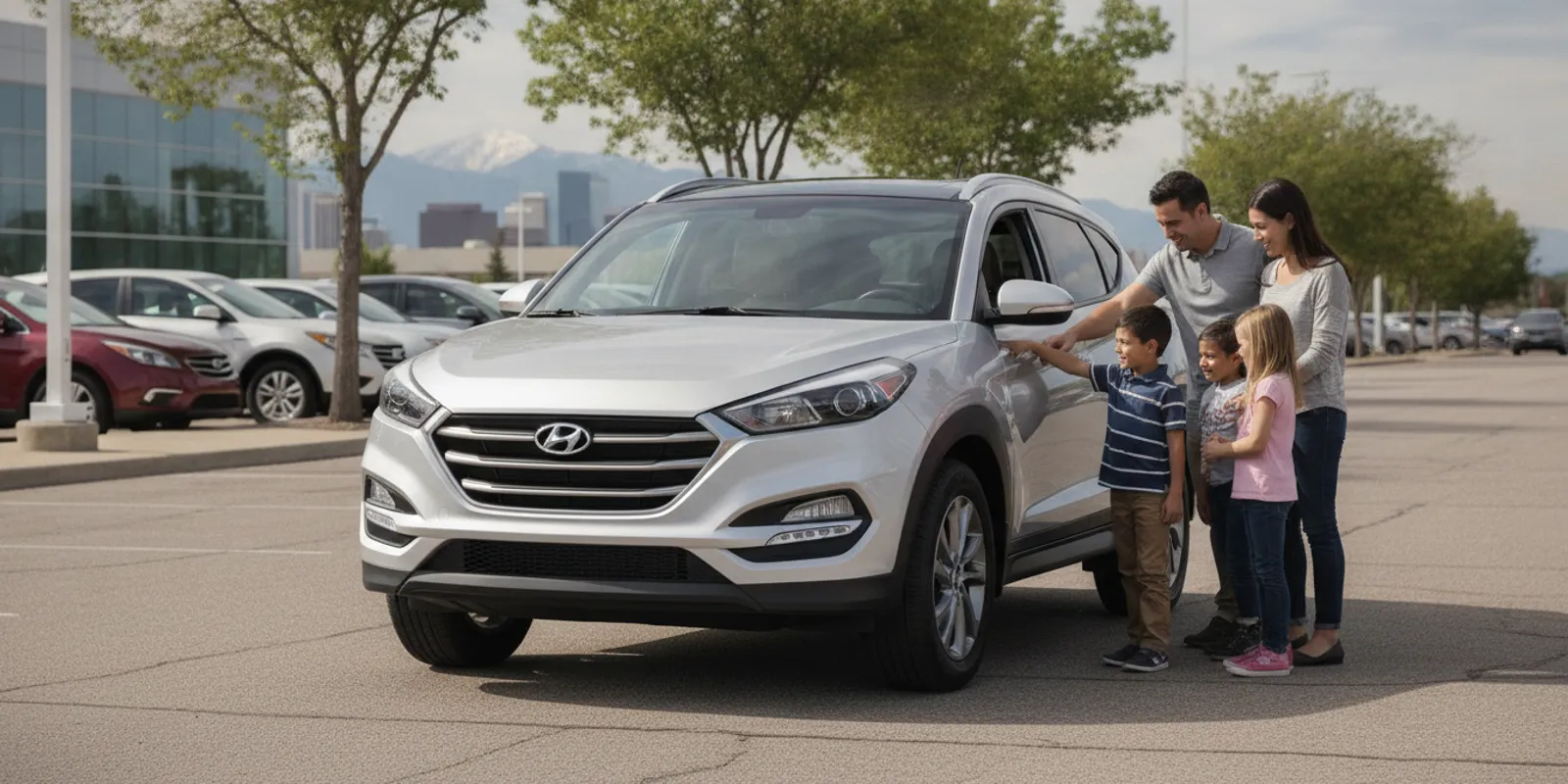
Shopping for a used Hyundai Tucson for sale is easier when you compare the whole vehicle, not just its model year or monthly payment. Tucson versions can differ in equipment, engine, drivetrain, safety features, and condition. Start with your needs, then verify details in each specific listing. Royal Automotive is a family-owned used-vehicle dealership in Englewood serving Denver-area shoppers. Inventory changes, so check current listings before planning around a particular vehicle.
Call to ask about current inventory
Start with the way you will use the Tucson
Before comparing listings, write down what the vehicle needs to do. A daily commute, school runs, weekend trips, and bulky gear place different demands on a compact SUV. Think about passenger count, cargo, winter driving, and how long you expect to keep the vehicle. Rank priorities as must-have, useful, or optional. A particular safety feature, drivetrain, heated seat, or connectivity option should be confirmed on the exact vehicle rather than assumed from a trim badge.
This short list protects you from being distracted by a long equipment list. It also makes two different listings easier to compare. For example, decide whether all-wheel drive is a genuine requirement for your regular routes or simply a preference. Be equally specific about seating, cargo access, and the controls you use every day.
How should model year influence the choice?
Model year is a starting point, not a verdict. Newer versions may differ in styling, controls, powertrain choices, or available technology, but a newer year alone does not establish that a specific vehicle is in better condition. Confirm year and vehicle identity in the listing and vehicle documentation. Compare year, trim, engine, drivetrain, mileage, condition, records, and current price using the same fields for every candidate.
Features and specifications can vary by year and package. If a feature matters, ask the seller to verify it on the vehicle or in its documentation. Do not assume that two vehicles with the same name have identical equipment. Revisit online listings shortly before a planned visit because details and availability can change.
What do trim names and equipment tell you?
Trim names are useful clues, not a substitute for checking the actual vehicle. Make a verification list for driver-assistance features, infotainment connections, seating materials and adjustments, climate controls, cameras, and other equipment that affects daily use. Ask the seller to identify features that are not clear in photographs. During a visit, operate the controls yourself. Pair a phone if permitted, adjust seat and mirrors, operate windows and locks, and confirm that the display and cameras function.
Do not treat a feature appearing in a generic model description as proof that it is installed in an individual Tucson. Also distinguish between equipment being present and operating properly. If a feature is important, test it and ask about any warning messages or unusual behavior.
Which powertrain and drivetrain details should you verify?
Verify the exact engine, transmission, and whether the Tucson is front-wheel drive or all-wheel drive. Configurations vary by year and trim. Front-wheel drive may suit many drivers who mainly use paved city and highway roads. All-wheel drive may matter to shoppers who routinely travel in changing conditions, but it does not replace appropriate tires, safe speeds, or careful driving. Consider the configuration alongside potential maintenance needs.
On a test drive, notice whether the vehicle starts, accelerates, shifts, and brakes smoothly. Listen for unusual sounds and watch for warning lights. These observations are not a mechanical diagnosis. Ask what inspection information is available and consider an independent evaluation if you have concerns.
How do you decide whether the Tucson fits your household?
Sit in the front and rear seats, check entry and exit, and assess visibility from the driver's seat. Bring a child seat, mobility aid, or frequently carried item if you need to check a particular fit, and ask permission before testing it. Check cargo area shape and opening as well as any listed capacity. A stroller, work equipment, sports bags, and luggage may fit differently than expected.
Consider your parking and commute. A test drive on familiar types of roads helps you assess visibility, steering feel, road noise, acceleration, and comfort. Try a careful parking maneuver if tight spaces are part of your routine. Confirm that any cameras or sensors operate as expected, and do not assume a photograph can establish visibility or ease of use.
How should you compare mileage, age, and condition?
Mileage matters, but it does not tell the whole story. Compare it alongside age, use, maintenance documentation, visible condition, and price. A low odometer reading does not prove that a vehicle was maintained well, and higher mileage alone does not explain how it was driven or cared for.
Inspect the exterior in good light. Look for uneven panel gaps, paint differences, glass damage, tire wear, and signs of prior repair. Check cabin wear against the description and test basic controls. Examine tire tread and wear patterns, and ask about recent maintenance or repairs. A visual review can raise questions but cannot establish the condition of every system.
Royal Automotive describes a pre-sale inspection process for its vehicles. Ask what inspection information is available for the specific Tucson. A general statement about the process is not a substitute for vehicle-specific records or your own questions. If you want a separate assessment, discuss an independent inspection and agree on access before purchase.
What should you listen and look for on a test drive?
Plan a route with ordinary low-speed driving and, when safe and permitted, a faster road. Before leaving, adjust the seat and mirrors, understand the controls, and check warning lights. Follow the seller's instructions and applicable traffic laws.
- Does the engine start readily and idle steadily?
- Does acceleration feel consistent, without unexpected hesitation?
- Do steering and braking feel predictable?
- Are there knocks, rattles, grinding, or sounds that need explanation?
- Do climate controls, lights, windows, infotainment, and driver-assistance controls work as expected?
- Can you see comfortably and reach the controls you use most?
Make notes immediately after the drive. Separate what you observed from what needs confirmation. If a warning light appears, a function does not work, or a noise concerns you, ask for an explanation and supporting information. A short drive is not a complete mechanical inspection.
How do vehicle history information and maintenance records differ?
A vehicle history report and service records answer different questions. A report may summarize information reported to its data sources, such as ownership or recorded incidents, but it may not include every event or repair. Maintenance records may show work performed and dates or mileage. Gaps do not automatically explain why documentation is missing.
Review available history information and ask about entries you do not understand. Compare dates and mileage in service documents with the current odometer. Ask whether work was performed outside a dealership and whether receipts are available. Look for consistency among the listing, vehicle identification information, records, and what you see. If sources conflict, pause and request clarification.
Read records as a timeline: note dates, odometer readings, work described, and document sources. Missing records alone do not prove neglect, while a stack of paperwork does not establish that every system is in good condition today. Use documents to develop questions. Ask what a repair entry means rather than guessing from unfamiliar terminology.
How should you compare asking price and ownership costs?
Compare current asking prices for similar years, trims, drivetrains, mileage, equipment, and condition. A broad search for Tucson can mix vehicles that are not directly comparable. Note when you checked each listing. Ask for written purchase information for the specific vehicle and distinguish taxes, title, licensing, and other charges from its listed price.
Royal's published price disclosure states advertised prices include a $499 D&H fee and exclude taxes, government fees, title fees, licensing fees, and other testing fees. Confirm the current listing and applicable details directly. Do not add the D&H fee again or describe an advertised price as an out-the-door total.
Estimate ongoing expenses that fit your situation: insurance, fuel, maintenance, tires, and possible repairs. Ask your insurer about the exact vehicle if cost is a deciding factor. If financing is part of your plan, consider total amount paid, term, down payment, and other written terms rather than only a monthly figure. An application is not a promise of approval or a particular rate. Review Royal's financing information and ask questions through the dealership's contact route.
What should you ask before visiting?
Confirm whether the exact vehicle is currently listed before traveling. Ask the seller to verify year, trim, drivetrain, mileage, and features that matter. Ask what inspection, service, or history information can be reviewed, whether a test drive can be arranged, what documents may be needed for your planned discussion, and how current price disclosures apply. If you have a trade-in, ask what information is useful to begin that conversation.
Royal Automotive's current used-vehicle inventory is the place to check listed vehicles. Its contact page provides a way to ask questions or arrange next steps. A Spanish-language credit application is available at this application page; that does not establish that every dealership interaction is conducted in Spanish.
How can you compare Tucson candidates side by side?
Use the same fields for each candidate. A simple comparison keeps missing details visible and reduces the temptation to decide based on one appealing feature.
| Detail | Candidate A | Candidate B | What to verify |
|---|---|---|---|
| Year and trim | Record listing | Record listing | Confirm vehicle identity |
| Engine and drivetrain | Record listing | Record listing | Verify configuration |
| Mileage and condition | Note both | Note both | Review wear and records |
| Features you need | Check each item | Check each item | Test in person |
| Price and costs | Record date and details | Record date and details | Request charges in writing |
| Questions remaining | List unknowns | List unknowns | Resolve before deciding |
Do not fill unknown fields with guesses. Mark them not confirmed and ask the seller. Complete records or a stronger match to your must-haves may matter more than a simple model-year comparison.
Build a focused search and shortlist
Opening dozens of tabs makes it difficult to remember which vehicle had which equipment. Set boundaries before becoming attached to a photograph. Write down an acceptable year range, mileage range, budget, must-have features, and flexible preferences. For every listing, record the date, year, trim, mileage, drivetrain, engine, stated equipment, asking price, and questions. Mark unstated details as unknown rather than borrowing specifications from another listing.
Use a three-pass process. First, remove listings that clearly fail a must-have. Second, compare remaining vehicles on year, trim, mileage, visible condition, and documentation. Third, contact sellers about unresolved details and arrange visits for candidates that still make sense. Imagine one candidate is newer with lower mileage, while another is older but has service documentation and a feature you use daily. Verify equipment, inspect both, compare purchase information, and decide which trade-off fits your household. No single number decides the question.
Set a travel radius and a visit schedule. A promising listing may no longer be active when you arrive, so confirm its status shortly beforehand. Royal's inventory page is a useful starting point, not proof of future availability.
How can photographs help, and what can they not prove?
Photographs can help decide whether a visit is worthwhile. Look for exterior, cabin, seat, cargo-area, tire, dashboard, and odometer views when provided. Check whether images appear to show the same vehicle and whether important details are visible. If a feature is not shown, ask whether it is present; omission from a photograph does not prove it is absent.
Photos cannot establish mechanical condition, confirm every function, or replace an in-person inspection. Lighting and camera angles can hide scratches, tire wear, or interior damage. A clean cabin does not prove maintenance, and an attractive exterior does not explain service history. Ask concrete questions: Is there known damage? Does a particular control work? Is documentation available? Does a photographed feature belong to this exact vehicle?
What should you inspect in the cabin and cargo area?
Adjust the seat, steering wheel, and mirrors, then assess visibility and access to common controls. Sit in the rear seat and consider how passengers enter and exit. Check touch points such as steering wheel, seat bolsters, pedals, door handles, and switches. Wear is not a diagnosis, but may prompt questions if it seems inconsistent with the description. Notice odors, stains, loose trim, or signs of moisture and ask about anything concerning.
Test the climate system, windows, locks, mirrors, lights, audio, display, camera, and connectivity methodically. Confirm whether functions operate and whether warning messages appear. If cargo fit matters, bring a measuring tape or an item you regularly carry, such as a folded stroller or work container, and ask permission before loading it. Check that it fits through the opening and can be placed and removed easily. Try the rear-seat folding mechanism if relevant. Cargo shape and access may matter more than a capacity figure.
How should you plan a useful test drive?
A parking-lot loop may not answer how a vehicle feels on your regular routes. If permitted and safe, choose low-speed streets and a faster road, with a stop, turn, lane change, and parking maneuver. Notice whether warning lights remain illuminated after startup. Listen for sounds over bumps and during turns. Pay attention to acceleration, shifting, brakes, visibility, seating comfort, and road noise. Avoid unsafe driving or any route outside the seller's instructions.
Choose a route resembling your daily use if possible. A tight parking space, rough pavement, or highway merge may matter more than a generic loop. After the drive, write three kinds of notes: what worked, what needs clarification, and what you did not have a chance to test. If a noise or sensation concerns you, describe when it occurred and ask for an explanation rather than guessing at a diagnosis.
How should you weigh a trade-in?
Treat a trade-in as a separate line in your comparison. First decide which Tucson candidates fit; then assess the trade-in alongside written purchase terms. Gather your vehicle's year, make, model, mileage, condition, documents, and any known loan balance. Be accurate about its condition. An initial conversation or online information is not a final value; the dealership must assess the actual vehicle.
Royal's sell-or-trade page offers a starting point for that discussion. Compare written figures and make sure you understand how an existing loan balance is handled.
What if the Tucson you want is not listed?
Inventory changes. If you do not see a Tucson that fits, check again or contact the dealership with your year range, features, drivetrain, and budget parameters. Do not treat any search assistance as a promise of a specific model, price, or arrival date. You may also compare other pre-owned vehicles if your real priority is cargo space, seating, or a configuration rather than a particular badge. Keep your Tucson criteria visible so an alternative does not fail a genuine must-have.
How can you prepare for a dealership visit?
Confirm the listing and appointment before leaving. Bring questions, a way to record answers, and any items you want to test for fit. If another household member will use the Tucson, include them in seating and test-drive checks. Verify what documents are needed for the activity you plan to discuss rather than assuming requirements.
Decide what would make you pause: a missing essential feature, a material mismatch in the listing, unresolved warning light, or written terms outside your budget. During the visit, verify that the vehicle matches your notes. Request available history, maintenance, and inspection information. If you are not ready to decide, summarize open questions and review them before proceeding.
Frequently asked questions
Is a used Hyundai Tucson a good fit for a first-time buyer?
It may be worth considering if the specific vehicle fits your space, budget, and driving needs. Compare condition, records, equipment, and total costs rather than choosing by model name alone.
Should I choose front-wheel drive or all-wheel drive?
Choose based on your routes and priorities. Verify the drivetrain on the exact vehicle. All-wheel drive does not replace suitable tires or careful driving.
Does lower mileage always mean a better Tucson?
No. Mileage is one factor among age, maintenance, condition, use, and price. Review records and inspect the vehicle rather than treating the odometer as a complete history.
Can I get financing for a used Tucson?
Royal Automotive offers a financing application path, but approval and terms are not guaranteed. Review the financing information and any proposed terms in writing.
How do I know whether a specific Tucson is listed?
Check current inventory and contact the dealership to confirm before traveling. Search results and saved pages can become outdated.
Contact Royal Automotive about next steps
Compare each Tucson on evidence, fit, and written terms, and decide only after the details important to your household are clear.