Used Dodge Durango for Sale: A Guide to Comparing Model Years
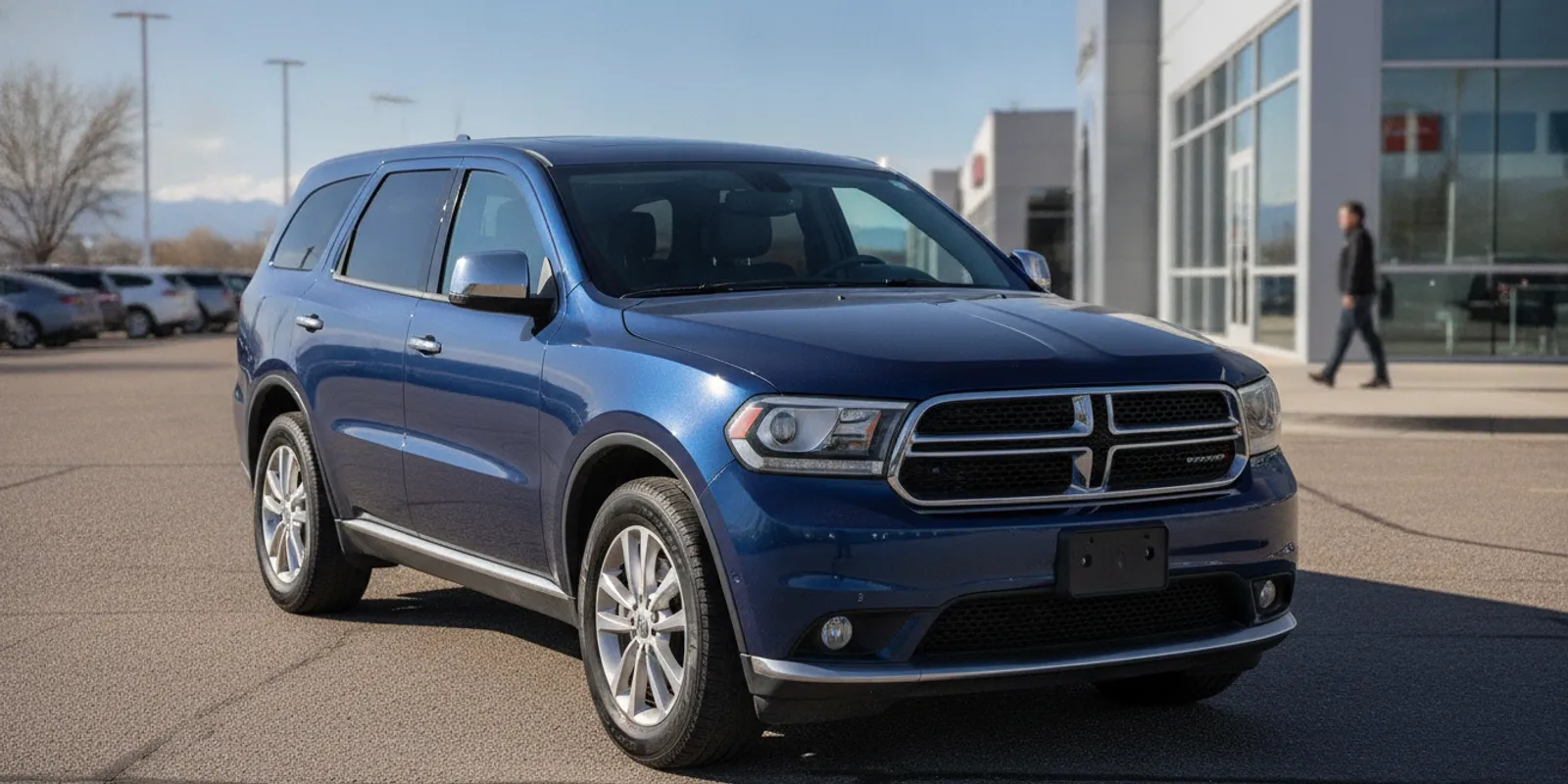
Shopping for a used Dodge Durango for sale means weighing more than model year or appearance. Durango versions can differ in seating layout, engine, drivetrain, equipment, and condition, so compare the specific vehicle against how you plan to use it. A careful review helps you decide what to ask, what to inspect, and whether to arrange a closer look.
Contact Royal Automotive about your shopping questions
What should you decide before comparing Durango listings?
Begin with your routine, not the trim badge. A family that regularly carries six people has different priorities from a driver who usually travels alone and occasionally needs extra cargo room. Someone who drives mostly on paved city streets will ask different questions from a shopper who frequently encounters steep grades, snow, or unpaved access roads. Putting your use case in writing helps prevent a polished photograph or a long equipment list from overshadowing practical fit.
Write down the answers to these questions before comparing listings:
- How many people usually ride? Count passengers on an ordinary weekday, then separately note occasional trips when everyone travels together. Check the actual seating configuration; do not assume every Durango has the same number of seats or the same second-row arrangement.
- What do you carry? List regular cargo such as grocery bags, a stroller, sports equipment, luggage, tools, or mobility aids. Consider whether those things travel with all expected passengers. Maximum cargo capacity with seats folded may not help if you routinely need every row upright.
- Where do you drive? Think about local streets, highway commutes, parking structures, hills, winter conditions, and longer trips. Your route helps you evaluate visibility, turning, ride comfort, and the particular drivetrain and tires on the vehicle.
- Which features are essential? Separate needs from preferences. Phone connectivity, a specific safety feature, a backup camera, heated seats, or towing-related equipment may matter to you, but confirm each item on the exact vehicle.
- What ownership expenses must fit? Look beyond the vehicle's listed price. Account for fuel, insurance, registration, maintenance, tires, and possible repairs using estimates that fit your circumstances.
Give each item a priority. For example, mark a third row as essential, a particular color as preferred, and a sunroof as optional. This creates a useful decision rule: a vehicle that lacks an essential requirement can be removed from consideration even if it has several attractive extras. A preference can help break a tie between otherwise suitable options, but it should not be confused with a requirement.
It can also help to define a "deal-breaker" and a "question to investigate." A deal-breaker might be a seating layout that cannot accommodate your regular passengers. A question might be whether a particular feature is installed or whether a service record is available. Keeping these categories separate helps you avoid rejecting a vehicle prematurely while also preventing an unknown from being treated as a confirmed benefit.
How should you compare model years and trims?
Model year is a starting point, not a complete description of a used vehicle. Equipment, available powertrains, and configurations can vary across years and trims. Even two vehicles with the same year and trim can differ in mileage, maintenance history, condition, and installed options. Compare the actual vehicle and its documentation rather than assuming that a model-year label settles the question.
Create one row for every candidate and record the same items each time: year, trim, mileage, engine information if confirmed, drivetrain, seating layout, listed equipment, history information, and questions still open. Use "not confirmed" when a detail is absent. That wording matters. A blank field can be mistaken for a feature you simply forgot to check; an explicit unknown reminds you to ask.
| Comparison point | What to verify | How it affects your decision |
|---|---|---|
| Year and trim | Exact vehicle description and installed equipment | Names alone do not establish the details on an individual vehicle. |
| Seating | Number of seats, row access, and seat operation | The layout needs to work for the passengers you actually carry. |
| Drivetrain | Specific configuration confirmed by listing or documentation | It is one part of matching the vehicle to your routes and conditions. |
| Condition | Tires, brakes, controls, body, cabin, and records | Condition is specific to the used vehicle, not guaranteed by its model name. |
| Costs | Purchase terms and relevant ongoing expenses | The ownership decision includes more than the advertised amount. |
For each feature that matters, identify how you will confirm it. A listing may describe equipment, but an in-person check or vehicle-specific documentation can help resolve important uncertainties. If the listing does not say whether a vehicle has a feature you need, ask before making a trip. Do not infer the answer from a photograph, another Durango, or a general description of a trim.
When comparing years, avoid treating "newer" as a complete value judgment. A later year may appeal to you for its specific equipment or lower mileage, but those details should be verified and weighed against condition, history, and total cost. An older vehicle may have a layout or equipment package that suits you better, but it still deserves the same inspection questions. The useful comparison is not simply year against year; it is one specific vehicle against your needs and the other specific vehicle.
Royal Automotive's used-vehicle inventory is a place to review listings. Inventory changes, so check the current listing and confirm its status before traveling. A listing can help you form questions; it is not a substitute for confirming the vehicle's present details.
How do seating and cargo needs affect your choice?
Think of seating as a daily-use decision. If you need a third row regularly, check the number of seats and the arrangement in the exact vehicle. Sit in each row that passengers will use. Have the people who ride there try entry and exit where practical. Check whether moving or folding a seat is manageable for the person who will do it most often.
Do not assess the third row only while it is empty. Consider the entire passenger-and-cargo arrangement. With every intended passenger seated, where will backpacks, groceries, or luggage go? If you usually drive with fewer passengers, how quickly can the cabin be reconfigured for cargo? The answer can be more useful than a maximum cargo figure because it reflects the way you plan to use the vehicle.
Use a simple three-position test while the Durango is parked:
- All expected seats occupied: Check access, legroom, headroom, belt access, and comfort for each regular passenger. Do not rely on a quick glance through an open door.
- Typical weekday arrangement: Set the seats as you would for an ordinary day. Check whether the cargo area holds the things you carry most often.
- Occasional large-load arrangement: Fold only the seats you would be willing to fold in real life. Look for a practical loading path and notice whether bulky objects can be managed safely.
If you use child seats, bring them along when possible and confirm fit and installation requirements using the vehicle and child-seat instructions. Make sure the relevant belt or anchor positions are accessible. A quick visual check cannot establish that every seat installation will work in every position. If another adult normally helps with loading children or cargo, include that person in the check.
Try representative cargo rather than estimating from a photograph. A stroller, suitcase, sports bag, or storage bin can reveal a problem that a spec sheet will not. Keep the vehicle parked while testing, and do not place unsecured cargo where it could interfere with controls or visibility. If you cannot bring the actual item, measure its dimensions and compare the practical opening and floor area; allow room for the shape of handles, wheels, or packaging.
Small design details can matter over hundreds of ordinary trips. Notice how high you need to lift items, whether the rear opening works for your garage or parking space, where small belongings can be stored, and whether passengers can reach the controls or charging points they need. Check that seats move and latch as expected. Ask about any mechanism that seems stiff or unfamiliar rather than forcing it.
For a shopper who only occasionally carries a full group, it may be tempting to choose a vehicle based on the maximum number of seats. Consider how often that capacity will be used and whether the layout still suits everyday errands. Conversely, a shopper who routinely travels with a full cabin should not let a large cargo area with seats folded decide the purchase. The correct balance is the one that matches normal use, not the configuration that looks most impressive in a listing.
Which drivetrain and equipment should you check?
Confirm drivetrain on the listing and vehicle-specific documentation. Do not assume that every Durango has the same configuration, or infer it solely from a badge or appearance. Then think about the conditions you encounter: paved roads, hills, snow, wet surfaces, or occasional rough access roads. The choice should reflect those conditions and the exact vehicle, not a broad assumption that one configuration is right for every driver.
Drivetrain is only one element of control and traction. Tire condition and type, road conditions, speed, and driver behavior also matter. A drivetrain description does not promise that a vehicle will prevent slipping or make a particular route safe. If winter driving is part of your routine, ask about the tires currently fitted and assess their condition. Plan for suitable tires and cautious driving rather than relying on a feature name alone.
Verify high-priority equipment one item at a time. Depending on what is listed or important to you, check phone connectivity, audio controls, camera views, parking aids, driver-assistance features, climate controls, and seat adjustments. Turn on and operate features where practical. If a control is unclear, ask for an explanation. Confirm that a feature is present and functioning rather than assuming it from the trim name.
Make a short feature test sequence before a visit. For example, start the vehicle, check the displays, connect a phone if appropriate, test the climate system, select the camera view, and operate the seat and window controls. Keep this sequence limited to the equipment that matters; a complete button-by-button exploration can be distracting. If a system requires a setting or compatible device, distinguish a setup issue from a function that has not been confirmed.
For driver-assistance features, learn what the vehicle actually includes and how its instructions describe operation. Do not treat an alert or assistance feature as a replacement for attentive driving. If you need a particular feature for your routine, verify its presence and controls on the specific vehicle before using it as a reason to choose that vehicle.
If towing is part of your plan, confirm the exact vehicle's equipment and consult its owner documentation for applicable limits and requirements. A hitch by itself does not establish a vehicle's towing capacity. The relevant configuration, equipment, load, and vehicle condition all need to be considered. Do not select a vehicle for a particular trailer or load until its specifications have been confirmed and are appropriate for that use.
What should you inspect on a used Durango?
A systematic walk-around and test drive help you identify questions. They do not replace a professional evaluation if you want one, and a brief visit cannot reveal every aspect of a vehicle's history or future performance. Take notes, proceed safely, and describe observations clearly instead of trying to diagnose a mechanical cause from a sound or symptom.
Start with the outside
Walk around the vehicle in good light. Look at the panels, glass, lights, mirrors, wheels, and visible trim. Notice differences in color or finish, unusual gaps, cracked glass, or damage you want explained. These observations are prompts for questions, not proof of a particular event. Ask about repairs or visible marks when relevant, and compare the answer with any information provided about the vehicle.
Check the tires visually, including whether the tread appears uneven from one area to another. Note obvious damage or differences among the tires. Do not diagnose alignment or suspension from appearance alone. Ask what is known about tire condition and whether any follow-up inspection information is available. Tire needs can affect the practical cost of ownership, so include them in your notes alongside other condition observations.
Check the cabin and controls
Look at seats, trim, belts, floor areas, cargo space, windows, locks, lights, displays, and climate controls. Wear is not a complete record of how a vehicle was used, but it can help you identify questions and decide whether the cabin meets your expectations. Operate features you care about, including seat movement and folding mechanisms, while the vehicle is safely parked.
Observe warning indicators during startup and ask about any indicator that remains illuminated. Do not ignore a display or warning because the vehicle seems to drive normally during a short trip. Ask what explanation or inspection information is available. If a feature does not operate as expected, record the exact control and behavior rather than guessing at the cause.
Drive a route that answers useful questions
Before driving, adjust the seat and mirrors and become familiar with the controls. On a safe route, notice starting, acceleration, braking, steering, visibility, and unusual sounds or vibrations. If possible, include the types of roads you commonly use, while following the dealership's test-drive procedures and all traffic laws. Do not attempt risky maneuvers to test a vehicle.
Pay special attention to how the vehicle feels in routine situations: entering traffic, changing lanes, turning, stopping, and parking. A larger SUV may feel different from a smaller vehicle you currently drive. Check sightlines from the driver's seat and understand how mirrors or available cameras work. Assistance features can support awareness but do not replace looking around carefully.
If something feels or sounds unusual, describe when it occurred, such as "I noticed a vibration while braking" or "the control did not respond when I pressed it." Ask the dealership to explain what information is available. This is more helpful than assigning a cause without evidence. If you remain uncertain, consider whether additional evaluation is appropriate before making a decision.
Review records and the inspection process
Ask what history or service records are available and take time to review what is provided. Records may help clarify maintenance or repairs, but the information available can vary. Ask whether there are known issues, what inspection information is available for this specific vehicle, and whether there are follow-up items to understand. Keep the distinction clear between an overall dealership process and evidence about the vehicle in front of you.
Royal Automotive describes a pre-sale inspection process on its About Us page. Ask about the particular Durango and what inspection information can be shared. A general process description is not a guarantee of future condition and does not replace your own review or any evaluation you choose to arrange.
How should you think about mileage and condition together?
Mileage is one data point. It does not, by itself, establish how a vehicle was maintained, what kinds of roads it traveled, or what work it may need. Treat it as a prompt to compare the overall picture: age, visible condition, records, disclosed history, equipment, and current inspection information. Avoid turning one number into a simple verdict.
For two candidates, write down mileage and age, then record what you know about condition and history separately. If one vehicle has more miles but more documentation, that does not automatically make it preferable; if another has fewer miles but unresolved questions, the lower number does not automatically settle the choice. Your next step is to ask for relevant information and weigh it against your priorities.
Use a three-column note for each concern: observation, question, and answer or next step. For example, "tire wear appears uneven" is an observation; "what is known about tire condition and alignment?" is the question; "request available inspection information" is a possible next step. This format keeps a visual impression from becoming an unsupported diagnosis.
Also distinguish normal age-related wear from a concern that needs explanation. A scratch may be cosmetic and irrelevant to your decision, while a control that does not work could affect everyday use. The same visible condition can matter differently to different buyers. Record the issue, ask what is known, and decide whether it changes your willingness to proceed or warrants further assessment.
How can you estimate ownership costs without guessing?
Purchase price is only one part of owning an SUV. Consider fuel, insurance, registration, routine maintenance, tires, and repairs. The actual amounts depend on the particular vehicle, how it is driven, local requirements, and the owner's coverage and service choices. Gather estimates relevant to your own situation instead of relying on a broad claim about what every Durango costs to own.
A useful worksheet separates costs into three groups:
- Known now: Written vehicle terms and any confirmed fees or expenses. Keep the document and date with your notes.
- Estimate before deciding: Insurance quote, likely fuel use based on your driving and the specific vehicle's information, registration-related expenses, and a maintenance budget based on your circumstances.
- Uncertain condition items: Tires, repairs, or other work that needs clarification. Ask what information is available and whether an additional evaluation would help you understand the risk.
Do not compare vehicles on monthly payment alone. If you are considering financing, review the complete terms you receive, including the amount financed, interest rate, payment schedule, and total amount payable. Different down payments or loan terms can change a monthly payment without changing the underlying vehicle fit. An application or pre-approval path is not a promise of approval or a particular rate.
Royal's financing information explains how to begin that conversation. Ask questions about the process and review actual written terms applicable to you. Do not assume that an online application guarantees financing, establishes a final rate, or determines the complete cost of a vehicle.
Before visiting, set a comfortable total budget rather than a number based only on a desired payment. Keep room for the costs that arise after purchase. If a vehicle's terms are unclear, ask for written information and review it carefully. Compare like with like: the same down payment assumptions, similar loan durations if applicable, and the same treatment of fees and other expenses. A lower payment can reflect a longer schedule rather than a lower overall amount.
How should you compare two Durangos side by side?
Use the same checklist for each candidate and separate confirmed facts from open questions. A structured comparison can keep a persuasive listing description or one memorable feature from dominating the decision. Give more weight to requirements that affect safety, passenger fit, or daily practicality than to low-priority preferences.
- Confirm identity: Record exact year, trim, mileage, and the listing details for each vehicle. Verify that your notes refer to the right listing.
- Match the layout: Check seating, row access, seat operation, and cargo use in the configurations you expect to need.
- Verify drivetrain and equipment: Confirm each important feature on the vehicle or through vehicle-specific documentation.
- Assess condition consistently: Use the same walk-around, cabin checks, and safe test-drive observations for both.
- Review available history: Ask the same questions about records, known issues, and inspection information.
- Consider ownership expenses: Compare written terms and estimates relevant to your own use.
- Resolve unknowns: Mark every unconfirmed item and ask before treating it as a benefit.
For a practical scorecard, create a column for each vehicle and a row for every priority. Use "confirmed," "not included," or "ask" rather than a vague check mark. You might also score fit from one to three, where one means it does not meet the need, two means it may work but needs clarification, and three means it appears to fit after direct confirmation. Do not score an unknown as a three.
For example, imagine Candidate A has the row arrangement your household needs but its feature list is incomplete. Candidate B lists more equipment, but the passenger layout is not yet confirmed. Candidate A should not be declared the winner until you verify the equipment that matters; Candidate B should not be treated as suitable until you check the seating. The scorecard highlights what to ask next instead of disguising uncertainty as a ranking.
One useful decision rule is to compare in two passes. First, eliminate vehicles that fail an essential need or have an unresolved issue you are not willing to accept. Second, compare remaining vehicles on condition information, equipment, comfort, and total ownership considerations. This avoids overvaluing optional features before confirming that the basic configuration works for you.
What should you ask before arranging a visit?
A short, specific inquiry can save time and make a visit more useful. Refer to the exact listing or vehicle description, then ask questions that are not answered clearly. Avoid asking whether a vehicle is "the best" or relying on a general assurance; request factual details you can verify in person or in writing.
- Is this specific Durango currently listed and available to view?
- What seating configuration, drivetrain, engine information, and major equipment are confirmed?
- What history or service information is available for this vehicle?
- What inspection information can be shared about this specific vehicle?
- Can I arrange a test drive, and what should I bring or know beforehand?
- Are there written terms or fees I should review before making a decision?
- Can I discuss financing or a trade-in as separate parts of the shopping process?
Availability and listing details can change, so check before setting out. Review the dealership's contact page for a way to ask about a vehicle or visit. Do not assume an old screenshot or saved search confirms that a vehicle remains listed.
If you have a vehicle to trade, Royal's sell-or-trade page provides a separate starting point. A trade value depends on the vehicle and its evaluation; an online inquiry is not a final figure. Bring accurate information about your vehicle and ask what documentation is useful. If you want to compare a trade with selling separately, base the comparison on actual written terms and the time or steps involved for you.
What can different Durango shoppers prioritize?
There is no single checklist that suits every shopper. The following examples show how a person's use can change the order of questions. They are decision frameworks, not claims about a particular Durango's features or a promise that any vehicle will meet the described need.
A household that regularly carries several passengers
Start with the exact seating capacity and row arrangement. Have regular passengers try the seats, entry paths, and belts. Then test cargo space with those seats occupied. If child seats are involved, check the intended positions and bring the seats if practical. Once the layout works, verify must-have equipment, examine condition, and review any available records. This order prevents a long feature list from distracting from the central question: can the household use the cabin as intended?
For occasional trips with extra passengers, ask a different question: how often will the added seating be used, and what cargo will be displaced when it is? A configuration that is excellent for a rare trip but awkward every weekday may not be the best practical match. Conversely, if full passenger capacity is a regular requirement, do not compromise on the seats simply because another vehicle has more preferred equipment.
A driver who mostly commutes and parks in town
Focus on driver visibility, comfort, control layout, and how the vehicle feels on the roads you use. Include a parking maneuver in a safe setting if the test-drive route permits it. Check whether the vehicle's dimensions and turning feel comfortable in your normal parking spaces. Inspect the camera or parking aids if fitted, but do not rely on them instead of looking around.
For this shopper, third-row capability may be a useful occasional option but not a reason to overlook daily comfort. Compare seat position, mirror adjustment, display readability, and ease of entry. A short test drive can reveal whether the vehicle feels manageable, but allow enough time to operate the controls and ask questions without rushing.
A buyer planning frequent longer trips
Consider seat comfort, passenger needs, luggage arrangement, visibility, and the equipment you expect to use on a trip. Test the seats for the people who will travel, not just the driver. Think about where bags go when all planned passengers are aboard. Review the vehicle's documentation for the equipment and specifications that matter to your route, and confirm uncertain details before relying on them.
Make a trip-specific packing list and compare it with the cabin layout. A small bag may fit easily, while several large suitcases may require a different arrangement. If passengers bring personal items, include them in the plan. Do not assume that folding a row is an option if all those seats will be occupied. This exercise often clarifies whether passenger capacity or cargo flexibility deserves greater priority.
A shopper who encounters winter weather or steep roads
Verify the drivetrain and tire condition on the specific vehicle. Ask about the tires currently fitted and what documentation is available. Think about the roads you regularly travel and the conditions you can safely avoid. No drivetrain description guarantees traction in all conditions, and no feature removes the need for appropriate tires and careful driving.
Also consider whether the vehicle's size and visibility work for your winter routine. Check the lighting and windshield condition, and make sure you understand the controls you would use in poor weather. A buyer should not choose based on a broad label alone; actual tires, condition, route, and driving habits all matter.
A buyer considering towing or carrying bulky gear
Write down what you intend to tow or carry, including relevant weights and equipment details if known. Then confirm the exact vehicle specifications and requirements in its documentation. Ask about installed towing-related equipment, but do not use the presence of a hitch as a substitute for checking limits. If the specifications are not confirmed, do not treat the vehicle as appropriate for that load.
For bulky cargo, test the loading opening and the space with the seats arranged as they will be in use. Consider whether the item can be secured and whether it blocks the driver's view. The safest and most convenient fit is not always the one suggested by a maximum-space figure, especially when passengers are also traveling.
What should first-time SUV shoppers keep in mind?
If you are moving from a smaller vehicle to a larger SUV, take time to get comfortable with its size and sightlines. During a test drive, notice turning, lane positioning, parking, and visibility in ordinary settings. Adjust the mirrors before moving and learn how any camera or parking aid works while stopped. Practice only in a safe, permitted area and remain attentive to the surroundings.
Think through your daily parking situation before deciding. A vehicle can feel comfortable on an open road but require more care in a narrow garage or crowded lot. Consider the route to your home, the space available, and whether loading passengers is easy where you normally stop. These are practical questions that an attractive exterior photograph cannot answer.
First-time buyers may also benefit from separating vehicle choice from financing questions. Review your budget, gather the information requested for an application, and compare the complete written terms you receive. A payment amount alone does not show the total cost. Keep room in your budget for insurance, fuel, maintenance, and unexpected needs. If you want to ask questions before applying, contact the dealership and choose the inquiry path that suits you.
A financing application can request personal, residence, employment, and credit-related information. Review the site's privacy information and submit details only through a channel you intend to use. Royal provides a privacy policy for customers to review. The presence of an application does not mean approval is assured or that a particular rate or term will apply.
What if you want to apply in Spanish?
Royal Automotive provides a Spanish-language credit application. This is a route for starting an application; it should not be read as a promise that every inventory page, conversation, follow-up, or dealership interaction is available in Spanish. If you need language assistance with a vehicle question, appointment, or financing discussion, contact the dealership first to confirm what support is available and how to proceed.
Before submitting any application, take time to understand what information is requested and why. If a question is unclear, seek clarification before sending personal details. You can also ask about a specific vehicle or arrange a conversation without treating an application as the only way to begin shopping.
What common comparison mistakes can you avoid?
Several habits can make a search less reliable. Avoiding them does not guarantee a perfect decision, but it helps keep the process grounded in what is known about each specific vehicle.
- Choosing by year alone: A year does not tell you the complete equipment, condition, or history. Verify the individual vehicle.
- Assuming a trim includes every desired feature: Confirm features directly instead of relying on a trim label or generic description.
- Comparing maximum cargo space with real passenger use: Check cargo with the seats arranged for the people who will travel.
- Treating drivetrain as a guarantee: Consider tires, road conditions, vehicle condition, and driving behavior as well.
- Ignoring open questions: Write "not confirmed" and ask; do not silently assume an answer.
- Rushing the test drive: Use a safe route that lets you assess ordinary driving, comfort, visibility, and controls.
- Focusing only on payment: Review full financing terms and expected ownership expenses.
- Traveling based on stale information: Confirm current listing status and details before setting out.
Another common mistake is allowing sunk effort to decide the purchase. If you have already driven across town or spent time reviewing a vehicle, that effort does not make an unresolved concern disappear. Pause, ask for the information you need, and compare it with your written priorities. It is reasonable to continue looking if a vehicle does not fit.
How can you organize your next steps?
A simple process reduces repeated work and helps you arrive prepared. You do not need a complicated spreadsheet. A page of notes with clear headings can be enough if you use it consistently for every candidate.
- Set requirements: Identify essential seating, cargo, driving, and equipment needs. Mark preferences separately.
- Shortlist candidates: Review current listings and save the exact vehicle details. Do not treat a listing as confirmation that the vehicle remains available.
- Check missing information: Ask about configuration, equipment, history, and inspection details that affect your choice.
- Prepare a visit checklist: Bring your questions, any child seats or representative cargo, and the names of passengers who should evaluate the layout.
- Inspect and test drive: Use a repeatable walk-around and a safe route. Record observations rather than diagnosing them.
- Review costs and terms: Compare written information and estimates that apply to your situation.
- Decide what remains unresolved: Ask follow-up questions or consider further evaluation before proceeding.
After a visit, rewrite your notes while the details are fresh. Separate what you personally observed from what someone told you and from what remains unknown. If you compare a second vehicle on another day, use the same checklist. This simple discipline improves the quality of the comparison without requiring you to memorize every detail.
Royal Automotive's inventory listings can help you identify vehicles to ask about, while the contact page is a route to confirm details and discuss a visit. Check the exact listing and current status rather than assuming that a saved page reflects today's inventory.
FAQ: Used Dodge Durango shopping questions
Is a newer Durango always the better choice?
Not necessarily. Compare the specific vehicle's equipment, condition, mileage, available history, and written terms against your needs. Model year alone cannot establish which used vehicle is the right fit.
Should I choose all-wheel drive?
That depends on your driving needs and the exact vehicle. Confirm the drivetrain rather than assuming it from the model name. Remember that drivetrain does not replace suitable tires, attentive driving, or checking the condition of the vehicle.
How can I tell whether a third row will work for me?
Check the exact seating configuration in person. Have the people who will ride there try the seats and access, then examine cargo space with the row in place. Fit and comfort are best judged by the passengers who will use it.
Can I rely on a listing to confirm every feature?
Use a listing as a starting point, then confirm important equipment on the vehicle or through vehicle-specific documentation. If an item affects your decision and remains unclear, ask before visiting or moving forward.
Can I arrange a test drive before deciding?
Ask the dealership about arranging a test drive for the specific vehicle and confirm its current status first. A drive lets you assess comfort, visibility, controls, and road feel for yourself, while a separate inspection can address questions that a brief drive cannot resolve.
Ask about a Durango or arrange a visit
Compare each vehicle on confirmed details, condition, and how well it fits your daily needs, then resolve important questions before making a decision.