Sell or Trade In Car: Compare Value, Costs, and Effort
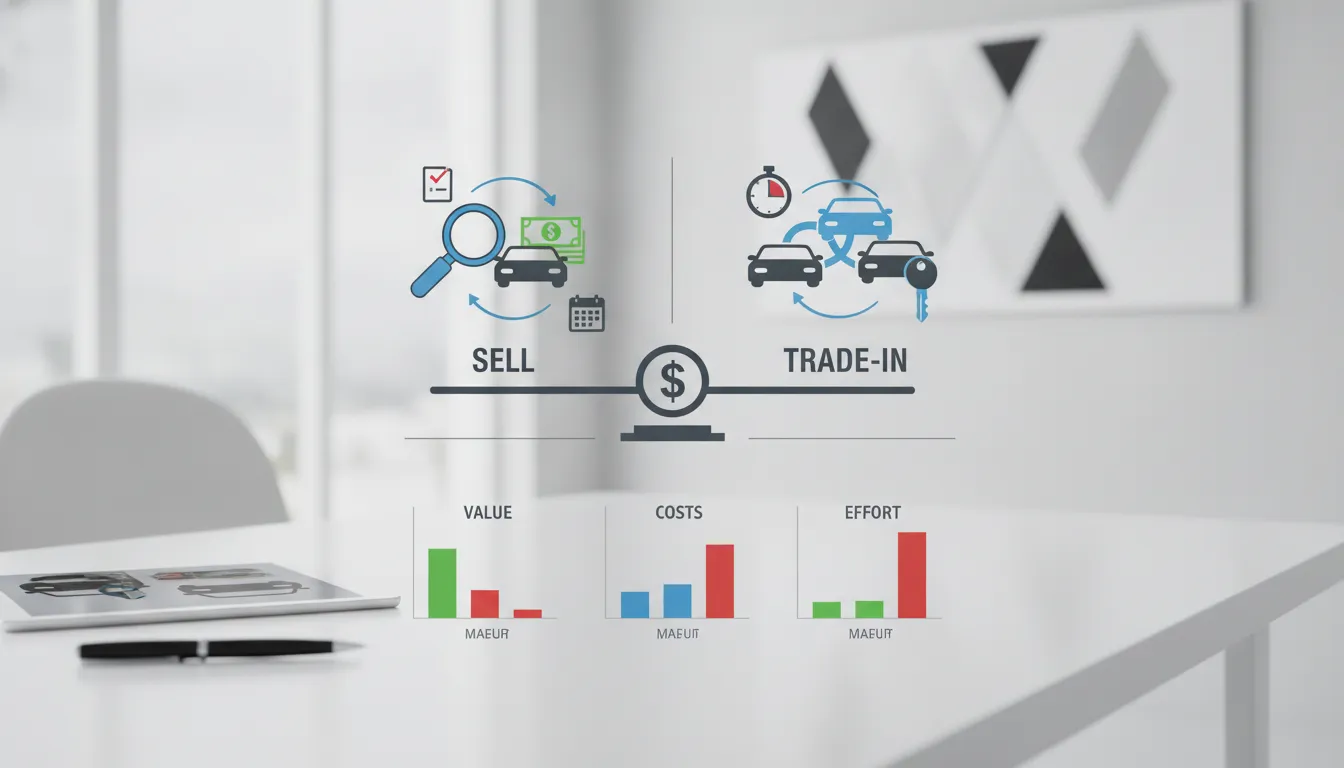
Youu2019re ready for a different car, but what should you do with the one in your driveway? When you sell or trade in car options side by side, the choice often comes down to more than the offer amount. Selling privately gives you control over the asking price, but youu2019ll handle the listing, buyer questions, test drives, payment, and paperwork. Trading in can save time, especially if youu2019re shopping for another vehicle, but itu2019s still worth comparing the offer with other estimates. Your caru2019s condition, mileage, loan balance, and your schedule all matter. Hereu2019s how to weigh the trade-offs, estimate what your vehicle may be worth, and decide which option makes sense for you.
Key Takeaways
Match the selling method to your priorities: A private sale gives you more control over the price, while a trade-in can save time, particularly when youu2019re buying another vehicle.
Compare what youu2019ll actually receive: Review realistic estimates and written offers, then account for expenses, taxes, and any remaining loan balance.
Get ready before agreeing to a deal: Gather your title and service records, share accurate details about your car, and review payment and transfer terms in writing.
- Match the selling method to your priorities: A private sale gives you more control over the price, while a trade-in can save time, particularly when youu2019re buying another vehicle.
- Compare what youu2019ll actually receive: Review realistic estimates and written offers, then account for expenses, taxes, and any remaining loan balance.
- Get ready before agreeing to a deal: Gather your title and service records, share accurate details about your car, and review payment and transfer terms in writing.
Should You Sell or Trade In Your Car?
Selling your car privately and trading it in can both help you move on to your next vehicle. A private sale gives you more control over the asking price, while a trade-in can make the process simpler. Consider how much time you have, how comfortable you are working with buyers, and whether youu2019re planning to purchase another car soon.
Sell Privately: Potentially Earn More, Do More Work
Selling privately may bring in more money, especially if your car is in good condition or a popular model. You set the asking price, choose where to advertise, and decide whether to accept an offer. Compare your car with similar listings and use a pricing resource like Kelley Blue Booku2019s car value tool to set a realistic starting point.
Youu2019ll also take on the work of creating a listing, responding to inquiries, arranging test drives, negotiating, and handling paperwork. A comparison of private sales and trade-ins can help you weigh the potential proceeds against the time involved. Be clear about your caru2019s condition and history, and confirm payment before transferring the keys or title.
Trade In: Simplify the Deal
A trade-in can be a practical choice if you want to save time or plan to buy another vehicle soon. Instead of finding a separate buyer, you can have your current car appraised while shopping for your next one. The dealership can explain its offer, help with the transaction paperwork, and apply the trade-in value toward your purchase.
Convenience doesnu2019t mean you should skip comparing offers. Ask how the appraisal was determined and whether it depends on buying another vehicle. Review the trade-in value separately from the price of your next car so you can assess both parts of the deal. If you still owe money on your car, confirm how the loan payoff will be handled before agreeing. You can also ask Royal Automotive about its sell-or-trade options.
Compare Convenience, Control, and Safety
A private sale may be right for you if maximizing the sale price matters most and youu2019re comfortable managing buyer questions, negotiations, and paperwork. A trade-in may suit you better if you want a more straightforward process or prefer to arrange your sale and next purchase together. Your caru2019s condition, loan balance, budget, and timeline can all shape the decision. Kelley Blue Booku2019s guidance on keeping or trading in a car offers more factors to consider.
For a private sale, meet buyers in a public place, take care when arranging test drives, and verify payment before transferring ownership. With either option, ask for the terms in writing and confirm how the transaction affects any outstanding loan. Compare the full offer, including the time and effort involved, rather than focusing only on the advertised price.
What Should Shape Your Decision?
The right choice depends on your car, your timeline, and what you plan to drive next. Compare the likely proceeds with the time, effort, and costs involved in each option.
Consider Condition, Mileage, History, and Demand
Start by assessing your caru2019s condition, mileage, maintenance history, and title status. Demand for its make and model can matter, too. In the Denver area, local preferences may affect how quickly certain cars, trucks, or SUVs attract buyers.
Mileage is one useful measure, but it doesnu2019t tell the whole story. A higher-mileage car with a strong service history may appeal more than a lower-mileage vehicle that needs significant repairs. Kelley Blue Book explains that factors such as condition, maintenance, driving conditions, and reliability can all affect value. Gather service records and make a list of known issues before requesting offers. Sharing accurate details helps you compare estimates and set a realistic asking price.
Weigh Your Timeline and Comfort With Private Buyers
A private sale may bring in more money, but it usually takes more time and hands-on work. Youu2019ll need to create a listing, answer questions, schedule viewings and test drives, and manage payment and paperwork. Think about whether youu2019re comfortable meeting prospective buyers and taking steps to keep each interaction safe.
Trading in can be simpler, especially when youu2019re buying another vehicle at the same time. You can have your car evaluated and discuss applying its value toward your next purchase. As Crossroads Ford explains, a trade-in can reduce the steps involved, while a private sale requires you to manage more of the process yourself. Weigh the potential price difference against the time and effort youu2019re willing to spend.
Factor In Your Next Vehicle and Financing Needs
Consider your next vehicle before deciding how to sell your current one. If youu2019re shopping for another car, truck, or SUV, trading in may let you apply your caru2019s value toward the purchase. Selling privately gives you more flexibility to shop separately, but youu2019ll need to plan how youu2019ll manage transportation and timing between transactions.
If you have an auto loan, compare your caru2019s estimated value with the lenderu2019s payoff amount. When the value is higher, the difference is equity that may go toward your next vehicle. If the payoff is higher, ask how you would cover the remaining balance before committing to a sale or purchase. Royal Automotive offers information about financing and pre-approval for shoppers planning their next purchase. Checking your budget and payoff details early makes it easier to compare options.
How Can You Estimate Your Caru2019s Value?
Start with a realistic range rather than a single figure. Your caru2019s value depends on details such as its condition, mileage, history, location, and demand. Estimate what you could receive from a private sale and a trade-in, then compare what youu2019d keep after expenses and any loan payoff.
Compare Private-Sale and Trade-In Estimates
A private sale may bring in more, especially if your car is well maintained and popular with local buyers. But youu2019ll handle the listing, messages, test drives, payment, and paperwork yourself. A trade-in is often more convenient, although the offer may account for inspection, reconditioning, and resale costs.
Get estimates for both options before making a decision. Compare a likely private-sale price with a written trade-in offer, and weigh the difference against the time and effort involved. This comparison of selling and trading in can help you assess the trade-offs.
Check Pricing Tools, Your VIN, and Local Listings
Online pricing tools can give you a useful starting range. Enter the correct year, make, model, trim, mileage, and condition. Your vehicle identification number (VIN) can help verify the exact model and features, which may affect an estimate. Be candid about wear, mechanical issues, accident history, and title status. Reviewing the factors that affect car value can help you prepare accurate details.
Next, look at similar vehicles listed in Denver and nearby communities. Compare cars with similar trim, mileage, condition, and history. Local listings show asking prices, not confirmed sale prices, so use them alongside pricing tools rather than treating one listing as a guaranteed value.
Separate Asking Prices From Realistic Offers
An advertised price doesnu2019t confirm what a buyer will pay. A listing may remain online while the seller adjusts the price, and differences in mileage, condition, or history can make two cars difficult to compare. Look at several similar listings and, when available, note how long each has been for sale.
For a more grounded estimate, consider written offers from dealers or serious private buyers. An appraisal can also account for details an online calculator may miss. If youu2019re comparing your car with vehicles for sale in the area, browse Royal Automotiveu2019s current inventory for local examples.
Calculate Net Proceeds, Not Just Sale Price
The highest offer may not leave you with the most money. For a private sale, subtract expected expenses such as repairs, detailing, advertising, and transaction costs. For a trade-in, compare the offer with your loan payoff and review how the trade affects the full purchase deal.
If you still owe money, subtract the payoff amount from your estimated sale or trade-in value. A positive balance is equity you may be able to put toward another vehicle. If your car is worth less than the loan balance, youu2019ll need to account for the difference. Kelley Blue Book explains how equity and payoff affect a trade-in.
Which Market Trends Affect Your Caru2019s Value?
Your caru2019s value can change as used-car supply, shopper demand, and buyer preferences shift. Age, mileage, and condition matter, too, but they donu2019t tell the whole story. Check current local listings and estimates before setting a price, and remember that a national estimate may not reflect what buyers in the Denver area are looking for.
Track Used-Car Supply, Demand, and Prices
Start by comparing your vehicle with similar cars for sale nearby. Look for matches in model year, trim, mileage, condition, and features. If local listings show plenty of similar vehicles, buyers have more options, so a competitive price may matter. If comparable cars are harder to find, yours could draw more interest.
Asking prices are useful for comparison, but they donu2019t confirm what a seller will receive. Use pricing tools alongside local listings to set realistic expectations. A caru2019s value can vary based on its condition, location, demand, and current market prices, as Kelley Blue Book explains. You can also check Royal Automotiveu2019s inventory to see what similar vehicles are available in the area.
Consider Depreciation, Age, and Mileage
Most vehicles lose value as they age, with depreciation often happening more quickly in the first few years. The exact rate depends on the car and the market, so use estimates as a guide rather than a guarantee. Condition, service history, features, and demand can all influence how your vehicle compares with others of the same age.
Mileage matters, but it is not the only measure buyers consider. Kelley Blue Book identifies about 12,000 miles per year as an industry benchmark. Compare your odometer reading with vehicles of a similar age, then gather service records to show how you maintained the car. When weighing depreciation against your budget and plans, Kelley Blue Booku2019s keep-or-trade-in guide offers helpful factors to consider.
Account for Seasonal Demand and Local Preferences
Shopper interest can shift throughout the year as weather, travel plans, and household needs change. In the Denver area, some buyers may look for SUVs or all-wheel-drive vehicles for winter conditions and outdoor trips. Others may prioritize fuel economy, affordability, or a comfortable daily commute. These preferences can affect how quickly certain vehicles attract attention, but no season guarantees a higher offer.
Local listings can help you see which types of vehicles are available and how theyu2019re priced. Also consider your own timing: waiting for a particular season may not make sense if you need to sell or replace your car sooner. Kelley Blue Book notes that selling earlier in the calendar year may make a vehicle seem newer relative to its model year. Consider timing alongside your caru2019s condition, loan payoff, and plans for your next vehicle.
What Taxes, Fees, and Loan Payoff Should You Check?
A caru2019s offer is only one part of the financial picture. Before you sell or trade in, account for the costs of completing the transaction, how a trade-in may affect taxes, and what you still owe on your loan. Comparing the full numbers can help you choose the option that leaves you in a better position.
Compare Selling Costs and Potential Trade-In Tax Treatment
A private sale may bring in more than a trade-in, but account for the expenses and effort involved. Depending on how you sell, you may pay for advertising, detailing, minor repairs, or a vehicle history report. Youu2019ll also spend time responding to inquiries, arranging viewings, and completing the paperwork.
A trade-in may qualify for a tax allowance when you purchase another vehicle. Rules vary by location, so the tax savings, if any, depend on where and how the purchase is completed. Ask the dealer to list the trade-in value, taxes, and fees separately. Then compare the likely amount youu2019ll keep from a private sale with the trade-in credit and estimated tax treatment. This gives you a clearer comparison than looking at the offer amount alone.
Check Colorado and Local Tax Rules
Tax treatment can differ by state and local jurisdiction. If youu2019re purchasing your next vehicle in Colorado, verify how a trade-in allowance applies to your specific transaction. The location of the purchase and registration may affect which taxes and fees are due.
Review the Colorado Department of Revenueu2019s sales tax guidance, then ask the dealership to explain each tax and fee on the purchase paperwork. If youu2019re buying outside Colorado or registering the vehicle in another state, check with that stateu2019s tax authority as well. Donu2019t assume the rules are the same everywhere or rely only on an early estimate. Confirm the final figures before signing so you can compare the complete costs of each option.
Confirm Your Loan Payoff and Equity
If you still owe money on your car, request a current payoff quote from your lender. It may differ from the balance on your latest statement because of interest and payment timing. Ask how long the quote remains valid so you can plan the sale or trade-in accordingly.
Compare the payoff amount with realistic offers for your vehicle. If an offer is higher than the payoff, the difference is your equity. You may be able to apply it toward your next purchase or receive it after the loan is paid. For a trade-in, ask how the dealership will send payment to your lender and how youu2019ll know the loan is closed. Kelley Blue Booku2019s guide to comparing value and loan balance can help you understand how equity affects your options.
Plan for Negative Equity and Review the Full Deal
If your payoff is higher than your caru2019s value, you have negative equity. When trading in, youu2019ll need to cover the difference, either out of pocket or through financing. Rolling that amount into a new loan increases what you borrow and may leave you owing more than the replacement vehicle is worth.
Ask for a written breakdown of the payoff, trade-in value, and any remaining balance. Review those amounts alongside the purchase price, taxes, fees, down payment, interest rate, loan term, and total amount financed. A lower monthly payment doesnu2019t necessarily mean a better deal, especially if it comes with a longer loan term and higher total borrowing costs. If youu2019re planning to finance your next vehicle, review Royal Automotiveu2019s financing options and make sure the complete payment fits your budget.
What Paperwork Do You Need to Sell or Trade In?
Gathering your documents before you sell or trade in your car can help keep the process on track. The paperwork you need depends on whether you own the vehicle outright, whether a lender holds a lien, and how the sale is handled. Colorado requirements can change, so check the stateu2019s vehicle sale and title-transfer guidance before you sign.
Gather Your Title, Registration, and Service Records
Locate your vehicle title and registration. The title establishes ownership and is needed to transfer the vehicle. If you canu2019t find it, contact your county motor vehicle office to ask how to request a replacement before finalizing a sale.
Registration doesnu2019t replace the title, but it can help confirm details such as the vehicleu2019s VIN. Service records, repair receipts, and inspection documents can also help answer questions about maintenance and past work. Check that the VIN on your documents matches the number on the vehicle, and organize records in one place so theyu2019re easy to review. Gathering these documents ahead of time can make the transaction more straightforward.
Confirm Lender Payoff and Title-Transfer Steps
If you still owe money on your car, contact your lender for the current payoff amount and instructions. The payoff may differ from the balance on your latest statement, so ask when the quote expires and how the lender will release its lien after payment.
A lender may hold the title until the loan is paid off. Before completing the sale or trade-in, confirm who will send the payoff, where the funds should go, and how the title will reach the new owner. For a trade-in, ask the dealership to explain the payoff and show how it affects the deal. If youu2019re selling privately, coordinate the steps with your lender before handing over the keys or signing transfer documents.
Check Bill of Sale, Odometer, Plate, and Notification Requirements
A bill of sale can document the vehicle identification number (VIN), sale price, date, and names of the buyer and seller. Odometer disclosure may also be required during a title transfer. Forms and requirements can depend on the vehicle and transaction, so confirm what applies with your county motor vehicle office before signing.
In Colorado, sellers generally remove their license plates before transferring a vehicle. The state also provides instructions for reporting a sale. Review Coloradou2019s vehicle sale requirements for current steps, and keep copies of signed documents for your records. Write down the date you transferred the vehicle, too. Having a clear record can help address later questions about ownership or registration.
How Should You Prepare Your Car?
Before you request an appraisal or meet a private buyer, take a little time to get your car and paperwork ready. A clean vehicle, organized records, and honest answers about its condition can make the process clearer for everyone. Focus on sensible preparation rather than costly upgrades.
Clean the Interior and Exterior
Remove trash and personal belongings, then vacuum the seats and carpets, wipe down hard surfaces, and clean the windows. Wash the exterior so buyers can see the paint and body condition clearly. If time is limited, prioritize the driveru2019s area, dashboard, and trunk.
A clean car can make a stronger first impression and help people assess its condition. Crossroads Fordu2019s guide to selling or trading in a car also notes that presentation can affect how buyers perceive a vehicle. You likely donu2019t need professional detailing: start with a thorough wash and basic interior cleaning, then decide whether extra work is worth the cost.
Make Minor Repairs Without Overspending
Check for simple fixes, such as a burnt-out bulb, low washer fluid, or loose trim. For larger repairs, get an estimate before approving the work. Replacing worn tires or repairing a dent may improve the caru2019s appeal, but the added value may not cover the expense.
Use your caru2019s condition and likely sale price to guide your decision. Crossroads Ford recommends weighing repair costs against the potential increase in value. Keep receipts for recent maintenance and repairs, and share them during an appraisal or sale. If the vehicle needs significant work, ask for an offer as-is before spending money so you can compare your options.
Organize Records and Disclose Known Issues
Gather your title, registration, owneru2019s manual, and service records before arranging an appraisal or sale. Maintenance receipts can help answer questions about the caru2019s care and recent work. If you still owe money on the vehicle, contact your lender for the current payoff amount and instructions for transferring the title.
Be clear about known mechanical problems, warning lights, past damage, or other issues that may affect the car. Sharing accurate details helps set expectations and prevents surprises later. Crossroads Fordu2019s selling and trade-in guide recommends bringing maintenance records and confirming loan payoff information. For a private sale, check the Colorado DMVu2019s vehicle buying and selling guidance to review applicable paperwork requirements.
Gather Keys, Accessories, and Personal Items
Collect all available keys and fobs, plus accessories that came with the vehicle, such as floor mats, cargo covers, charging cables, or a removable third-row seat. Set aside items like the wheel-lock key, spare tire, and any security codes. Having these ready makes it easier to confirm what is included with the car.
Before handing over the vehicle, check the glove compartment, center console, door pockets, and trunk for personal items. Remove your garage opener, parking passes, toll tags, and paperwork with personal information. Keep the items youu2019re including together so theyu2019re easy to review during an appraisal or sale. A quick final check helps make the handoff more organized.
How Can You Compare Offers and Avoid Mistakes?
Get Multiple Written Offers
Ask for written offers from more than one dealership. If youu2019re considering a private sale, check listings for similar cars in the Denver area, too. Give each buyer the same details, including the VIN, mileage, condition, service history, and known issues. Consistent information makes offers easier to compare and helps avoid surprises during an inspection.
Online estimates can give you a starting point, but a buyer may adjust the offer after seeing the car. Ask how long each offer is valid and what could change it. Getting an estimate before visiting can also help you prepare for an appraisal, as Crossroads Fordu2019s trade-in guidance recommends. Keep copies of the offers so you can review the terms side by side.
Compare Net Proceeds, Time, and Effort
The largest offer may not leave you with the most money or fit your schedule. A private sale can bring a higher price, but it takes time to write listings, answer questions, arrange viewings, and handle paperwork. Youu2019ll also need to coordinate test drives and payment. Trading in is usually more straightforward, especially when youu2019re buying another car at the same time.
Compare what youu2019re likely to keep after costs such as advertising, repairs, and detailing. Then consider how much time you can spend and whether youu2019re comfortable meeting potential buyers. A quick comparison of each offer, expected expenses, time commitment, and estimated net proceeds can make the tradeoffs clearer.
Set a Minimum Price and Review Each Deal
Decide on a minimum acceptable amount before you negotiate. Start by checking your caru2019s estimated value and any remaining loan payoff. If the payoff is higher than the vehicleu2019s value, account for the difference when comparing offers. Kelley Blue Booku2019s guidance on keeping or trading in a car explains why itu2019s important to compare those figures.
Review each offer in writing before agreeing. Confirm the amount, expiration date, inspection conditions, payment method, and any repairs the buyer expects you to make. If youu2019re in the Denver area, you can also ask Royal Automotive about its sell-or-trade options. Having your minimum and loan payoff in front of you can help you judge an offer on its terms, rather than feeling rushed to accept.
Look Beyond Monthly Payments and Single Estimates
When you trade in a car and finance another, ask the dealer to show the trade-in value, vehicle price, down payment, fees, and loan terms separately. A lower monthly payment doesnu2019t necessarily mean you received more for your car. It could reflect a longer loan term or a larger down payment. Review the full deal and the total amount youu2019ll pay over the life of the loan.
Donu2019t rely on just one online estimate, either. Estimates can differ, and an in-person inspection may affect the final offer. Compare multiple written offers with your caru2019s condition, remaining loan balance, and the costs of a private sale. If you plan to finance your next vehicle, review the loan terms separately from the trade-in negotiation. Royal Automotive explains its financing options for shoppers considering their next vehicle.
Use Safe Practices for Test Drives and Payment
For a private sale, arrange viewings in a public place during daylight, and consider bringing someone with you. Before a test drive, check the buyeru2019s driveru2019s license and confirm your insurance coverage. Go along for the drive, choose a short route, and remove personal documents and valuables from the vehicle.
Donu2019t hand over the keys, title, or car until youu2019ve confirmed payment and completed the required paperwork. A payment screenshot or notification isnu2019t proof that funds have cleared. Contact the issuing bank to verify a cashieru2019s check, and follow Coloradou2019s title-transfer steps. The Colorado DMVu2019s vehicle title information can help you check whatu2019s required. Keep copies of the signed documents and records of the payment for your files.
Sell or Trade In Your Car With Royal Automotive
Selling your current vehicle can help fund your next one, but the right approach depends on your priorities. Royal Automotive is a family-owned dealership in Englewood serving Denver-area drivers. Before you reach out, gather your vehicle details and think about whether you value convenience, a private-sale price, or putting your caru2019s value toward another vehicle.
Request an Appraisal in Englewood
Your caru2019s value depends on details such as its age, mileage, condition, service history, title status, and demand in your area. Online tools like Kelley Blue Booku2019s valuation tool can give you a starting estimate, but an appraisal can consider your vehicleu2019s specific details and condition.
To prepare, gather the make, model, year, mileage, and VIN, along with the title and maintenance records if available. Accurate information can make it easier to discuss your car and compare an offer with other options. Contact Royal Automotive to ask about an appraisal in Englewood and what documents to bring. The dealership is located at 3232 S Broadway, convenient for shoppers in Englewood and the Denver metro area.
Ask About Sell-or-Trade Options
Selling privately may bring a higher price, but it also means creating a listing, answering messages, arranging test drives, and handling the sale paperwork. A trade-in can be simpler because the dealership may apply your caru2019s value toward another vehicle. Consider the likely proceeds alongside the time and effort each option requires. Walseru2019s comparison of selling and trading in can help you weigh the differences.
Ask Royal Automotive whether selling outright or trading in is an option for your situation, and request a clear explanation of the offer. If you have a car loan, contact your lender for the current payoff amount. The difference between your caru2019s value and the loan balance determines whether you have equity or still owe money. Kelley Blue Booku2019s guide to trade-in equity explains how that amount can affect your next purchase.
Explore Financing for Your Next Vehicle
If you plan to replace your car, consider the full cost of the next vehicle, not only the trade-in amount. Positive equity may reduce the amount you need to finance. If your loan balance is higher than your caru2019s value, ask how the remaining balance would affect the transaction. Before agreeing to a deal, review the vehicle price, loan terms, fees, and total amount financed.
Royal Automotive offers financing information and pre-approval for shoppers considering their next vehicle. You can also browse the dealershipu2019s used-car inventory to compare cars, trucks, and SUVs. Looking at your appraisal and financing options together can help you understand the full cost and choose a vehicle that fits your budget.
Frequently Asked Questions
Is it better to sell my car privately or trade it in? A private sale may bring in more money, but youu2019ll handle advertising, buyer questions, test drives, payment, and paperwork. A trade-in can be more convenient, especially if youu2019re buying another vehicle. Compare written offers and weigh the likely proceeds against the time and effort each option takes.
How can I estimate what my car is worth? Use a pricing tool as a starting point, then compare your car with similar listings in the Denver area. Make sure the year, trim, mileage, condition, and history match as closely as possible. A written appraisal can provide another estimate based on your vehicleu2019s specific details.
Can I sell or trade in a car if I still owe money on it? Yes, but contact your lender for a current payoff quote first. If your caru2019s value is higher than the payoff, you may have equity. If the payoff is higher, youu2019ll need to account for the difference. Ask how the lender will be paid and how the title will transfer.
What should I bring when I request an appraisal? Bring your vehicleu2019s make, model, year, mileage, and VIN. If available, gather the title, registration, service records, repair receipts, and loan payoff information. Be ready to describe the caru2019s condition and any known issues.
Can I sell my car to Royal Automotive without buying another vehicle? Ask Royal Automotive about its current sell-or-trade options and what information is needed to evaluate your car. The dealership is located at 3232 S Broadway in Englewood and serves drivers in the Denver area.