How to Choose a Used SUV: 7 Steps to Buy Smart
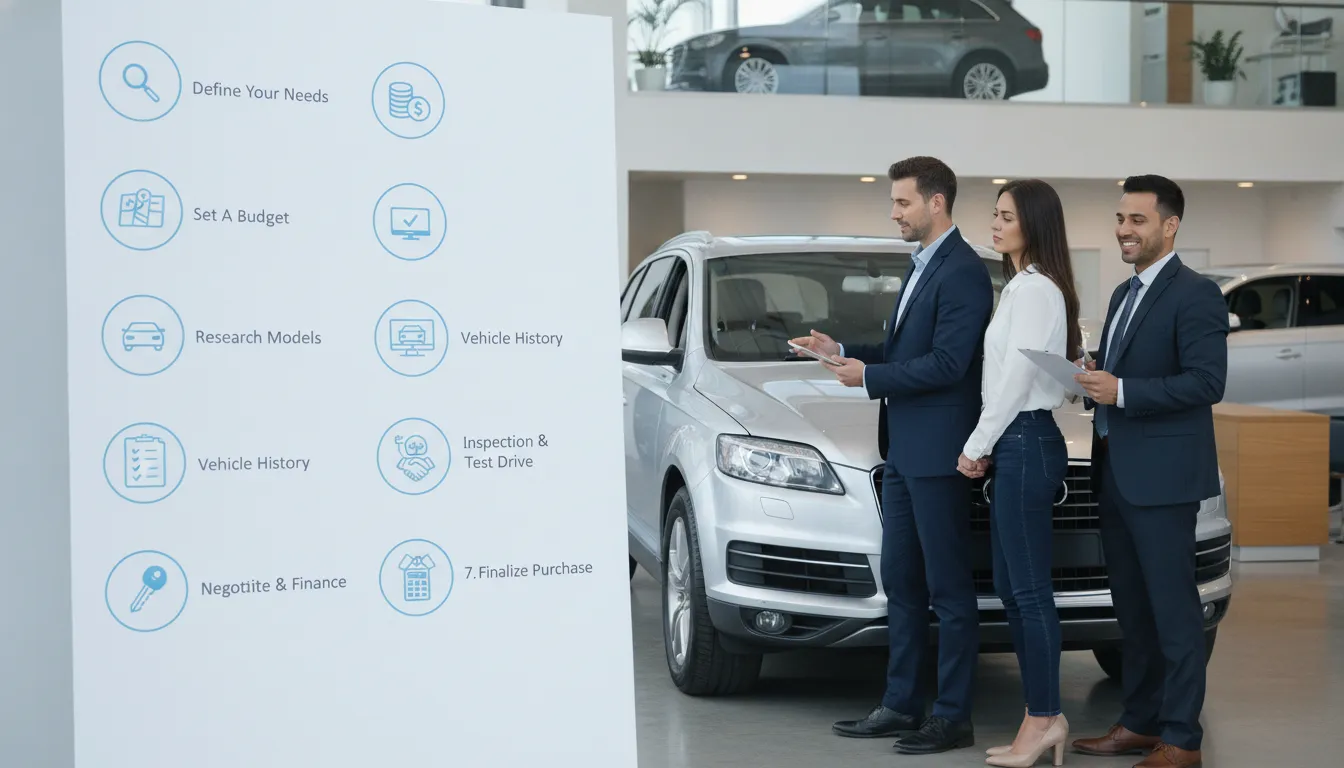
The right used SUV should feel comfortable on your daily routes and practical for the people and gear you carry. A compact crossover may suit a city commuter, while a three-row SUV may work better for a growing family. Drivers who regularly visit the mountains may need all-wheel drive, quality tires, added ground clearance, or towing equipment. Learning how to choose a used SUV means matching the vehicle to your actual needs instead of relying on size, badges, or appearance alone. Before you visit a dealership, consider your passengers, cargo, parking space, financing range, and expected driving conditions. Then use those details to compare Royal Automotiveu00e2u0080u0099s available inventory in Englewood.
Key Takeaways
- Match the SUV to your routine: Assess passenger space, cargo needs, parking, fuel economy, drivetrain, towing, and Colorado driving conditions before choosing a model.
- Calculate the full ownership cost: Include the purchase price, taxes, fees, financing, insurance, fuel, maintenance, repairs, tires, registration, and emissions expenses in your budget.
- Verify condition and paperwork: Review the VIN history, inspect the SUV, take a thorough test drive, confirm the financing terms, and arrange an independent inspection before signing.
How Do You Choose the Right Used SUV?
The right used SUV depends on more than its make, model, or advertised price. A vehicle that suits one Denver driver may feel too large, expensive, or limited for another. Start with your daily routine, then compare size, features, drivetrain, safety, and long-term ownership costs.
Before visiting a dealership, write down your regular passengers, typical cargo, parking situation, commute, and weekend plans. This list gives you a practical starting point and helps you focus on SUVs that fit your life. You can then browse Royal Automotiveu00e2u0080u0099s used SUV inventory with clearer priorities.
Define how youu00e2u0080u0099ll use the SUV
Think about your everyday driving first. Will the SUV mainly carry one or two people through city traffic, or will it regularly transport children, pets, sports equipment, and luggage? A compact SUV may work well for commuting and errands, while a midsize or full-size model may provide more room for larger households and road trips.
Consider how often you drive on highways, steep roads, gravel, or mountain routes. If you tow a trailer, carry bikes, or transport bulky gear, check the SUVu00e2u0080u0099s towing capacity and cargo measurements. Do not assume that a larger vehicle automatically offers the capability you need. Your driving habits can help determine the ideal engine, drivetrain, seating layout, and cargo configuration.
Match the SUV size to passengers, car seats, cargo, and parking
SUV size affects passenger comfort, cargo space, maneuverability, and parking. A compact SUV is often easier to handle on busy streets and in smaller spaces. A midsize SUV may provide a useful balance, with more rear-seat and cargo room without the footprint of a full-size model.
If you use car seats, bring them to the dealership for a test fit. Check rear-seat width, door openings, seat-belt access, and lower-anchor placement. Families should also measure strollers, coolers, musical instruments, or other items they regularly carry. For a three-row SUV, sit in the third row and test how easily passengers can reach it. Confirm that the SUV fits your garage, parking space, and usual routes.
Separate must-have and nice-to-have features
Create two feature lists before you shop. Must-haves might include all-wheel drive, a backup camera, heated seats, room for two car seats, or a specific towing capacity. Nice-to-have features could include a panoramic sunroof, premium audio, leather upholstery, or a hands-free liftgate.
This distinction keeps appealing extras from leading you toward an SUV that misses your basic requirements. Pay close attention to safety and visibility features, including automatic emergency braking, blind-spot monitoring, adaptive cruise control, and lane-departure warnings. Equipment can vary by trim and model year, so verify the exact features included on the vehicle you are considering.
Compare fuel economy, engines, hybrids, and ownership costs
Fuel economy is important, but it represents only one part of the ownership cost. Compare estimated fuel use with your annual mileage, local fuel prices, insurance premiums, maintenance needs, tire costs, and likely repairs. The EPA fuel economy website can help you compare different SUVs and powertrains.
Consider how each engine fits your needs. A smaller turbocharged engine may use less fuel, while a larger engine may provide stronger acceleration or towing performance. A hybrid SUV may reduce fuel use in certain conditions, but an older hybrid deserves a closer look at battery age, service history, and replacement costs. Review the maintenance schedule for the specific model year and ask for available service records.
Choose FWD, AWD, or 4WD for Denver driving
Front-wheel drive, or FWD, may suit commuting, errands, and ordinary road conditions. It is often lighter than an equivalent all-wheel-drive system and may use less fuel. All-wheel drive, or AWD, can help distribute power when road surfaces change, making it useful for steep roads, winter trips, and some unpaved routes.
Four-wheel drive, or 4WD, is designed for more demanding conditions, particularly when it includes low-range gearing. It may be appropriate for serious off-road driving or certain towing needs, but it can add weight, fuel costs, and maintenance requirements. Review Coloradou00e2u0080u0099s traction law information before mountain travel. No drivetrain replaces quality tires and cautious driving.
Consider snow, mountain trips, towing, off-road use, and city traffic
Match the SUV to the conditions you expect to encounter. For regular snow or mountain trips, examine ground clearance, tire condition, braking performance, drivetrain operation, and available winter-driving modes. An AWD badge alone does not guarantee confident handling on slick roads.
If you tow, verify the rated capacity, hitch equipment, trailer-brake setup, payload limit, and cooling requirements. For off-road driving, consider ground clearance, approach and departure angles, skid protection, and tire type. City drivers may place greater value on a tight turning radius, parking sensors, strong visibility, and smooth low-speed control. During the test drive, check that acceleration feels consistent and the transmission shifts without hesitation.
Compare NHTSA and IIHS safety ratings by model year
Safety ratings can change between model years, generations, and trim levels. Compare the exact year and configuration you are considering through NHTSA vehicle safety ratings and IIHS vehicle ratings. Reviewing both sources gives you a broader view of crash performance and available safety technology.
Look beyond the overall score. Review individual crash-test results, headlight performance, child-seat usability, rollover ratings, and front-crash prevention evaluations when available. Confirm that the tested vehicle includes the same equipment as the SUV you are viewing. A safety feature may be standard on one trim and optional on another, so compare the window sticker, owneru00e2u0080u0099s manual, and vehicle identification number.
Check driver-assistance features, visibility, comfort, and accessibility
Test every feature you expect to use regularly. Confirm that the backup camera displays clearly, parking sensors respond correctly, and blind-spot alerts appear where you can easily see them. If the SUV includes adaptive cruise control or lane assistance, ask how each system works and whether its settings can be adjusted.
Visibility matters just as much as technology. Check your sightlines over the hood, through the rear glass, and around the side pillars. Sit in every seating position and assess legroom, headroom, seat support, door access, and step-in height. Test the climate controls, windows, locks, lights, infotainment system, and charging ports. A vehicle can look impressive on paper and still feel uncomfortable in daily use, so take your time during the test drive.
How Much Should You Budget for a Used SUV?
The purchase price is only one part of your used SUV budget. Before you shop, account for the down payment, monthly loan payment, insurance, fuel, routine service, repairs, taxes, title, registration, and dealer fees. Larger SUVs and luxury models may cost more to operate, even when their purchase prices seem manageable.
Start with a maximum out-the-door price, then estimate your ongoing ownership costs. This approach helps you compare SUVs based on what they will really cost, not just the number shown on the windshield. Royal Automotiveu00e2u0080u0099s financing resources can help you review preapproval and payment options before visiting the dealership.
Set an out-the-door price limit
Set your spending limit around the SUVu00e2u0080u0099s total purchase cost, not its advertised price. The out-the-door amount may include the vehicle price, taxes, title and registration fees, dealer processing fees, optional protection plans, and other charges listed in the buyeru00e2u0080u0099s order.
Leave room for the down payment and your first few months of ownership. If you plan to sell or trade in your current vehicle, estimate its value separately and confirm how the trade affects the amount you need to finance. You can review Royal Automotiveu00e2u0080u0099s used SUV inventory to compare prices across different makes, model years, mileage ranges, and trim levels.
A firm price limit keeps your search focused and reduces the chance of choosing an SUV that stretches your finances. Share your target range with the dealership early, then ask for a written out-the-door figure before you make a decision.
Estimate fuel, insurance, maintenance, tires, taxes, and registration
Your monthly payment does not show the complete cost of owning an SUV. Estimate fuel expenses based on your typical driving, the vehicleu00e2u0080u0099s fuel economy, and local gasoline prices. A three-row SUV, turbocharged model, or luxury vehicle may use more fuel than a smaller crossover.
Insurance premiums vary by model, age, safety equipment, driving record, coverage level, and location. Ask your insurer for a quote using the vehicle identification number before you buy. You should also plan for oil changes, filters, brake service, tires, batteries, fluids, and seasonal maintenance.
Taxes, title costs, and registration add to the purchase total. Ask for a written breakdown so you know which charges are included in the transaction and which costs you will pay through the state or county. Adding these expenses to your budget early makes it easier to compare SUVs accurately.
Account for Colorado fees and emissions requirements
Colorado buyers should budget for registration costs, ownership taxes, title fees, and applicable emissions requirements. The exact amount can depend on the vehicleu00e2u0080u0099s age, weight, taxable value, county, and registration location. Review the Colorado DMVu00e2u0080u0099s title and registration information for current guidance.
If you live in the Denver metro area, check whether the SUV needs an emissions test before registration. Requirements can vary by county and vehicle type. The Colorado emissions testing information explains where testing applies and what owners should know.
Ask the dealership whether the SUV has already completed any required emissions testing and whether the related paperwork is included. These costs may not appear in the advertised price, so adding them to your initial estimate can prevent surprises after you purchase the vehicle.
Compare down payments, APRs, loan terms, and total interest
A larger down payment can reduce the amount you borrow, but avoid using every dollar you have available. Keep enough cash for insurance, registration, maintenance, and unexpected repairs. Compare different down-payment amounts to see how each one affects your monthly payment and total loan cost.
The annual percentage rate, or APR, affects how much interest you pay over the life of the loan. A longer term may reduce the monthly payment, but it can increase total interest and leave you owing more on the SUV for a longer period.
Use a loan calculator to compare the amount financed, APR, loan term, monthly payment, and total interest. When reviewing an offer, ask whether the quoted payment includes taxes, fees, warranties, or other products. Comparing complete loan terms gives you a clearer picture than looking at the payment alone.
Get financing pre-approval before shopping
Financing preapproval gives you a clearer price range before you compare vehicles. A lender may provide an estimated loan amount, APR, and term based on your credit and financial information. You can then compare dealership financing with the offer you already have.
Preapproval does not require you to accept that lenderu00e2u0080u0099s loan. It simply gives you a reference point for discussing terms and may make the buying process more efficient. Compare the APR, amount financed, loan term, monthly payment, and total interest rather than focusing only on the approved amount.
Royal Automotive offers financing and preapproval options for shoppers who want to review their choices before selecting a vehicle. Bring your budget, proof of income, insurance information, and lender details if you have them. Having these documents ready can help reduce delays when you move from choosing an SUV to finalizing the financing.
Reserve funds for repairs and scheduled maintenance
Even a well-maintained used SUV may need service after you buy it. Review the manufactureru00e2u0080u0099s maintenance schedule for the specific model year and engine. Common expenses include oil and filter changes, brake pads and rotors, tires, wheel alignment, fluids, batteries, and spark plugs.
Older SUVs and higher-mileage vehicles may need larger services soon, such as transmission fluid replacement, cooling-system work, suspension repairs, or timing belt service. All-wheel-drive and four-wheel-drive vehicles also include components such as transfer cases and differentials that require inspection and maintenance.
Ask for available service records and find out what work the dealership completed during reconditioning. Set aside money for unexpected repairs instead of assuming every issue will be covered. A written estimate from a trusted mechanic can help you plan for near-term service before you commit to the SUV.
Weigh warranty coverage, depreciation, and resale value
Warranty coverage can affect the value of a used SUV, but read the terms carefully. Find out which components are covered, how long the coverage lasts, whether a deductible applies, and which repairs are excluded. An optional service contract may suit some drivers, but include its cost in your total purchase calculation.
Depreciation also matters. Some SUVs retain their value better because of demand, reliability history, fuel costs, equipment, and brand reputation. A vehicle with a lower purchase price is not always the least expensive choice if it loses value quickly or requires costly repairs.
Compare the SUVu00e2u0080u0099s mileage, maintenance records, condition, accident history, drivetrain, and model-year reputation. If you may sell or trade the vehicle in a few years, consider how these factors could affect its future value. Resale value should not outweigh every other priority, but it belongs in your ownership-cost estimate.
Avoid choosing based only on the monthly payment
A low monthly payment can seem appealing, but it may result from a longer loan term, a larger down payment, or a higher total purchase price. Before making a decision, ask for the out-the-door price, APR, loan term, amount financed, and total interest.
Extending a loan can reduce the payment while adding interest over several years. Rolling taxes, fees, warranty products, or an old loan balance into the new loan can also increase the amount you owe. Those details may be difficult to see when the conversation centers on one payment figure.
Compare at least two complete financing scenarios. Then add estimated insurance, fuel, maintenance, registration, and repairs to see whether the SUV fits your actual budget. Choosing a vehicle you can comfortably afford matters more than choosing the most expensive SUV a lender is willing to finance.
Which Used SUVs Offer Reliable Value?
Reliable value comes from more than choosing a familiar badge. The right used SUV should suit your daily routine, fit your budget, and show signs of consistent care. A low purchase price may not be a bargain if the vehicle needs tires, brakes, major service, or drivetrain repairs soon after you buy it.
Start by comparing practical models, then look closely at the specific year, engine, transmission, drivetrain, mileage, trim, and ownership history. These details can affect fuel economy, comfort, safety, resale value, and repair costs. It is also worth comparing the SUVu00e2u0080u0099s asking price with similar local listings, not just online pricing guides.
Royal Automotive can help Denver-area shoppers review available SUVs and discuss financing or trade-in options. You can view Royal Automotiveu00e2u0080u0099s used SUV inventory and create a shortlist based on your preferred price range, body style, mileage, and features.
Start with Royal Automotiveu00e2u0080u0099s inspected SUV inventory
Royal Automotive serves Englewood, Denver, and nearby Colorado communities with used cars, trucks, and SUVs. Its inventory includes practical brands such as Toyota, Honda, Subaru, Jeep, Chevrolet, Ford, and Nissan, along with luxury makes including BMW and Mercedes-Benz. Browse the current vehicle inventory to compare available SUVs, prices, mileage, trims, and equipment.
Royal Automotive says its used vehicles are mechanically inspected and serviced by professional mechanics. Ask for details about the inspection, completed repairs, upcoming maintenance, and any warranty coverage. A dealership inspection is a helpful starting point, but it does not replace a vehicle history review, test drive, or independent inspection when appropriate.
Compare the Toyota RAV4, Honda CR-V, Mazda CX-5, and Subaru Forester
The Toyota RAV4, Honda CR-V, Mazda CX-5, and Subaru Forester are popular compact SUVs because they combine useful cargo space, comfortable seating, and manageable dimensions. Each model has a different focus, so compare the exact model year instead of treating every version as interchangeable.
A RAV4 may suit buyers who value fuel efficiency, available hybrid power, and strong resale demand. The CR-V offers practical cargo space and family-friendly comfort. The CX-5 often appeals to drivers who prefer responsive handling and an upscale cabin. The Forester provides good visibility, a roomy interior, and available all-wheel drive for Colorado roads.
Check Consumer Reportsu00e2u0080u0099 car ratings and other reliable sources for the specific year you are considering. Reliability can change between generations and powertrain configurations.
Consider the Chevrolet Equinox, Ford Escape, and Nissan Rogue for practical value
The Chevrolet Equinox, Ford Escape, and Nissan Rogue are worth considering when you want a compact SUV with a broad selection of used examples. Depending on the year, each may offer comfortable seating, useful technology, available all-wheel drive, and dimensions that work well for city parking.
Compare the powertrains carefully. The Ford Escape has been available with gas, hybrid, and plug-in hybrid systems, while the Nissan Rogue has used different engines and transmissions across generations. Chevrolet Equinox engine options and equipment also vary by year. These differences can affect acceleration, fuel economy, maintenance, and repair costs.
Before making an offer, check the vehicle identification number for open recalls through the NHTSA recall database. Confirm whether any required repairs have been completed, and ask the dealership for supporting records when available.
Evaluate the Toyota Highlander, Kia Sorento, and Toyota 4Runner for added space or capability
If a compact SUV feels cramped, compare midsize models such as the Toyota Highlander and Kia Sorento. They can provide more passenger room, larger cargo areas, and available third-row seating. Do not assume every third row will work for your household. Bring the people who will use it and check legroom, access, and cargo space with all seats in place.
The Toyota 4Runner serves a different purpose. Its body-on-frame construction and available four-wheel-drive equipment may appeal to drivers who regularly travel mountain roads, trails, or rough terrain. That capability can mean lower fuel economy, a firmer ride, and higher prices for well-maintained examples.
If towing or off-road use matters, inspect the hitch, underbody, suspension, transfer case, and differentials. Ask whether the SUV was used for frequent towing or demanding trail driving, since that use can affect wear.
Consider the Audi Q5, BMW X3, and Mercedes-Benz GLC alongside higher repair costs
The Audi Q5, BMW X3, and Mercedes-Benz GLC can offer quiet cabins, upscale materials, responsive handling, and advanced technology. A well-maintained luxury SUV may provide a comfortable choice for commuting around Denver or taking longer Colorado trips.
The purchase price tells only part of the story. Luxury SUVs may cost more to maintain because of specialized parts, electronic systems, turbocharged engines, larger wheels, complex suspensions, and all-wheel-drive components. Tires, brakes, scheduled services, and diagnostic work may also cost more than comparable work on a mainstream SUV.
Review the maintenance schedule and request complete service records. Research likely expenses with sources such as RepairPalu00e2u0080u0099s maintenance cost information, then ask a qualified mechanic to assess the specific vehicle. If records are incomplete, keep additional funds available for deferred maintenance.
Compare model years, generations, engines, transmissions, and drivetrains
A model name does not tell you everything about a used SUV. A redesign may introduce different safety equipment, cabin dimensions, engines, transmissions, and reliability concerns. Even within one generation, a mid-cycle update can change the infotainment system, driver-assistance features, or available powertrains.
Create a shortlist of specific model years and compare each one separately. Review the engine type, transmission, drivetrain, towing capacity, fuel economy, recalls, and standard safety features. Pay close attention to turbocharged engines, continuously variable transmissions, hybrid systems, and four-wheel-drive components, since their service needs may differ.
Use the IIHS vehicle ratings to compare crash protection and safety equipment by model year. Verify the SUVu00e2u0080u0099s actual trim and optional packages because listings do not always include every feature accurately.
Weigh mileage, service records, trim, ownership history, and resale value
Mileage matters, but it should not be your only measure of condition. An SUV with higher mileage and consistent service records may be a better purchase than a lower-mileage vehicle with missed oil changes, neglected tires, or overdue major maintenance. Look for documentation covering fluid changes, brake work, tire replacement, and timing-belt service when applicable.
Ownership history adds useful context. An SUV used mainly for commuting may show different wear than one used for towing, rideshare driving, or frequent mountain trips. Review the trim level, too. A higher trim may include desirable comfort and safety features, but larger wheels, advanced electronics, and specialized components can raise replacement costs.
When comparing resale value, match the year, trim, drivetrain, mileage, and condition as closely as possible. A vehicle history report can help verify reported accidents, ownership changes, and mileage, but it should support a physical inspection rather than replace one.
Check common issues and maintenance costs for the specific model year
After finding a promising SUV, research recurring problems associated with its exact model year, engine, and transmission. Look for patterns involving the cooling system, electrical components, suspension, brakes, air conditioning, engine, transmission, and all-wheel-drive system. Compare multiple sources, since one isolated complaint does not establish a problem with every vehicle.
Review the manufactureru00e2u0080u0099s maintenance schedule and estimate upcoming services. If the SUV is near a major mileage interval, include that work in your budget and use it during price discussions. Request estimates for common replacement items such as tires, brakes, batteries, belts, and fluids.
Progressiveu00e2u0080u0099s used-car buying guidance offers additional questions about vehicle condition, value, and ownership costs. Bring your findings to Royal Automotive and ask which services have been completed, what may be due soon, and whether the SUV can be reviewed by an independent mechanic before purchase.
How Can You Research and Compare Used SUVs?
Comparing used SUVs is easier when you evaluate each one with the same checklist. Start with how you plan to use the vehicle, then review reliability, safety, ownership costs, market value, and condition. This approach keeps you focused on practical fit instead of getting distracted by a favorite color, a long feature list, or a particularly appealing monthly payment.
Create one comparison sheet for every SUV you consider. Record the VIN, model year, trim, mileage, drivetrain, asking price, service history, vehicle history, inspection notes, and included equipment. You can compare SUVs in Royal Automotiveu00e2u0080u0099s inventory with similar vehicles listed by other Denver-area dealerships.
A thorough comparison also helps you identify questions to ask before scheduling a test drive. If two SUVs have similar prices, details such as maintenance records, tire condition, safety technology, fuel economy, and warranty coverage may make one a much stronger choice.
Build a shortlist around your needs and budget
Start with three to five SUVs that meet your basic requirements. Consider how many people you regularly carry, whether you need room for child seats or pets, and how much cargo you transport. A compact SUV may be easier to park around Denver, while a midsize or three-row model may be more comfortable for families and road trips.
Set a maximum out-the-door budget rather than focusing only on the advertised price. Include financing, insurance, fuel, maintenance, tires, registration, taxes, and potential repairs. Decide whether you need all-wheel drive, towing capability, extra ground clearance, or a hybrid powertrain before comparing individual vehicles. Credit Acceptance recommends considering passenger capacity, cargo needs, climate, terrain, and intended use when evaluating a used SUV.
Check model-year reliability ratings and common issues
Reliability can vary between model years, even when two SUVs share the same name. Research the exact year, generation, engine, transmission, and drivetrain. A modelu00e2u0080u0099s overall reputation may not reflect a specific yearu00e2u0080u0099s mechanical or electrical concerns.
Look for repeated reports involving the engine, transmission, cooling system, suspension, brakes, electrical system, or driver-assistance equipment. Check whether a concern led to a recall, a manufacturer service bulletin, or a redesigned component. Owner forums can point you toward patterns, but one driveru00e2u0080u0099s experience does not represent every vehicle.
Use several sources, including professional reliability data, maintenance information, and the SUVu00e2u0080u0099s service records. A vehicle with a known issue that was properly repaired may be a better purchase than a lower-mileage SUV with gaps in its history.
Read owner reviews and independent road tests
Owner reviews can reveal what it is like to live with an SUV after the excitement of the test drive fades. Look for comments about seat comfort, visibility, cabin noise, technology, winter traction, fuel economy, and recurring repairs. Give more weight to reviews from drivers with similar commutes, families, climates, and mileage expectations.
Independent road tests provide another useful perspective. Professional reviewers often compare acceleration, braking, handling, ride quality, cargo access, and interior practicality. Read reviews for the specific model year and trim because engines, equipment, and safety features can change over time.
Resources such as U.S. News & World Reportu00e2u0080u0099s car reviews and Consumer Reports can help you compare reliability information, owner satisfaction, and road-test observations. Use those findings to create questions for the dealership instead of treating any single rating as the final answer.
Compare dimensions, cargo space, fuel economy, towing, and safety features
Manufacturer specifications offer a useful starting point, but focus on measurements that affect your routine. Check the SUVu00e2u0080u0099s exterior length and width if you park in a garage or use crowded city streets. Review rear-seat legroom, cargo capacity behind each seating row, lift-over height, and whether the rear seats fold flat.
Compare fuel economy by engine and drivetrain. An all-wheel-drive model may use more fuel than a front-wheel-drive version, while a hybrid may reduce fuel costs in stop-and-go traffic. Check the recommended fuel grade, too, especially when comparing mainstream and luxury SUVs.
If you plan to tow, verify the rated capacity and confirm that the SUV includes the correct hitch, wiring, cooling equipment, and towing package. Then compare safety equipment such as blind-spot monitoring, automatic emergency braking, adaptive cruise control, lane-keeping assistance, parking sensors, and a backup camera.
Review NHTSA recalls and IIHS crash-test results
Safety ratings can differ by model year, trim, and body style. Search the SUVu00e2u0080u0099s VIN in the NHTSA recall database to identify open safety recalls. Ask whether recall repairs have been completed, and request documentation when it is available. A recall does not automatically make a vehicle a poor choice, but an unresolved safety repair deserves attention before purchase.
Review crash-test results and safety evaluations from the Insurance Institute for Highway Safety. Look beyond the overall rating and compare results for front crashes, side impacts, headlights, child-seat anchors, pedestrian protection, and crash-avoidance systems.
Check whether a safety feature was standard or optional for the model year and trim you are considering. Two SUVs with the same name may have different equipment, so verify the actual vehicle rather than relying on a general model description.
Check maintenance schedules, parts costs, insurance, and warranty options
Compare the recommended maintenance schedule for every SUV on your shortlist. Note when the manufacturer calls for oil changes, transmission fluid replacement, spark plug replacement, coolant service, belt replacement, and all-wheel-drive system maintenance. Ask to see service records and look for consistent care over time.
Parts and labor costs can vary by brand, engine, drivetrain, and vehicle age. Request estimates for common items such as tires, brakes, batteries, scheduled services, and suspension components. Insurance premiums may also differ based on repair costs, theft rates, safety equipment, and your driving profile.
Review any remaining factory warranty, dealer-backed coverage, or available service contract. Confirm what the plan covers, where repairs can be completed, whether a deductible applies, and whether exclusions limit coverage for wear items. Royal Automotive can explain available financing and vehicle details as you compare options through its financing resources.
Compare fair-market values with local listings and Royal Automotiveu00e2u0080u0099s inventory
Research an SUVu00e2u0080u0099s estimated market value before discussing the price. Compare vehicles with the same model year, trim, engine, drivetrain, mileage range, and major equipment. A low-mileage SUV with a clean history and recent service may reasonably cost more than a similar vehicle with higher mileage or incomplete records.
Local listings can help you understand pricing across the Denver-Metro area. Compare the complete vehicle, not just the advertised price. Review dealer fees, included equipment, reconditioning, warranty coverage, tires, inspection information, and service records.
You can also compare available models in Royal Automotiveu00e2u0080u0099s used SUV inventory. The dealership offers inspected pre-owned vehicles from brands including Toyota, Chevrolet, Ford, Nissan, Audi, BMW, and Mercedes-Benz. Comparing similar vehicles side by side can help you identify whether differences in price reflect mileage, trim, condition, or included services.
Score each SUV for price, mileage, features, history, and condition
Create a simple scorecard so one appealing feature does not outweigh several concerns. Rate each SUV for purchase price, mileage, service records, accident history, safety equipment, fuel economy, comfort, cargo space, and overall condition. Add notes about tires, brakes, warning lights, fluid leaks, cosmetic repairs, and missing equipment.
A five-point scale works well, or you can label each category as strong, acceptable, or concerning. Give more weight to the factors that matter most to you. A Denver commuter may prioritize winter traction, fuel costs, and reliability, while a family may place greater importance on third-row access, cargo space, and safety technology.
Use the scorecard as a screening tool, not a substitute for inspecting the vehicle. Confirm your findings with a vehicle history report, a thorough test drive, and an independent pre-purchase inspection before making your decision.
Check the Used SUVu00e2u0080u0099s History Report
A vehicle history report gives you a clearer picture of a used SUV before you spend time negotiating or arranging financing. It may show accident records, title brands, odometer readings, registration events, ownership changes, reported damage, and some service history. These details are especially helpful when comparing SUVs with different model years, mileage, and price points.
Ask for the report before making an offer, then compare it with the SUV, its paperwork, and the selleru00e2u0080u0099s description. Royal Automotiveu00e2u0080u0099s inspected used SUV inventory gives Denver-area shoppers a place to begin, but every vehicle still deserves a careful review. Ask the team about the SUVu00e2u0080u0099s inspection, reconditioning, service records, and title status before you schedule a test drive.
A history report is not a substitute for a physical inspection. Use it alongside a walk-around, test drive, maintenance review, and independent pre-purchase inspection.
Get a VIN-based report before making an offer
Request a vehicle history report using the SUVu00e2u0080u0099s Vehicle Identification Number, or VIN. The report may include accident records, title events, odometer readings, registration history, reported damage, and service entries. It may also identify previous use as a rental, fleet vehicle, or commercial vehicle.
Review the report before discussing your offer. If it shows a major accident, inconsistent mileage, or a branded title, you can ask specific questions before moving forward. The Federal Trade Commissionu00e2u0080u0099s used-car buying guidance recommends checking a vehicleu00e2u0080u0099s history and arranging an independent inspection before purchase.
If a report is unavailable, incomplete, or significantly different from the selleru00e2u0080u0099s description, pause the transaction until you understand why.
Match the 17-character VIN to the vehicle and paperwork
A VIN is a 17-character code assigned to a specific vehicle. You can usually find it on the driveru00e2u0080u0099s side dashboard near the windshield and inside the driveru00e2u0080u0099s doorjamb. It should also appear on the title, registration, insurance documents, history report, buyeru00e2u0080u0099s order, and financing paperwork.
Compare every character carefully. One incorrect letter or number may be a simple paperwork mistake, but it can also point to a more serious ownership or identity concern. Do not rely on a quick glance, since similar characters can be easy to confuse.
Check whether the dashboard VIN plate is damaged, loose, altered, or difficult to read. If anything looks unusual, ask for an explanation before continuing. The VIN on the final purchase documents should match the SUV you inspected and test-drove.
Check the title, lien information, and brand history
The title shows the vehicleu00e2u0080u0099s legal status and may identify a lender or another party with a lien. Ask who holds the title, whether the lien has been released, and how the title transfer will be handled. A dealership should be able to explain the process and provide the documents required for registration.
Review the title brand history carefully. Terms such as salvage, rebuilt, flood, fire, or lemon-law buyback can affect the SUVu00e2u0080u0099s value, insurance options, financing, and future resale. Coloradou00e2u0080u0099s title requirements are available through the Colorado Division of Motor Vehicles.
The title, history report, and selleru00e2u0080u0099s explanation should tell the same story. If they do not, ask questions before leaving a deposit or signing a purchase agreement.
Look for salvage, rebuilt, flood, fire, and other title records
A branded title may indicate that an insurer or state agency considered the vehicle a total loss. That can happen after a serious collision, flood, fire, theft recovery, or another major event. A rebuilt title means the SUV was repaired after receiving a salvage designation, but it does not confirm that the repairs restored the vehicle to its original condition.
Look for title brands in the report and request documentation about the original damage and repairs. During your inspection, check for corrosion in unusual areas, water stains, damp carpeting, damaged wiring, mismatched paint, or a lasting musty smell.
Some damage may not appear in a history report if the owner paid for repairs privately or did not report the incident. For that reason, a professional inspection is particularly important when the report contains gaps or the SUV shows signs of previous repairs.
Review accidents, damage, airbag deployment, and structural repairs
Read the accident section carefully instead of focusing only on the number of reported incidents. Look for the impact location, damage severity, airbag deployment, towing, structural repairs, and any indication that the SUV was declared a total loss.
A repaired bumper is not the same as damage to the frame, suspension mounting points, crumple zones, or other structural components. During the walk-around, compare the report with the vehicleu00e2u0080u0099s condition. Uneven panel gaps, mismatched paint, overspray, replacement headlights, and uneven tire wear may suggest previous repair work.
Ask whether airbags and seat belt pretensioners were replaced after a collision. Progressiveu00e2u0080u0099s used-car buying guide also recommends reviewing accident history and arranging an inspection before purchasing.
Compare mileage, ownership changes, registration, and vehicle use
Compare the mileage in the report with the odometer, service invoices, inspection records, and registration entries. A mileage decrease, unexplained gap, or sudden jump deserves a clear explanation. The SUVu00e2u0080u0099s wear should also match the reported mileage. Heavily worn pedals, seats, steering wheel, or cargo area may suggest more use than the records indicate.
Review how many times the SUV changed owners and which states recorded its registration. Frequent transfers can have reasonable explanations, but they are worth discussing. Pay attention to whether the vehicle was used personally, commercially, as a rental, or by a fleet.
Vehicle use can affect wear on the brakes, suspension, interior, and drivetrain. An SUV that spent years in city traffic may have different maintenance needs from one used primarily for highway driving. Ask how the vehicle was used when the history report does not provide enough detail.
Look for service records, inspections, and maintenance gaps
Service records help you see how consistently the SUV was maintained and which major items may be due soon. Look for oil changes, brake work, tire replacements, coolant service, transmission maintenance, battery replacement, and scheduled inspections. For an AWD or 4WD SUV, ask about differential and transfer-case service.
Long gaps in the records deserve attention. Missing paperwork does not automatically mean the vehicle was neglected, since some owners perform maintenance without saving receipts. Still, incomplete records make it harder to confirm what has been done.
Compare the available service history with the manufactureru00e2u0080u0099s schedule for that specific model year, engine, transmission, and drivetrain. Ask whether the dealership completed additional reconditioning before listing the SUV. If maintenance is overdue or cannot be verified, include that cost in your budget before making an offer.
Verify open safety recalls through the NHTSA database
Search the SUVu00e2u0080u0099s VIN in the National Highway Traffic Safety Administration recall database to check for unresolved safety recalls. A VIN search can identify recalls connected to that specific SUV, rather than showing only general recalls for the same make and model.
Review the recall description, affected component, and repair status. Ask whether the dealership will complete any open recall repairs before delivery and whether you will receive documentation. Manufacturer recall repairs are commonly completed at no charge through an authorized dealer, but confirm the process before purchasing.
Also distinguish between a safety recall, a service campaign, and a routine repair. These may have different eligibility rules and costs. If the database does not return a result, continue with the rest of your inspection because a recall search does not confirm the SUVu00e2u0080u0099s overall mechanical condition.
Treat a clean report as a starting point, not a guarantee
A clean history report is a positive sign, but it does not prove that an SUV has never been damaged or that every mechanical system works properly. Reports depend on information from insurers, repair shops, law enforcement agencies, state offices, and other sources. Privately repaired damage may never be recorded.
Use the report to create a list of questions, then verify the answers through a walk-around, test drive, service records, and an independent pre-purchase inspection. Ask a qualified mechanic to examine the engine, transmission, suspension, brakes, underbody, electrical systems, and signs of water damage.
If the report, vehicle condition, and selleru00e2u0080u0099s explanation agree, you can make a more informed decision. If they conflict, ask for documentation and additional inspection before proceeding with the purchase.
Inspect and Test-Drive the Used SUV
Photos and a vehicle listing can tell you a lot, but they cannot show every detail. A careful walk-around and test drive can reveal signs of wear, previous repairs, mechanical concerns, or features that do not work as expected.
Bring a flashlight, inspect the SUV in daylight when possible, and give yourself enough time to look closely. You do not need to diagnose every issue yourself. Focus on noticing anything unusual, asking direct questions, and deciding whether the SUV should receive a professional inspection. The Federal Trade Commissionu00e2u0080u0099s used-car guidance also recommends reviewing the vehicle history and having a qualified mechanic inspect the vehicle before purchase.
If you are shopping at Royal Automotive, ask about the SUVu00e2u0080u0099s inspection process, service records, reconditioning, and any known repairs before you begin your test drive.
Examine paint, panel gaps, glass, lights, trim, and repair signs
Walk around the SUV slowly and view it from several angles. Look for paint that appears darker, glossier, or rougher on one panel than another. Uneven panel gaps, crooked trim, overspray on rubber seals, and mismatched fasteners can indicate previous body repairs.
Check the windshield and other glass for cracks, chips, and cloudy areas. Inspect the headlights, taillights, mirrors, roof rails, badges, and exterior trim for damage or loose pieces. Small cosmetic marks are not always a reason to walk away, especially on an older SUV, but ask whether larger imperfections resulted from an accident and whether the repairs were completed properly.
Check tires, wheels, brakes, suspension, underbody, and rust
Inspect all four tires, including the spare if the SUV has one. Tread should wear evenly across each tire. Uneven wear may point to alignment, suspension, or tire-pressure issues. Check the sidewalls for cracks, bulges, and old date codes. Look at the wheels for bends, heavy curb damage, or missing center caps.
Through the wheel openings, look for deeply scored brake rotors, damaged components, and signs of leaking fluid. If you can safely view the underbody, check for severe rust, bent metal, loose covers, or fresh repairs. Surface rust can be common, but extensive corrosion deserves a closer inspection, especially on a vehicle driven in snowy conditions.
Look for fluid leaks, worn hoses, corrosion, and poor fluid condition
With the SUV parked, look underneath for fresh drops or wet areas. Clear water near the front may come from the air-conditioning system, while dark oil, red fluid, green coolant, or a strong fuel odor requires further attention. Do not touch unknown fluids. Ask the dealership to explain anything you find.
With the engine cool, inspect visible hoses and belts for cracking, fraying, swelling, or corrosion around their connections. Fluid levels should be appropriate for the vehicle, and severe discoloration or a burnt smell may suggest neglected maintenance. A clean engine bay does not prove that every system is in good condition, so ask to see service documentation.
Inspect the cabin for water stains, musty odors, and uneven wear
Open every door and inspect the carpets, floor mats, seats, headliner, and cargo area. Water stains, damp carpeting, peeling material, or a persistent musty smell can indicate leaks or previous water damage. Check under the cargo floor if the design allows, since moisture can collect around the spare-tire well.
Compare wear across the cabin. A heavily worn driveru00e2u0080u0099s seat, steering wheel, pedals, and door handle may be reasonable on a high-mileage SUV, but excessive wear on a low-mileage vehicle deserves an explanation. Inspect the seat belts, child-seat anchors, and door seals, too. A clean cabin is appealing, but hidden moisture and neglected safety equipment deserve greater attention.
Start the SUV cold and listen for smoke, knocks, squeals, or rough idling
Ask whether you can start the SUV before it has been warmed up. A cold start can reveal sounds that disappear once the engine reaches operating temperature. Watch the exhaust as the engine starts, and listen for knocking, rattling, ticking, squealing, or a high-pitched whine.
The engine should settle into a consistent idle without shaking excessively or stalling. Blue smoke may suggest oil consumption, while thick white smoke after warm-up or heavy black smoke can indicate other engine concerns. Some vehicles make brief startup noises, so note what you hear and ask a qualified technician for an opinion instead of guessing at the cause.
Confirm warning lights turn on and clear after startup
When you turn the ignition on, dashboard warning lights should briefly illuminate as part of the system check. After the engine starts, most should turn off. Pay close attention to the check-engine, airbag, ABS, tire-pressure, battery, oil-pressure, and drivetrain indicators.
A warning light that stays on does not always mean the SUV is unsafe to buy, but it should never be ignored. Ask for the diagnostic code and repair plan in writing. You can also check for open safety recalls with the NHTSA VIN recall lookup tool, which identifies recalls tied to a specific vehicle.
Test the climate control, windows, locks, seats, cameras, sensors, and infotainment
Test every feature you expect to use. Run the heat and air conditioning at different settings, including the fan, defroster, and rear climate controls. Open and close each window, lock and unlock every door, adjust the mirrors and seats, and test the power liftgate if equipped.
Pair your phone with the infotainment system and check the display, speakers, navigation, USB ports, and steering-wheel controls. Reverse slowly to test the backup camera, parking sensors, and other driver-assistance features. Do not assume an electrical issue is minor. Replacing a screen, camera, control module, or power-seat motor can be expensive, so ask which features are covered and whether repairs will be completed before delivery.
Drive on city streets, highways, hills, and rough pavement
A short trip around the dealership may not reveal much. Ask for a route that includes city traffic, a faster road, a hill, and a rougher section of pavement when conditions allow. This gives you a better sense of the SUVu00e2u0080u0099s comfort, visibility, road noise, and response.
Keep your attention on the vehicle and surrounding traffic rather than the entertainment system. Notice whether the seating position feels comfortable, the mirrors provide enough visibility, and the SUV feels easy to place in a parking space. A useful test drive should last long enough for you to notice how the vehicle behaves when cold and after it warms up.
Evaluate acceleration, steering, shifting, braking, alignment, and vibration
Accelerate gradually and firmly when it is safe. The SUV should respond smoothly without hesitation, surging, or unusual engine noise. Automatic transmissions should shift without harsh impacts, slipping, or repeated searching between gears. If the SUV has a manual mode, test it only when traffic and road conditions permit.
Apply the brakes at different speeds in a safe area. The pedal should feel firm, and the SUV should stop without pulling to one side, shaking, or making harsh grinding sounds. On a straight, level road, the steering wheel should remain reasonably centered. Persistent vibration through the wheel or seat may point to tire, wheel, brake, alignment, or suspension concerns.
Test AWD, 4WD, towing equipment, and hill performance when equipped
If the SUV has all-wheel drive or four-wheel drive, ask the dealership to explain how the system operates before testing it. Some systems engage automatically, while others require a specific drive mode. Do not activate 4WD on dry pavement unless the owneru00e2u0080u0099s manual permits it.
Listen for clunks, grinding, whining, or binding when changing modes or turning at low speed. If you plan to tow, inspect the hitch, wiring connector, trailer-brake equipment, and published towing capacity. On a hill, pay attention to acceleration, braking, transmission behavior, and the vehicleu00e2u0080u0099s ability to hold speed. Never test towing capability with a trailer unless the dealership has approved the setup.
Compare visible wear with the reported mileage
Mileage provides useful context, but it should not be the only measure of condition. Compare the odometer reading with the driveru00e2u0080u0099s seat, steering wheel, pedals, brake pedal, door handles, and cargo area. An SUV used mostly for highway driving may show different wear than one driven in city traffic, even when both have similar mileage.
Review the vehicle history report and service records for mileage entries that increase consistently. If the dashboard mileage differs from paperwork, inspection stickers, or maintenance invoices, ask for clarification before moving forward. The National Motor Vehicle Title Information System explains how title and odometer information can help shoppers research a used vehicle.
Treat missing records, keys, pressure, or a refused test drive as warning signs
Ask whether the SUV includes all available keys, owneru00e2u0080u0099s manuals, floor mats, cargo covers, and equipment such as locking-wheel-nut adapters. Missing items may be replaceable, but you should know their cost before agreeing to a price. Also ask for maintenance records, inspection results, and details about any promised repairs.
Be cautious if someone pressures you to skip the test drive, refuses an independent inspection, cannot explain missing paperwork, or discourages questions. If the SUVu00e2u0080u0099s tire-pressure light is on, ask whether the issue is a simple adjustment or part of a larger problem. Write down every concern you notice and ask Royal Automotive whether it can be inspected or addressed before you proceed with the purchase.
Get an Independent Pre-Purchase Inspection
A vehicle history report and test drive are valuable, but they cannot reveal every mechanical problem. An independent pre-purchase inspection gives you a closer look at the SUVu00e2u0080u0099s condition before you commit to the purchase. A qualified mechanic may find hidden leaks, worn suspension parts, stored diagnostic trouble codes, cooling-system concerns, or signs of previous repairs that are easy to miss during a dealership visit.
Arrange the inspection after you have found an SUV you like, but before signing final paperwork or leaving a nonrefundable deposit. If you are considering an SUV from Royal Automotive, ask the sales team about the dealershipu00e2u0080u0099s inspection and reconditioning process, then confirm whether an outside mechanic may evaluate the vehicle. You can start by reviewing the dealershipu00e2u0080u0099s used SUV inventory and identifying vehicles that fit your needs.
The inspection does not need to produce a perfect report. Used SUVs commonly need routine maintenance, especially as mileage increases. The goal is to understand the vehicleu00e2u0080u0099s condition, estimate near-term costs, and decide whether the SUV fits your budget. A written report can also help you ask clear questions, request repairs, or compare the vehicle with other options.
Choose a qualified mechanic familiar with the SUVu00e2u0080u0099s brand and powertrain
Choose a mechanic who regularly works on the SUVu00e2u0080u0099s brand, engine, transmission, and drivetrain. A technician familiar with a Toyota hybrid, Subaru AWD system, or European turbocharged engine may recognize model-specific concerns more quickly than a general repair shop.
The mechanic should have no connection to the seller and should be known for fair, competent work. Ask whether the shop performs pre-purchase inspections, what the inspection includes, and whether it has manufacturer-specific diagnostic equipment. For a luxury SUV such as an Audi Q5, BMW X3, or Mercedes-Benz GLC, a specialist may provide more useful insight into repair costs and maintenance needs.
Arrange the inspection before signing or leaving a deposit
Arrange the inspection while you still have the option to walk away. A pre-purchase inspection can uncover issues that a history report or test drive may miss, including developing mechanical problems, hidden damage, and stored trouble codes. Credit Acceptance recommends inspecting a used SUV before completing the purchase.
Ask whether you can take the SUV to a nearby repair shop or have a mobile inspector examine it at the dealership. Confirm how long the inspection will take, who pays for it, and whether the vehicle must be transported. Review any deposit terms in writing, since paying a deposit does not always give you the right to cancel the transaction.
Request a lift inspection, diagnostic scan, fluid check, and leak assessment
A thorough inspection should go beyond a visual walk-around. Ask the mechanic to place the SUV on a lift and examine the underbody, suspension, exhaust, driveshafts, brake lines, and signs of collision repair. The technician should also scan the vehicleu00e2u0080u0099s computer systems for current, pending, and stored trouble codes.
Request checks of the engine oil, coolant, transmission fluid, brake fluid, and other applicable fluids. The mechanic should look for leaks near the engine, transmission, differentials, cooling system, and power-steering components. The inspection should also cover the tires, brakes, battery, hoses, belts, and visible wiring. Progressiveu00e2u0080u0099s used-car guidance explains why professional inspections can reveal brake wear, trouble codes, and other concerns that are difficult to spot during a dealership visit.
Evaluate the engine, transmission, cooling system, drivetrain, suspension, and brakes
Ask the mechanic to evaluate the major systems that affect safety, reliability, and repair costs. For the engine, the inspection may include oil leaks, unusual noises, smoke, rough idling, overheating, worn mounts, and signs of neglected maintenance. The technician can also check whether the SUV starts easily when cold.
The transmission should be reviewed for delayed engagement, slipping, harsh shifts, fluid leaks, and abnormal noises. The cooling system deserves close attention because overheating can cause expensive engine damage. The mechanic should check the radiator, water pump, thermostat, hoses, fans, and coolant condition.
The drivetrain, suspension, and brakes also need a careful review. The shop can inspect axles, driveshafts, bushings, shocks, struts, wheel bearings, rotors, pads, and brake lines. A lift inspection may reveal wear beneath the SUV that is not visible from the curb.
Inspect transfer cases, differentials, hybrid batteries, and turbochargers when applicable
Some SUVs have systems that require specialized attention. If the vehicle has AWD or 4WD, ask the mechanic to inspect the transfer case, front and rear differentials, axles, and related seals. The shop should look for leaks, unusual noises, binding, and signs that required fluid services were missed.
For a hybrid SUV, ask whether the technician can test the hybrid battery, inverter, cooling system, and related warning systems. Battery condition may affect the vehicleu00e2u0080u0099s value if replacement costs are significant. The mechanic should also check the gasoline engine and regenerative braking system.
Turbocharged SUVs need an inspection of the turbocharger, intercooler, boost hoses, oil lines, and related sensors. Ask about maintenance requirements for the exact engine and model year. These checks may require brand-specific tools, so confirm the shopu00e2u0080u0099s experience before scheduling the appointment.
Request a written report separating urgent repairs from future maintenance
Ask for a written report that explains what the mechanic found and what each issue may cost to address. The report should separate safety-related or urgent repairs from maintenance that can reasonably wait. Worn brake pads and a leaking coolant hose require different attention than aging wiper blades or a service recommendation due several thousand miles from now.
Request photos when possible, especially for leaks, underbody damage, tire wear, rust, and fluid seepage. Ask the mechanic to identify the severity of each issue and whether it affects safe operation. A clear report is easier to share with the seller and more useful when comparing multiple SUVs.
You can use Progressiveu00e2u0080u0099s inspection guidance as a starting point for the systems a professional should review. Keep the report with the SUVu00e2u0080u0099s history and service records, even if you decide not to purchase the vehicle.
Use the findings to negotiate, approve repairs, or reconsider the SUV
Use the inspection report to make a practical decision, rather than expecting a perfect vehicle. Minor maintenance items are common on used SUVs. Serious structural damage, major drivetrain problems, or expensive electrical faults may change whether the SUV makes sense for your budget.
If the issues are manageable, ask whether Royal Automotive can complete specific repairs before delivery or adjust the deal to reflect documented work. Get every promised repair in writing, including the part to be replaced and the expected completion date. Do not rely on a verbal commitment.
You may decide to purchase the SUV as-is if its price, condition, and expected repair costs fit your plans. If the mechanic identifies problems you cannot comfortably afford, reconsider the vehicle and continue shopping. The inspection is most useful when it gives you enough information to make a clear decision.
Confirm Royal Automotiveu00e2u0080u0099s inspection and independent-inspection policies
Before scheduling an outside inspection, ask Royal Automotive what each vehicle receives during the dealershipu00e2u0080u0099s inspection and reconditioning process. Ask whether the SUV comes with inspection paperwork, service records, warranty coverage, or a vehicle service contract. You can contact the dealership through its financing page to discuss the purchase process and available options.
Also confirm the dealershipu00e2u0080u0099s policy for independent inspections. Ask whether you may take the SUV to a local mechanic, use a mobile inspector, or arrange an inspection near Royal Automotiveu00e2u0080u0099s Englewood location. Clarify the timing, transportation arrangements, inspection fees, and any deposit conditions before making plans.
A dealership inspection and an independent inspection serve different purposes. The first explains what the dealership checked and repaired. The second gives you an outside assessment focused on the vehicleu00e2u0080u0099s condition and your interests as the buyer.
Treat refusal of an independent inspection as a serious warning sign
A seller may have scheduling or transportation limits, but an outright refusal to allow any independent inspection deserves careful attention. An outside mechanic can identify problems that are not obvious during a test drive, so ask why the inspection is being denied and whether another reasonable option is available.
The dealership may be able to provide a recent inspection report, allow a mobile mechanic to visit the SUV, or arrange an evaluation through a nearby shop. If no practical option exists, pause the purchase rather than accepting pressure to sign quickly.
A refusal does not automatically prove that an SUV has a problem, but it removes an important way to verify its condition. Compare the vehicle with other options in Royal Automotiveu00e2u0080u0099s inventory, and choose an SUV whose condition, documentation, and inspection process you understand before making a commitment.
Finalize the Used SUV Purchase with Royal Automotive
Finding the right used SUV is an important step, but the purchase is not complete until you review the vehicle, paperwork, financing, and delivery details. Taking a few extra minutes at the dealership can help you confirm the SUVu00e2u0080u0099s condition, understand the total price, and address questions before signing.
Royal Automotive is a family-owned dealership at 3232 S Broadway in Englewood, serving shoppers throughout the Denver area. The dealership offers inspected pre-owned vehicles, financing support, pre-approval options, and sell-or-trade services. Use the checklist below to prepare for your final visit and make the buying process more straightforward.
Ask about inspection results, reconditioning, warranty coverage, and included equipment
Ask to review the SUVu00e2u0080u0099s inspection results and learn which services were completed during reconditioning. Depending on the vehicleu00e2u0080u0099s needs, this may include an oil change, brake service, tire replacement, battery testing, fluid service, or repairs to lights and safety equipment.
Ask what warranty coverage applies, when it begins, and which components or repairs it includes. If the SUV comes with a service contract, request a copy and review its exclusions, deductible, claims process, and expiration date before signing.
Also confirm which equipment comes with the vehicle. This may include floor mats, a spare tire, a tire-inflation kit, roof rails, tow accessories, wheel-lock keys, or a second key fob. Royal Automotive describes its used inventory as mechanically inspected and serviced by professional mechanics. You can contact Royal Automotive to ask about the inspection and reconditioning work completed on a specific SUV.
Confirm the VIN, title status, odometer, and vehicle disclosures
Compare the SUVu00e2u0080u0099s 17-character Vehicle Identification Number, or VIN, with the number on the buyeru00e2u0080u0099s order, title documents, and vehicle history report. You can usually find the VIN on the dashboard near the windshield, inside the driveru00e2u0080u0099s doorjamb, and on the vehicle paperwork. The numbers should match exactly.
Ask about the title status and whether any lien remains on the vehicle. Review the odometer reading and compare it with the history report, service records, and inspection paperwork. Ask whether the SUV has had previous accidents, flood or hail damage, structural repairs, commercial use, or rental use.
A history report can provide useful background, but it does not replace a professional inspection. The National Motor Vehicle Title Information System explains how title and vehicle-history information can help shoppers identify important records before buying a used vehicle.
Review the out-the-door price, taxes, fees, financing terms, and pre-approval options
Request an itemized, out-the-door price before finalizing the purchase. The document should show the vehicle price, dealer fees, taxes, registration costs, document fees, trade-in credit, down payment, and any optional products you choose.
Ask which charges are required and which products are optional. If you are financing, review the amount financed, annual percentage rate, loan term, estimated monthly payment, and total amount paid over the loanu00e2u0080u0099s life. Make sure the figures on the final paperwork match the terms you discussed.
Royal Automotiveu00e2u0080u0099s financing page provides information about its financing support and pre-approval options. You can also request an offer from a bank or credit union before shopping. Comparing outside financing with dealership offers can give you a clearer view of your available choices. Focus on the complete loan cost, not only the monthly payment.
Compare financing costs, including APR and interest
A lower monthly payment does not always mean a less expensive loan. Extending the loan term can reduce the payment while increasing the total interest paid. Compare each offer by reviewing the APR, amount financed, loan length, monthly payment, total interest, and total of payments.
Ask whether the interest rate depends on your credit profile, down payment, vehicle age, or lender approval. Confirm whether the lender charges fees for paying the loan early, and ask whether optional products have been included in the amount financed.
The Consumer Financial Protection Bureauu00e2u0080u0099s auto-loan guidance explains common financing terms and questions to ask before accepting an offer. Review the final lender documents carefully, especially if the terms differ from an earlier estimate. Do not sign until you understand how much you will pay over the full loan period.
Explore Royal Automotiveu00e2u0080u0099s sell-or-trade options
If you already own a vehicle, ask Royal Automotive whether selling or trading it fits your purchase plans. A trade-in may reduce the amount you need to finance, while selling the vehicle separately may give you more control over the transaction. Compare both options using realistic market values and the vehicleu00e2u0080u0099s current condition.
Bring the title, registration, loan payoff information, keys, service records, and accessories that belong with your current vehicle. If you still owe money on the vehicle, ask how the payoff will be handled. Request documentation showing how the loan balance, trade value, and any remaining difference affect the transaction.
You can review Royal Automotiveu00e2u0080u0099s vehicle inventory before contacting the dealership about sell-or-trade options. Be clear about whether you want to apply your vehicleu00e2u0080u0099s value toward the SUV or receive a separate purchase offer.
Review the buyeru00e2u0080u0099s order, warranty, service contract, and cancellation terms
Read the buyeru00e2u0080u0099s order from beginning to end before signing. Confirm that the VIN, vehicle description, selling price, trade-in allowance, down payment, taxes, fees, and financing details are correct. Any promise made during the buying process should appear in writing.
If you are offered a warranty or service contract, review the coverage period, deductible, exclusions, repair authorization process, and provider. Ask whether the contract is required for financing and whether it can be canceled. Cancellation rights and refund calculations may vary by contract and state, so ask for a written explanation rather than relying on a verbal promise.
Request copies of every document you sign, including the purchase agreement, financing contract, warranty, service contract, and disclosure forms. Keep these records with the vehicle history report and future maintenance documents. If a document contains an error, ask for it to be corrected before you sign.
Complete a final walk-around before signing
Complete one final walk-around after the SUV has been cleaned and prepared for delivery. Inspect the paint, bumpers, wheels, glass, lights, mirrors, trim, and interior for damage that was not present during your test drive. Check the tires for even wear and confirm that the promised spare tire or inflation kit is present.
Open and close every door, the liftgate, hood, and fuel door. Test the headlights, turn signals, brake lights, windshield wipers, climate controls, windows, locks, cameras, parking sensors, and infotainment system. Start the SUV and make sure no unexpected warning lights remain illuminated.
If you notice a new scratch, missing accessory, or unfinished repair, ask for it to be documented before you sign. Take clear photos of the SUV at delivery and compare its condition with the description in the paperwork. Addressing small issues before finalizing the purchase is easier than trying to resolve them later.
Confirm the keys, manuals, service records, and promised repairs
Ask how many keys, fobs, and remotes come with the SUV. Replacement smart keys can be expensive, so confirm the number included in the sale. Also check for the owneru00e2u0080u0099s manual, warranty information, wheel-lock key, navigation instructions, and materials for driver-assistance or security systems.
Request copies of available service records, inspection results, repair invoices, and the vehicle history report. These documents can help you plan upcoming maintenance and verify that recent work was completed. If records are incomplete, ask what the dealership can provide about the SUVu00e2u0080u0099s service history.
Before leaving, confirm that every promised repair has been completed. This may include replacing tires, repairing a windshield chip, completing an alignment, changing a battery, or fixing a warning light. If work remains, make sure the agreement identifies the repair, responsible party, and expected completion date.
Visit Royal Automotive at 3232 S Broadway in Englewood to view the SUV inventory and schedule a test drive
When you are ready to compare SUVs in person, visit Royal Automotive at 3232 S Broadway in Englewood. Seeing a vehicle firsthand lets you assess its condition, seating position, cargo space, features, and comfort before making a decision. A test drive can also reveal how the SUV accelerates, brakes, steers, and handles Denver-area roads.
Review the dealershipu00e2u0080u0099s used vehicle inventory before your visit and identify SUVs that fit your budget and requirements. Call ahead to confirm that your preferred vehicle is available and ask whether you need to schedule a test drive.
Bring your driveru00e2u0080u0099s license, proof of insurance, financing information, and trade-in documents if applicable. During the appointment, explain how you plan to use the SUV, whether you need space for passengers or gear, and which features matter most. This information can help the team focus your search and make the final purchase process more efficient.
Frequently Asked Questions
What should I consider before choosing a used SUV? Start with how you plan to use it. Consider passenger space, cargo needs, parking, fuel economy, winter and mountain driving, towing, and must-have safety features. Write down your priorities before shopping so you can compare vehicles based on your routine rather than appearance alone.
How much should I budget for a used SUV? Set a maximum out-the-door price that includes taxes, registration, dealer fees, and optional products. Then estimate insurance, fuel, maintenance, tires, repairs, and financing costs. Compare loan APR, term, total interest, and amount financed instead of judging an offer by its monthly payment alone.
Should I get a vehicle history report and independent inspection? Yes. A history report can show title events, accidents, mileage records, ownership changes, and reported damage. An independent mechanic can examine the engine, transmission, brakes, suspension, drivetrain, electronics, and underbody. Use both before signing paperwork or leaving a deposit.
What should I check during a used SUV test drive? Test the SUV on different roads when possible. Pay attention to acceleration, shifting, steering, braking, vibrations, unusual sounds, visibility, and ride comfort. Also operate the climate controls, windows, locks, cameras, sensors, infotainment system, and driver-assistance features.
Can Royal Automotive help with financing, trade-ins, and finding a used SUV? Royal Automotive serves Denver-area shoppers from its Englewood location and offers inspected pre-owned cars, trucks, and SUVs. Its team can discuss available inventory, financing, pre-approval, and sell-or-trade options. Review the current inventory and financing resources before scheduling a visit.