BMW Electric Car Buying Guide: i4, i5, i7, or iX?
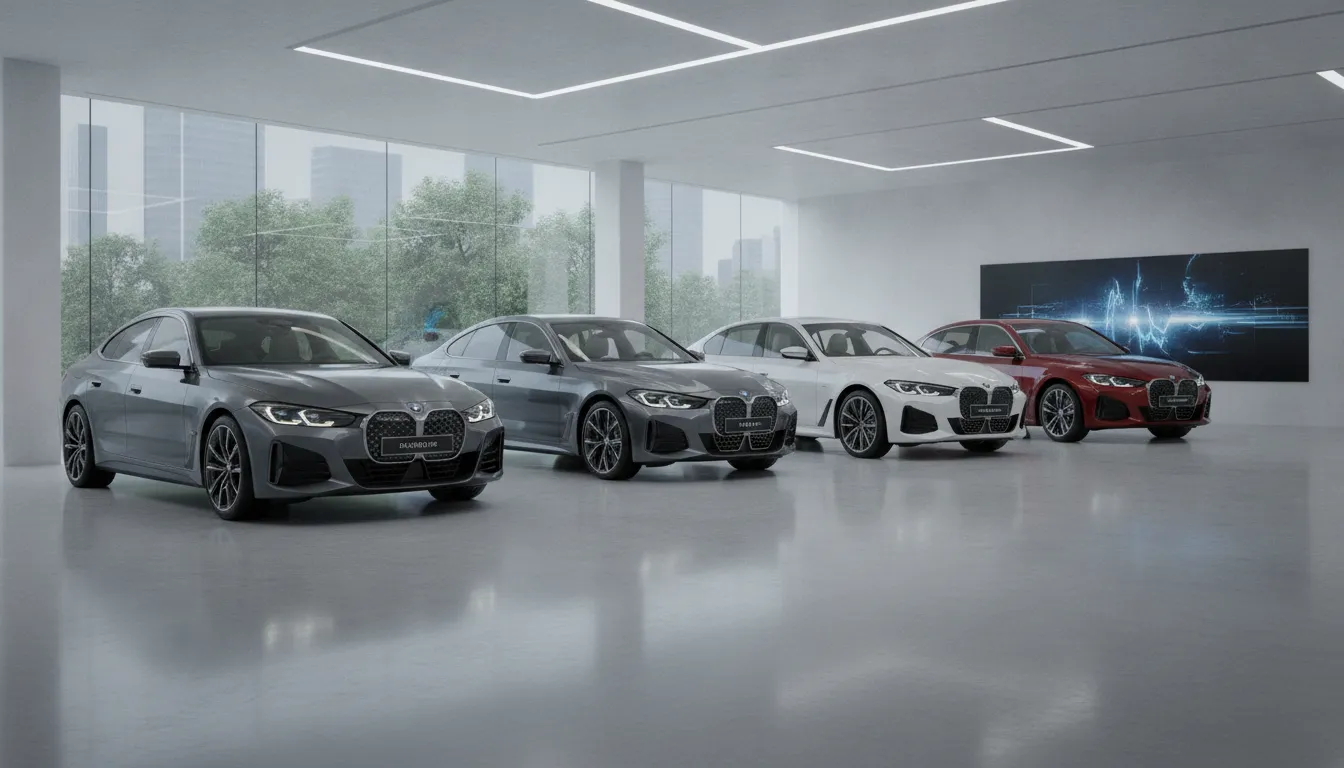
A BMW electric car can deliver quick acceleration, a quiet cabin, and the polished driving experience many luxury shoppers want. Still, the best model for you depends on more than performance numbers. Your daily mileage, home-charging setup, passenger needs, budget, and plans for Colorado road trips all matter. A compact i4 may suit a Denver commuter, while the iX may make more sense for a family that carries equipment or travels through the mountains. The i5 and i7 offer different levels of comfort and rear-seat space. Here is how to compare BMWu2019s electric models before buying used.
Key Takeaways
- Match the BMW EV to your lifestyle: Choose the i4 for sporty commuting, the i5 for balanced comfort, the i7 for rear-seat luxury, or the iX for family space and cargo flexibility.
- Review each used vehicleu2019s details carefully: Compare the model year, trim, drivetrain, battery condition, charging equipment, tires, warranty coverage, service records, and included features.
- Prepare for Colorado ownership: Account for home charging, winter range changes, mountain travel, insurance, financing, tire replacement, maintenance, and battery coverage before visiting Royal Automotive in Englewood.
Which BMW Electric Car Models Are Available?
BMWu2019s electric lineup includes sporty sedans, executive cars, a flagship luxury model, and a spacious SUV. The best fit depends on how you drive, how much room you need, and whether you care most about acceleration, rear-seat comfort, cargo flexibility, or road-trip convenience.
The BMW i4, i5, i7, and iX all offer quiet electric power, refined interiors, and responsive handling, but each model serves a different type of driver. The i4 is compact and performance-focused, the i5 balances comfort with everyday practicality, the i7 emphasizes first-class luxury, and the iX provides SUV versatility for passengers and cargo.
Used BMW EVs can also vary significantly by model year and trim. Battery size, drivetrain, wheel design, charging equipment, software, and driver-assistance features may differ between vehicles with the same model name. Review the equipment list and vehicle history instead of relying on the badge alone.
Denver-area shoppers can browse Royal Automotiveu2019s used vehicle inventory to see current availability and compare BMW models with other inspected pre-owned cars, trucks, and SUVs.
BMW i4: Sporty Gran Coupe With Hatchback Utility
The BMW i4 is a strong choice for drivers who want an electric car with a sporty feel and useful everyday space. Its sleek profile resembles a sedan, while the rear liftgate makes it easier to load groceries, luggage, and larger items than a traditional trunk.
Depending on the version, the i4 can produce up to 536 horsepower and reach 60 mph in about 3.7 seconds. The i4 M50 adds all-wheel drive and stronger performance, while other versions may place more emphasis on efficiency and range. Its compact size also works well for Denver commuting and city parking.
Inside, the i4 combines supportive seats with a modern BMW cabin and integrated digital displays. Check the model year, battery configuration, drivetrain, and wheel size before buying, since these details affect performance and estimated range. A BMW i4 review can offer useful driving impressions, but a dealership test drive is still the best way to evaluate comfort and handling.
BMW i5: Executive Sedan for Daily Driving
The BMW i5 sits between the compact i4 and full-size i7. It gives shoppers more passenger room without requiring an SUV, making it a practical choice for commuting, business travel, and longer drives. Its midsize sedan design emphasizes a smooth ride, quiet cabin, and comfortable seating.
The i5 focuses on balance rather than a single standout feature. It delivers strong electric performance while maintaining a relaxed driving character. The i5 M60 adds quicker acceleration and all-wheel drive for drivers who want a more energetic experience. Other versions may suit shoppers who prioritize efficient daily driving and a comfortable ride.
Equipment can differ considerably among used i5 models. Compare the infotainment system, seating materials, wheel design, driver-assistance technology, and charging equipment before choosing. This BMW electric vehicle overview provides a helpful look at the i4, i5, i7, and iX lineups.
BMW i7: Luxury Sedan With Rear-Seat Technology
The BMW i7 is the flagship sedan in BMWu2019s electric lineup. It is built for shoppers who want premium materials, a quiet ride, generous passenger space, and advanced technology. While the i4 and i5 place more emphasis on the driver, the i7 gives rear-seat comfort a central role.
Depending on its configuration, the i7 may include reclining rear seats, upgraded entertainment, premium audio, and large display technology. These features can make it a good fit for executive transportation, frequent passengers, or drivers who want a relaxing cabin for long trips.
The i7 M70 is the performance-focused version, combining the modelu2019s luxury appointments with stronger acceleration. Used examples may have different equipment packages, so inspect the rear-seat controls, displays, audio system, charging equipment, and interior materials. Ask which options are included before comparing prices, especially if rear-seat technology is a priority.
BMW iX: Spacious SUV for Families and Cargo
The BMW iX is a dedicated electric SUV with a taller seating position, spacious passenger accommodations, and flexible cargo capacity. It suits families, active households, and Denver-area drivers who need room for passengers, luggage, sports equipment, or shopping.
Compared with an electric sedan, the iX offers easier entry and exit, broad outward visibility, and the practical shape many SUV shoppers prefer. Its electric powertrain provides quiet operation and immediate response. Depending on the trim, the iX may offer different levels of power, equipment, and all-wheel-drive capability.
The iX M60 is the performance-oriented model. Other trims may offer a calmer balance of range, comfort, and price. Compare cargo space, seating comfort, wheel size, and drivetrain before choosing. Royal Automotiveu2019s used SUV inventory in Denver gives shoppers an opportunity to compare an electric SUV with other pre-owned options in person.
eDrive, xDrive, and M Performance Options
BMW uses several names to describe its electric configurations. eDrive refers to BMWu2019s electric powertrain technology, while xDrive generally identifies all-wheel drive. Depending on the model and model year, xDrive can provide added traction on wet, snowy, or uneven roads, which may be useful for Colorado commutes and mountain travel.
M Performance versions add stronger acceleration and sportier tuning. Examples include the BMW i4 M50, i5 M60, i7 M70, and iX M60. These models appeal to drivers who want instant electric response with a more aggressive driving character. They may also include upgraded brakes, suspension tuning, exterior styling, and interior appointments.
Performance equipment can affect ownership costs as well as acceleration. Larger wheels and sport-oriented tires may reduce estimated range and cost more to replace. When comparing a used BMW EV, review the original equipment list to confirm whether the vehicle includes M Performance features, xDrive, upgraded wheels, or a technology package.
Used BMW EV Model-Year and Trim Differences
A used BMW electric car can differ significantly from another vehicle with the same model name. Battery capacity, charging hardware, software, driver-assistance features, infotainment systems, and available trims may change by model year. Even two i4 models may have different drivetrains, interiors, wheels, or range estimates.
Electric vehicles have fewer moving parts than gasoline-powered vehicles. A BMW EV does not need traditional oil changes, spark plug replacement, or conventional transmission service. It still requires attention to tires, brakes, suspension components, climate systems, charging equipment, and battery condition.
Before buying, request the vehicle history, inspection records, warranty information, and battery-related documentation. Confirm whether the remaining battery warranty transfers to you, and ask how the vehicle was maintained. Royal Automotiveu2019s financing and pre-approval resources can help you compare monthly payments while evaluating different BMW EV model years, trims, and equipment levels.
Which BMW Electric Car Delivers the Best Performance and Range?
BMWu2019s electric lineup gives Denver-area drivers several ways to balance acceleration, comfort, cargo space, and driving range. The i4 is the most athletic option for shoppers who want a sporty sedan with useful hatchback access. The i5 adds executive-sedan comfort, while the i7 focuses on premium materials and rear-seat space. The iX offers SUV practicality, a higher seating position, and strong electric performance.
There is no single BMW EV that delivers the best combination for every driver. The quickest model may not travel the farthest on a charge, and the longest-range trim may not offer the all-wheel-drive traction you want for winter roads. Range also varies by model year, battery size, wheel design, tire type, drivetrain, temperature, and driving speed.
When comparing a used BMW electric car, check the exact trim and equipment rather than relying on the model name alone. Royal Automotiveu2019s used BMW inventory can help you review available vehicles, while the original window sticker and vehicle history report can confirm the battery, drivetrain, wheels, and factory options.
Compare Horsepower, Torque, and Acceleration
The BMW i4 M50 is one of the lineupu2019s strongest choices for drivers who enjoy quick, responsive handling. Its dual electric motors produce up to 536 horsepower and 586 lb-ft of torque, and BMW lists a 0-to-60-mph time of about 3.7 seconds. Electric torque arrives immediately, giving the i4 M50 strong response when merging onto I-25, passing on a two-lane highway, or pulling away from a stop.
The i5 M60, i7 M70, and iX M60 also provide rapid acceleration, but each places that power in a different type of vehicle. The i5 M60 combines performance with a larger, quieter sedan body. The i7 M70 delivers full-size luxury and effortless passing power, while the iX M60 offers similar urgency in an SUV. BMWu2019s official electric vehicle lineup provides model-specific specifications that may vary by model year.
Compare EPA-Estimated Range by Trim and Drivetrain
The most efficient BMW EV is not always the most powerful one. Rear-wheel-drive trims generally offer more range than comparable xDrive versions because they use one motor instead of two. For example, the i4 eDrive40 is typically the range-focused choice, while the i4 M50 trades some efficiency for faster acceleration and all-wheel drive.
The i5, i7, and iX can also provide practical range for commuting, errands, and longer trips, but larger vehicles and performance-oriented equipment may use more energy. EPA estimates are helpful for comparing vehicles under consistent testing conditions, but your actual results can differ. Check the EPA electric vehicle database for the exact model year, trim, wheel configuration, and estimated range of a BMW you are considering.
BMW i4 M50, i5 M60, i7 M70, and iX M60
The i4 M50 is a strong match for drivers who want a sporty electric car that remains manageable in city traffic. Its Gran Coupe body combines a sleek profile with a rear hatch, making it easier to load groceries, luggage, or smaller recreational gear than a conventional sedan trunk.
The i5 M60 suits buyers who want more cabin room and a smoother executive-sedan ride without giving up strong acceleration. The i7 M70 is aimed at shoppers who value rear-seat comfort, premium appointments, and long-distance refinement. The iX M60 is the practical choice for families who need SUV seating, flexible cargo space, and a higher driving position. On a used model, compare the model year, battery specifications, software, wheels, and standard equipment before deciding.
Compare Rear-Wheel Drive and xDrive Efficiency
Rear-wheel drive generally uses less energy than all-wheel drive when the vehicles have similar batteries, tires, and equipment. That can make a rear-wheel-drive BMW EV appealing for Denver commuters who want to maximize range and spend most of their time on maintained roads. Good tires and smooth acceleration remain important, especially during winter.
BMW xDrive sends power to all four wheels through two electric motors. The added traction can help during snow, rain, steep climbs, and hard acceleration. It may also reduce range because the vehicle carries another motor and related hardware. xDrive is useful in Colorado, but it does not replace appropriate winter tires, reasonable speeds, or extra caution on icy roads. Compare both the drivetrain and tire condition when inspecting a used BMW EV.
Explore Handling, Regenerative Braking, and Drive Modes
The battery pack sits low in an electric BMW, helping lower the center of gravity and reduce body movement through corners. The i4 M50 has the most athletic character of these models, with quick responses and a compact feel. The i5 and i7 place more emphasis on quiet control and a smooth ride. The iX feels substantial and stable, while its elevated seating position gives SUV drivers a clearer view of surrounding traffic.
Regenerative braking converts some motion into stored battery energy when the vehicle slows. BMWu2019s settings can allow stronger lift-off deceleration, blended braking, or a more traditional pedal feel. Depending on the model, drive modes can adjust throttle response, steering, suspension, sound, and climate settings. During a test drive, try city streets, a highway entrance, and a few turns so you can judge how the settings feel in everyday use.
See How Wheels, Tires, Speed, and Climate Affect Range
Wheel and tire choices can have a noticeable effect on electric range. Larger wheels and wider performance tires may sharpen steering response and give the BMW a more aggressive appearance, but they can also add weight and rolling resistance. A used i4 M50 with large wheels may not achieve the same range as a more efficiency-focused i4 trim with smaller wheels.
Speed, wind, steep grades, climate control, and cargo also affect energy use. Highway driving at elevated speeds typically consumes more electricity than slower city driving because aerodynamic resistance increases. Cold weather can reduce available range and make charging slower until the battery warms. The U.S. Department of Energy explains how cold weather affects electric vehicle performance, making it a useful resource for Colorado shoppers.
Prepare for Coloradou2019s Cold, Elevation, and Mountain Roads
Coloradou2019s weather and terrain make real-world range planning important. A cold battery may deliver less usable energy and accept a fast charge more slowly until it reaches a suitable temperature. Heating the cabin also draws electricity. If possible, precondition the interior while the BMW is connected to a charger, so the battery supplies less energy for initial heating.
Mountain climbs can increase energy use, even though downhill sections may return some energy through regenerative braking. Snow, headwinds, traffic, and low temperatures can reduce your range further. Before a trip from Denver into the mountains, charge to an appropriate level, check charging locations, and keep extra range in reserve. When buying used, ask for charging equipment, inspect the tires and brakes, and confirm that the vehicle completes a test charge without warnings.
Which BMW Electric Car Offers the Best Luxury and Practicality?
BMWu2019s electric lineup gives luxury shoppers several distinct ways to combine comfort with everyday usefulness. The i4 is the most driver-focused option, pairing responsive handling with a Gran Coupe hatchback. The i5 offers a quieter, more traditional executive-sedan experience, while the i7 adds a larger cabin and high-end rear-seat features. The iX stands apart as a luxury SUV with generous passenger room, flexible cargo space, and a higher driving position.
The best choice depends on how you use your vehicle. A commuter who enjoys spirited driving may prefer the i4. A driver who spends long hours on the highway may appreciate the i5u2019s composed ride. The i7 makes more sense when rear passengers deserve first-class comfort, while the iX suits families, active households, and shoppers who regularly carry bulky gear.
Used BMW electric cars can also differ significantly by model year, trim, drivetrain, and optional equipment. Before you compare prices, inspect the specific vehicleu2019s seats, displays, driver-assistance systems, wheels, tires, and charging equipment. You can browse Royal Automotiveu2019s inventory to see which BMW models and features are currently available in the Denver area.
Compare Cabin Materials, Comfort, and Design
Each BMW electric car offers a premium cabin, but the design and seating experience vary. The i4 has a low, driver-focused layout with supportive seats and familiar BMW controls. Its cabin works well for daily commuting, especially for drivers who want a sporty feel without giving up modern technology. The Gran Coupe roofline also gives it a more useful rear opening than a traditional sedan.
The i5 feels more spacious and formal. Its quiet cabin, comfortable seats, and polished ride make it well suited to business travel and longer drives. The i7 adds richer materials, more rear-seat room, and available comfort features such as ventilation, massage, and power adjustment.
The iX uses a more open, contemporary design. Its taller seating position, wide windows, and minimalist dashboard create an airy feel. When comparing used models, check the upholstery, seat functions, panoramic roof, interior lighting, and trim materials in person. BMWu2019s electric vehicle overview can help you compare the lineup before visiting a dealership.
Use BMW iDrive, Curved Displays, and Wireless Smartphone Integration
BMWu2019s curved display system gives many newer i4, i5, i7, and iX models a clean, connected dashboard. Depending on the model year, the system combines a digital instrument cluster with a central touchscreen. Drivers can use it for navigation, vehicle settings, media, charging information, and selected driver-assistance controls.
The BMW i4 M50, for example, uses a 12.3-inch digital instrument display and a 14.9-inch central touchscreen with BMW Operating System 8.5. Wireless Apple CarPlay and Android Auto make it easier to access calls, messages, music, and familiar navigation apps without plugging in a phone.
Technology can vary by trim and model year, so test each function before buying. Check the touchscreen, rotary controller, voice commands, phone connection, navigation, backup camera, and available camera views. Some connected features may require a compatible phone, account, or subscription. BMW ConnectedDrive information can help clarify which remote and online services work with a particular vehicle.
Explore Updates, Connected Services, and Driver Assistance
Connected technology can make an electric BMW easier to use every day. The navigation system may help plan charging stops and estimate the battery level at arrival. Depending on the vehicle, over-the-air updates may also improve certain functions without requiring a dealership visit.
Driver-assistance equipment depends on the model, trim, option package, and model year. Available systems may include adaptive cruise control, lane-keeping assistance, blind-spot monitoring, parking sensors, a surround-view camera, and automated parking support. These features can reduce fatigue during commutes and highway trips, but the driver must remain attentive.
When inspecting a used BMW EV, ask which features came with the vehicle and which were optional. Test the warning alerts, cameras, sensors, and display messages during the drive. It is also worth checking whether connected services are active and compatible with the vehicle. BMW owner resources provide model-specific information that can help you review equipment and operating instructions.
Experience BMW i7 Rear-Seat Comfort and Technology
The BMW i7 is the strongest choice for shoppers who place rear-passenger comfort above cargo flexibility. Its long cabin provides generous legroom, while available rear seats may include power adjustment, heating, ventilation, and massage. Quiet electric power and careful insulation create a calm environment for passengers during daily transportation or longer trips.
Some i7 configurations include a large rear entertainment screen that lowers from the ceiling. Rear passengers can use it for movies and other content, creating an experience that feels closer to a private lounge than a standard sedan. Premium materials, soft lighting, and separate comfort controls add to the sense of occasion.
The i7u2019s size is part of its appeal, but it can also make tight parking spaces more challenging. Its trunk is less flexible than the cargo area in an SUV, and buyers should measure it if they regularly carry bulky items. Review the BMW 7 Series sedan overview, then confirm every feature on the specific used i7 you are considering.
Explore BMW iX Materials, Visibility, and SUV Utility
The BMW iX is a practical match for drivers who want luxury SUV comfort. Its upright seating position gives the driver a broad view of surrounding traffic, while wide-opening doors make it easier to load children, groceries, and larger items. The spacious cabin also gives adult passengers more room to settle in on longer drives.
Inside, the iX combines contemporary materials with a clean dashboard and BMWu2019s curved display system. The layout feels modern without removing the controls drivers use most often. Its quiet electric powertrain delivers smooth acceleration, and available all-wheel drive can provide added traction on wet or snowy roads.
The iX may be especially useful for Denver-area shoppers who combine weekday commuting with weekend trips, outdoor activities, or mountain travel. Equipment still varies by trim, so inspect the seats, wheel size, cargo area, panoramic roof, and driver-assistance systems. BMWu2019s iX overview provides a helpful starting point for comparing its design and available features.
Compare Passenger Space, Cargo Capacity, and Storage
The i4 offers more cargo flexibility than its sleek shape may suggest. Its Gran Coupe hatchback opens to a wide rear cargo area, making it easier to load luggage, boxes, and smaller gear than a conventional sedan trunk. Folding the rear seats creates additional room when you do not need all passenger positions.
The i5 and i7 provide comfortable seating, but their sedan bodies limit the height and shape of items you can carry. The i7 focuses heavily on rear-passenger comfort, so shoppers who transport bulky equipment should inspect and measure the trunk before making a decision.
The iX is the most practical choice for families and active drivers. Its taller cargo area makes it easier to load a stroller, sports equipment, groceries, or camping supplies. During an in-person inspection, compare rear-seat legroom, the cargo opening, underfloor storage, and smaller interior compartments. Bringing a stroller or other frequently used item can give you a more accurate sense of fit.
Compare Sedan and SUV Ride Quality and All-Weather Confidence
The i4 and i5 have lower seating positions, which can make them feel more connected to the road. The i4 leans toward sporty handling, especially in M Performance trims, while the i5 favors a quiet, settled ride for commuting and highway travel. Wheel size and tire choice can noticeably affect comfort in both sedans.
The i7 prioritizes smoothness. Its longer body, quiet cabin, and refined suspension make it a strong fit for frequent highway travel and rear-passenger transportation. The iX provides a higher seating position, greater cargo flexibility, and available all-wheel drive for added confidence on wet or snowy roads.
Colorado shoppers should inspect tire tread, tire age, brake condition, and drivetrain before buying. xDrive can help with traction, but it does not replace suitable winter tires or careful driving on snow and ice. During a test drive, pay attention to rough pavement, tight turns, regenerative braking, and elevation changes. You can ask Royal Automotive about vehicle condition and inspection details before choosing a used BMW electric car.
How Does Charging a BMW Electric Car Work in Denver?
Charging a BMW electric car in Denver usually means plugging in at home overnight and using public stations for road trips or busy days. The right setup depends on your BMW model, battery size, daily mileage, parking arrangement, and access to electrical service.
Denveru2019s weather and Coloradou2019s terrain also affect charging and range. Cold temperatures may reduce available range and slow charging until the battery reaches its preferred temperature. Highway speeds, cabin heating, steep grades, and mountain driving can increase energy use. Before buying a used BMW EV, review its charging equipment and test the system as part of the vehicle inspection.
Compare Level 1 and Level 2 Home Charging
Level 1 charging uses a standard household outlet. It is the simplest option, but it adds range slowly, often only a few miles per hour. This setup may work if you drive short distances, park for long periods, or have an outlet close to your vehicle. It can be less practical for drivers with longer commutes or larger BMW batteries.
Level 2 charging uses a 240-volt connection, similar to one used for an electric dryer. A properly installed Level 2 charger can add considerably more range per hour, making overnight charging more convenient. Installation may require an electrician to assess your panel, wiring, outlet, and parking location. Consumer Reports explains EV charging levels, including the practical differences between home charging options.
Plan Home Charger Installation, Speed, and Costs
Before installing a Level 2 charger, ask a licensed electrician to check whether your home has enough electrical capacity. Costs can vary depending on the distance between the electrical panel and parking space, trenching, permits, panel upgrades, and charger equipment. Older Denver homes and condo garages may require a more detailed assessment.
Charging speed also depends on the BMWu2019s onboard charger, circuit amperage, and charger output. A higher-rated home charger will not make the vehicle charge faster than its onboard system allows. Request a written estimate that separates equipment, labor, permits, and possible electrical work. Assurantu2019s EV customer research shows why clear charging information can help shoppers make informed purchase decisions.
Use DC Fast Charging and Estimate 10u201380% Times
DC fast charging sends direct current to the battery without relying on the vehicleu2019s standard onboard AC charger. It is useful during road trips or busy days when you need to add range quickly. Charging generally slows as the battery gets fuller, so the time from 10% to 80% can be more useful than the time required to reach 100%.
Actual charging times vary by BMW model, battery temperature, starting charge, station output, and site conditions. A warm battery with a low starting charge will often charge more quickly. BMW i4, i5, i7, and iX versions have different charging specifications, so check the exact trim and model year. This overview of luxury EV charging concerns discusses the importance of charging access and customer education.
Check CCS, NACS, and Public Charging Access by Model Year
Many used BMW electric cars use the Combined Charging System, commonly called CCS, for DC fast charging. Newer BMW EVs may use the North American Charging Standard, or NACS, depending on the model year, market, and production details. Some vehicles can access additional networks with an approved adapter, while others require a specific connector or charging arrangement.
Do not assume every public station will work with every BMW. Before buying, confirm the vehicleu2019s port type, included cables, adapter compatibility, network access, and software requirements. Check station availability through BMWu2019s connected services, charging-network apps, and route-planning tools. The U.S. Department of Transportationu2019s EV guidance also addresses charger availability, signage, and trip-planning concerns.
Use Battery Preconditioning, Route Planning, and Charging Apps
Battery preconditioning prepares the battery for more efficient fast charging. When supported, selecting a compatible DC fast charger in the BMW route planner may help warm or cool the battery before arrival. This feature can be especially useful during cold Denver mornings, when a battery may charge more slowly at first.
For longer drives, plan charging stops before leaving and identify a backup station. BMWu2019s route tools and charging apps can help estimate energy use, locate stations, and account for distance. Leave extra range for traffic, winter weather, mountain grades, and unexpected detours. Regenerative braking can recover some energy in certain driving conditions, but it should complement careful planning rather than replace it.
Find Charging Options for Apartment and Condo Living
Apartment and condo residents may need approval before installing a charger. Ask your property manager or homeowners association whether the building offers shared chargers, assigned parking with electrical access, or a process for requesting installation. Clarify who pays for equipment, electricity, maintenance, and future repairs.
If home charging is not available, look for dependable public stations near your home, workplace, gym, or regular errands. A predictable charging routine can make ownership manageable, even if you cannot plug in every night. Check station hours, payment requirements, connector compatibility, and stall availability before relying on a location. The Department of Transportation notes that unclear signage and limited information can make public charging more difficult to use.
Plan Denver Commutes and Colorado Mountain Trips
For a Denver commute, estimate your weekly mileage and compare it with the range you can realistically expect from the BMW. Cold mornings, cabin heating, highway speeds, and heavy traffic may reduce range compared with the EPA estimate. A home Level 2 charger can simplify daily driving, while workplace or public charging provides another option.
Mountain trips require additional planning. Check charging stations along the full route, not only near your destination, and identify alternatives before entering areas with fewer stations. Cold weather and elevation changes can affect energy use, while regenerative braking may recover some energy on descents. Start with a comfortable charge, leave room for weather and traffic, and confirm that your selected stations work with the BMWu2019s connector. Royal Automotive can help you compare available BMW inventory and discuss how each vehicleu2019s charging setup fits your Denver commute and Colorado travel plans.
What Does a BMW Electric Car Cost to Own?
The purchase price is only one part of owning a BMW electric car. To estimate your total cost, consider financing, charging, insurance, maintenance, tires, repairs, warranty coverage, and future resale value. A used BMW i4, i5, i7, or iX may have a lower entry price than a new model, but mileage, battery coverage, equipment, and condition can create meaningful differences between similar vehicles.
Charging expenses depend on where and how often you plug in. Home charging is generally less expensive than gasoline, especially for drivers with a regular Denver commute. Public fast charging may cost more, so compare your likely charging routine before choosing an EV. BMWu2019s all-electric vehicle lineup can help you compare available models, range estimates, and standard equipment.
BMW EVs also require fewer routine powertrain services than gas-powered vehicles, but they are not maintenance-free. Tires, brake inspections, cabin filters, software updates, suspension components, and occasional repairs remain part of ownership. When shopping for a used model, ask for service records and arrange an inspection. Royal Automotive features inspected pre-owned inventory for Denver-area shoppers who want a closer look at a vehicleu2019s condition before buying.
Compare New and Used BMW Electric Car Prices
A new BMW electric car gives you the latest technology, full model-year warranty coverage, and the ability to select a preferred trim, color, and equipment package. The purchase price may be higher, though, and early depreciation can affect resale value. A used BMW EV may make luxury electric driving more accessible, particularly if you are comfortable with an earlier model year or higher mileage.
When comparing used listings, look beyond the advertised price. Check the model year, battery size, drivetrain, mileage, wheel design, driver-assistance features, charging equipment, and remaining warranty coverage. A used iX with xDrive and premium options may cost more than a rear-wheel-drive i4, but its additional cargo space and all-wheel-drive capability may better suit your needs.
Review the vehicle history, inspection records, title status, and included equipment before comparing final prices. You can browse Royal Automotiveu2019s inventory to see available pre-owned vehicles and contact the dealership for details about a specific BMW.
Compare Home-Charging and Gasoline Costs
Home charging can reduce the cost of each commute, especially when you plug in overnight. Level 2 charging uses a 240-volt connection and replenishes a BMW EV faster than a standard household outlet. Your cost depends on your electricity rate, the vehicleu2019s efficiency, charging losses, and the number of miles you drive.
BMW estimates that electric drivers may save approximately $2,000 to $2,500 per year on fueling compared with gasoline, although your results will vary. Drivers who rely on public fast chargers may see smaller savings than those who charge at home. Electricity rates, gasoline prices, driving habits, and seasonal temperatures also affect the calculation.
For a realistic estimate, compare your current monthly fuel spending with your expected electricity use. The Consumer Reports EV ownership guide explains why EVs can cost less to own over a typical ownership period than comparable gas-powered vehicles.
Maintain a BMW EV With Fewer Moving Parts
BMW electric vehicles have fewer moving parts than gas-powered cars, which can reduce the number of routine services required. There is no engine oil, oil filter, spark plug, exhaust system, catalytic converter, or traditional transmission to maintain. The battery also does not need the oil changes and tune-ups associated with an internal-combustion engine.
An EV still requires regular care. Your BMW may need tire rotations, cabin air filter replacement, brake inspections, windshield washer fluid, software updates, and checks of cooling, steering, and suspension systems. Review the maintenance schedule for the exact model year before buying.
Regenerative braking may reduce friction-brake wear, particularly when you drive smoothly and use one-pedal driving. Brake components still need inspection because infrequent use can allow corrosion to develop. Plug In Americau2019s EV FAQs explains several common maintenance differences between electric and gas-powered vehicles.
Budget for Tires, Brakes, Insurance, and Repairs
Tires can represent a significant ownership expense for some BMW EVs. Electric cars deliver immediate torque, while heavier models such as the iX and i7 can place additional demands on their tires. Larger wheels and performance tires may also cost more to replace. Before buying a used BMW EV, ask about the tire brand, tread depth, age, and estimated replacement cost.
Brake wear may be lower because regenerative braking handles much of the vehicleu2019s deceleration. Brake inspections remain important, especially for a used vehicle driven in snow, road salt, or heavy traffic. Insurance premiums vary based on the model, repair costs, safety equipment, driver history, and location, so request an insurance quote before signing a purchase agreement.
Repairs involving high-voltage systems, sensors, displays, and driver-assistance equipment may be costly outside warranty coverage. Assurant reports that many shoppers are concerned about future EV repair costs, making it worthwhile to ask about protection products, service contracts, and battery coverage options.
Protect Battery Health and Review Warranty Coverage
The high-voltage battery is one of the most important components in a BMW electric car. EV batteries are designed to last for many years, but climate, mileage, charging patterns, and driving habits can affect long-term performance. Follow the charging guidance in your owneru2019s manual, avoid leaving the battery at a very high or very low charge for extended periods, and use DC fast charging as part of a sensible charging routine.
Ask whether the dealership can provide a battery health report or diagnostic information. Confirm the battery warranty by model year and review what it covers. BMW states that its high-voltage batteries are covered for eight years or 100,000 miles, including protection against significant capacity loss. Verify the exact terms based on the vehicleu2019s original in-service date and market.
Battery warranties may not cover every electrical or charging issue, so read the exclusions carefully. The BMW electric vehicle information provides a starting point, but the original warranty documents and vehicle records should guide your final decision.
Compare BMW Service and Model-Year Warranty Coverage
Warranty coverage can vary by model year, mileage, original in-service date, and component. When shopping for a used BMW EV, request the vehicle identification number and use it to verify remaining new-vehicle, battery, roadside assistance, and maintenance coverage.
Some BMW electric vehicles include scheduled maintenance at no charge for a limited period or mileage allowance. Programs can vary by market and model year, so do not assume that a benefit advertised for a newer vehicle applies to a used BMW in the United States. A used vehicle may have little complimentary maintenance remaining even if its battery warranty continues for several years.
Ask for service records and confirm that required maintenance was completed on schedule. You should also ask where future repairs can be performed and whether a BMW-trained technician will inspect high-voltage components. BMWu2019s service and maintenance information offers a useful starting point, while a dealership can verify coverage for a specific vehicle.
Find Federal, Colorado, and Local EV Incentives
EV incentives can depend on the vehicleu2019s purchase price, battery requirements, model year, buyer income, business use, and whether the vehicle is new or used. Before including a credit in your budget, verify the current rules and confirm that both you and the BMW qualify. Used EV programs may have different price and income limits than new-vehicle programs.
Colorado residents can review current electric vehicle programs and tax guidance through the Colorado Energy Office. For federal requirements, consult the IRS clean vehicle credit guidance. Eligibility may also depend on when the vehicle is purchased and how the transaction is completed.
Local utility companies may offer rebates for home chargers, electrical upgrades, or managed charging. Apartment and condo residents should ask property managers or homeowners associations about installation rules. Plug In Americau2019s PlugStar resources can also help you research EVs, home chargers, dealers, and local incentives. Treat an incentive as a possible cost reduction, not a guaranteed discount, until eligibility is confirmed.
Evaluate Depreciation, Financing, and Ownership Value
Depreciation can significantly affect the cost of owning a BMW electric car. Range updates, charging standards, incentives, battery technology, mileage, and demand for a specific trim can all influence resale value. A used BMW may have already experienced some initial depreciation, but future value still depends on condition, service history, battery coverage, and local demand.
Financing deserves the same attention as the vehicle price. Compare the annual percentage rate, loan term, down payment, taxes, registration, dealer fees, and optional protection products. A lower monthly payment may cost more overall when paired with a longer loan term. Getting pre-approved gives you a useful comparison point before reviewing dealership financing.
Your ownership value may include more than fuel savings. Consider comfort, performance, cargo space, warranty coverage, charging access, and reduced routine service. Royal Automotive offers financing and pre-approval options for shoppers who want to compare payment scenarios before selecting a BMW electric car.
How Do BMW Electric Cars Compare With Other Luxury EVs?
Comparing BMW electric cars with other luxury EVs takes more than looking at horsepower or range. Consider how each vehicle feels on Colorado roads, how easily it fits your routine, and what ownership may cost after the purchase. BMWu2019s i4, i5, i7, and iX combine electric performance with familiar BMW handling, premium interiors, and several body styles.
Another luxury EV may offer more range, faster charging, or a lower purchase price. BMW may be the better fit if you want responsive driving, refined materials, and controls that feel familiar. When shopping for a used model, review the vehicleu2019s trim, battery warranty, charging equipment, service records, and inspection results. You can begin by browsing Royal Automotiveu2019s inventory for available BMW models and other luxury vehicles.
Compare Performance, Torque, and Driving Dynamics
Electric motors deliver torque immediately, so BMW electric cars can feel quick and responsive without waiting for an engine to build power. The i4 M50, i5 M60, i7 M70, and iX M60 add stronger performance for drivers who want rapid acceleration and confident passing power.
The i4 M50 stands out for its blend of electric power, balanced handling, steering response, comfort, and build quality. Other luxury EVs may produce similar acceleration figures, but performance numbers do not tell the whole story. During a test drive, pay attention to cornering, braking, ride comfort, regenerative braking, and how smoothly the vehicle delivers power. This is especially important in Denver, where daily driving can include highways, hills, and changing weather.
Compare Range, Charging, and Road-Trip Readiness
Range depends on the model, drivetrain, wheel size, tires, temperature, speed, and driving habits. The BMW i4, for example, offers approximately 267 miles of EPA-estimated range in certain configurations. Under ideal conditions, DC fast charging can take the battery from about 10% to 80% in roughly 30 minutes, according to this BMW i4 review.
When comparing luxury EVs, review charging access as carefully as the range estimate. A vehicle with slightly less range may work well if you can charge at home overnight. Coloradou2019s cold temperatures, mountain grades, cabin heat, and highway speeds can reduce efficiency, so leave extra range for longer trips. Check charging locations before traveling beyond Denver, particularly along mountain routes where stations may be farther apart.
Compare Interior Quality, Technology, and Driver Assistance
BMW electric cars compete with other luxury EVs through premium materials, supportive seats, quiet cabins, and integrated technology. Depending on the model and trim, features may include BMWu2019s curved display, wireless Apple CarPlay, wireless Android Auto, over-the-air software updates, parking assistance, and advanced driver-assistance systems.
The i4 uses a 12.3-inch digital instrument display and a 14.9-inch central touchscreen. A larger screen does not always mean a better experience, so try each vehicle in person. Check whether the menus are easy to understand, the seat provides enough support, and the cameras offer a clear view. Equipment can vary by model year and trim, making a careful review of the window sticker and vehicle history important when buying used.
Compare Sedan and SUV Practicality for Families and Commuters
BMWu2019s electric sedans suit commuters who prefer a lower seating position, controlled handling, and a refined highway ride. The i4u2019s Gran Coupe hatchback design adds useful cargo flexibility compared with many traditional luxury sedans. The i5 provides more room for daily use, while the i7 focuses on a quieter ride and elevated rear-seat comfort.
The BMW iX may be a stronger choice for families, frequent cargo use, and drivers who prefer SUV visibility. It offers spacious seating, flexible storage, and available all-wheel drive. Compare rear legroom, door openings, child-seat access, cargo height, and winter-tire availability before choosing. A sedan may be easier to park and more efficient for commuting, while an SUV can provide simpler access for passengers and bulky items.
Compare Warranty, Service, and Ownership Support
Warranty coverage can affect the value of a used luxury EV. BMW high-voltage battery coverage is commonly listed at eight years or 100,000 miles, though terms can vary by model year and location. Confirm the remaining coverage through the vehicle identification number and the manufactureru2019s warranty documents. The BMW warranty information can help you identify coverage categories before you buy.
EVs have fewer moving parts than gasoline vehicles, so they do not require oil changes, spark plug replacements, or several other engine services. They still need tire inspections, brake checks, suspension service, software updates, and specialized repairs when needed. Ask for service records and arrange a pre-purchase inspection that includes the battery system, charging equipment, tires, brakes, and warning lights.
Compare Total Value Beyond the Purchase Price
The purchase price is only one part of an EV comparison. Include financing, insurance, registration, home-charger installation, electricity, tires, scheduled service, and depreciation when estimating your monthly cost. A used BMW electric car may provide premium materials and strong performance at a lower upfront price than a new luxury EV, but battery coverage and included equipment deserve close attention.
Home charging may cost less than gasoline, depending on local electricity rates, fuel prices, and driving habits. EVs also skip services such as oil changes and spark plug replacement, which can reduce routine maintenance needs. Before making an offer, compare your estimated payment with available financing and pre-approval options from Royal Automotive. Then consider how far you drive, where you can charge, and how long you plan to keep the vehicle.
Which BMW Electric Car Fits Your Lifestyle?
Choosing the right BMW electric car depends on how you plan to use it. Start with your daily commute, passenger needs, cargo requirements, and preferred driving style. A driver who spends most of the week traveling through Denver may value the i4u2019s compact dimensions and responsive handling, while a family may prefer the iX for its SUV versatility.
Your charging routine matters just as much. Home charging can make daily ownership straightforward, but apartment and condo residents may need access to workplace or public chargers. Before choosing a model, identify where you will charge overnight and whether those options work for longer trips.
Colorado driving adds a few more considerations. Cold weather, snow, steep grades, elevation changes, and highway speeds can affect real-world range. Include tires, insurance, financing, charging equipment, and service in your ownership budget. When you are ready to compare vehicles, you can browse Royal Automotiveu2019s used inventory and discuss your priorities with the dealership team.
Choose the BMW i4 for Commuting and Driving Enjoyment
The BMW i4 is a strong choice for drivers who want an electric vehicle with the feel of a sporty BMW. Its compact sedan shape is easy to maneuver through Denver traffic and convenient to park, while the hatchback design provides flexible access to the cargo area.
Depending on its configuration, the i4 can produce up to 536 horsepower and accelerate from zero to 60 mph in as little as 3.7 seconds. That makes it appealing to drivers who enjoy quick acceleration, responsive handling, and a more engaging drive.
The i4 also offers a refined cabin for commuting and everyday errands. Choose it if you usually drive alone or with one or two passengers and want practical cargo space without moving to an SUV. You can compare BMW i4 configurations before deciding which trim and drivetrain suit your routine.
Choose the BMW i5 for Balanced Luxury and Daily Use
The BMW i5 fits drivers who want a midsize electric sedan with a comfortable ride, upscale materials, and modern technology. It provides more room and a more relaxed driving experience than the i4, while remaining manageable for commuting, errands, and highway travel.
For Denver-area drivers, the i5 can serve as an adaptable everyday vehicle. It offers comfortable seating for passengers, space for groceries and work equipment, and the quiet ride expected from a luxury sedan. The i5 M60 adds stronger performance for buyers who want faster acceleration without giving up a comfortable cabin.
Consider the i5 if you want one vehicle for weekday commutes, professional appointments, family outings, and longer drives. It may be a better match than the i7 if you do not need extensive rear-seat features, and a better fit than the iX if sedan handling matters more than SUV cargo capacity. Review the BMW i5u2019s available configurations as you compare used models.
Choose the BMW i7 for Rear-Seat Comfort and Executive Travel
The BMW i7 is designed for buyers who place a high priority on luxury, technology, and rear-seat comfort. As BMWu2019s flagship electric sedan, it emphasizes a quiet ride, premium materials, spacious seating, and advanced cabin features.
The i7 can make sense for business owners, executives, and families who regularly carry passengers. Its rear-seat environment is especially useful when passengers need to work, relax, or stay comfortable during longer drives. It also offers the size and presence some buyers expect from a flagship luxury sedan.
Performance remains part of the i7 experience. The i7 M70 is the high-performance version for drivers who want strong electric acceleration alongside premium features. However, its larger size and higher cost may not be necessary for a solo commuter. Decide whether you will use its rear-seat technology often enough to justify the investment.
Choose the BMW iX for Families, Cargo, and All-Weather Driving
The BMW iX is a dedicated electric SUV for drivers who need passenger room, cargo flexibility, and a higher seating position. Its spacious layout can accommodate family schedules, luggage, sports equipment, groceries, and weekend gear more easily than a sedan.
The iX may be a practical fit for school drop-offs, regular errands, road trips, and outdoor activities. It can also appeal to Colorado drivers who want an SUV format for changing weather and mountain travel. All-wheel drive, suitable tires, and careful winter preparation still matter, since no vehicle eliminates the challenges of snow and ice.
Inside, the iX focuses on comfort, visibility, and technology. The iX M60 adds stronger performance for buyers who want more excitement without giving up SUV utility. Compare the vehicleu2019s cargo space with your parking area and charging setup, then review the BMW iXu2019s key features alongside the sedan options.
Match Your Choice to Budget, Range, and Charging Access
The purchase price is only one part of an electric vehicle budget. Compare financing, insurance, registration, tires, charging equipment, and potential repairs before choosing a model. A used BMW i4 may offer a lower entry price, while an i7 generally costs more because of its larger size, premium equipment, and flagship position. Royal Automotiveu2019s financing and pre-approval options can help you review payment possibilities.
Range figures provide a useful starting point, but real-world results vary. Cold temperatures, highway speeds, cabin heating, wheel size, tires, elevation, and driving habits can all affect how far you travel between charges. A driver with a short commute may not need the longest-range configuration, particularly if overnight home charging is available.
Think about charging before you buy. A Level 2 home charger may make daily use convenient, while apartment residents may depend on workplace or public stations. If you regularly drive from Denver into the mountains, check charging locations along your usual routes and leave additional range for weather, traffic, and elevation changes.
Use This BMW Electric Car Buying Checklist
Use the following checklist when comparing a used BMW electric car in Denver:
- Daily driving: Estimate your typical commute, errands, and weekend mileage.
- Passenger needs: Decide whether you need compact sedan seating, midsize comfort, or generous rear-seat space.
- Cargo: Consider the luggage, groceries, work equipment, or recreation gear you carry most often.
- Charging: Confirm whether you can install Level 2 charging at home and identify dependable public options.
- Colorado conditions: Account for cold temperatures, snow, mountain roads, elevation, and winter tires.
- Vehicle history: Review the VIN, accident history, ownership records, and inspection documentation.
- Battery coverage: Ask about remaining battery warranty coverage and available battery health information.
- Equipment: Verify the trim, drivetrain, driver-assistance features, wheels, tires, and charging cables.
- Ownership costs: Estimate financing, insurance, charging, maintenance, tires, and possible repairs.
- Test drive: Drive in city traffic and at highway speeds, test the technology, and evaluate every seating position.
When you inspect a pre-owned BMW EV, ask the seller to explain the vehicleu2019s condition, charging equipment, warranty coverage, and included features. You can also contact Royal Automotive for help comparing available vehicles and finding an option that suits your daily driving needs.
How Should You Buy a Used BMW Electric Car in Denver?
Buying a used BMW electric car in Denver takes more than comparing listing prices. You also need to consider battery condition, charging access, model-year differences, vehicle history, and the cost of ownership. An i4 may fit a driver who wants an efficient, engaging commuter, while an iX may be better for a family that needs additional cargo space and all-wheel-drive confidence.
Start by considering how you use your vehicle each week. Estimate your daily mileage, identify where you could charge, and think about how often you travel into the mountains. Cold weather, steep roads, winter tires, and highway speeds can all affect energy use and driving range. If you live in an apartment or condo, confirm that you have dependable charging access before choosing an EV.
A careful inspection and thorough test drive can help you make a confident decision. Royal Automotive offers inspected used vehicle inventory in Englewood, giving Denver-area shoppers a place to compare available vehicles with personalized guidance.
Check Battery Health and Warranty Coverage
The high-voltage battery is one of the most important components in a used BMW electric car. Ask whether the dealership can provide battery diagnostic results or a state-of-health reading. A battery with some capacity loss may still serve you well, but reduced capacity can affect daily range and long-distance planning.
Review the original battery warranty and confirm whether it transfers to the next owner. Ask how much coverage remains, which components it includes, and whether time or mileage limits apply. Coverage can vary by model year and vehicle, so avoid relying on general assumptions about BMW EV warranties.
Battery protection is a leading concern for EV shoppers, according to Assurantu2019s research on electric vehicle ownership. Request the vehicle identification number and use it to verify warranty information with BMW or an authorized service center. Also ask whether the vehicle has had battery alerts, charging faults, or high-voltage repairs.
Compare Model Year, Trim, Drivetrain, and Equipment
Two used BMW electric cars with the same model name can have different batteries, features, and performance. Compare the model year, trim, drivetrain, wheel size, interior equipment, driver-assistance technology, and included charging accessories before making a choice.
A rear-wheel-drive BMW may offer strong efficiency and a balanced driving feel. An xDrive model adds all-wheel drive, which may be helpful for snowy Denver commutes and trips through the foothills. However, larger wheels and performance equipment can affect both range and purchase price.
Look for features that fit your routine, such as a heat pump, heated seats, adaptive suspension, upgraded audio, panoramic glass, and advanced driver assistance. Confirm that the charging cables and adapters you need are included. You can use the BMW owneru2019s manuals to verify equipment and review model-specific features.
Review Vehicle History, Inspection Records, and Ownership
Request a vehicle history report and review it carefully. Look for accident records, title problems, odometer discrepancies, previous commercial use, and the number of prior owners. A clean report is helpful, but it does not replace an in-person inspection because some repairs and incidents may not appear in a history database.
Ask to see maintenance records, tire invoices, service documents, and inspection results. BMW electric cars generally need fewer routine mechanical services than gasoline vehicles, but they still require attention to tires, brakes, suspension components, cooling systems, software, and charging equipment.
The previous owneru2019s driving habits can also provide useful context. A vehicle used mostly for short trips may show different wear than one driven frequently on the highway. Ask about charging habits, outdoor parking, and any warning messages. The US Department of Transportationu2019s EV guidance also identifies charging access and trip planning as important parts of EV ownership.
Inspect Tires, Brakes, Suspension, and Charging Hardware
Electric vehicles are heavy and deliver immediate torque, so inspect the tires closely. Check tread depth, wear patterns, age, sidewall damage, and whether all four tires match. Uneven wear may indicate alignment or suspension concerns. Replacing performance tires on a BMW can be costly, particularly when the vehicle has larger wheels.
Examine the brake rotors and calipers for corrosion, uneven wear, and unusual noise. Regenerative braking reduces the use of friction brakes, but the braking system still needs regular attention. Also look underneath the vehicle for signs of damage and listen for suspension noises over uneven pavement.
Check the charge port for dirt, corrosion, damaged pins, or a loose cover. Test the included portable charger and inspect its cables, plugs, and connectors. EVs have fewer moving parts and generally require less maintenance, as Plug In America explains, but specialized components still deserve a close inspection.
Test-Drive the BMW EV and Verify Its Charging System
A test drive should include more than a short trip around the dealership. Pay attention to acceleration, steering, braking, road noise, ride quality, and warning messages. Try different drive modes and regenerative-braking settings to see which feel comfortable and intuitive.
Test the climate control, heated seats, windshield defroster, infotainment system, cameras, parking sensors, and driver-assistance features. Listen for suspension noises and check whether the vehicle tracks straight. The displays should respond quickly without battery, drivetrain, or charging alerts.
If possible, connect the vehicle to an AC charger before you buy it. Confirm that the charging session starts, the connector locks properly, and the vehicle displays a charging rate. Ask whether DC fast charging has been tested recently. Consumer Reportsu2019 EV guide notes that plugging in can require more physical effort than fueling, so make sure the cable and charge port work well for your routine.
Calculate Financing, Insurance, Charging, and Monthly Costs
Look beyond the advertised price and estimate your total monthly cost. Include the down payment, loan amount, interest rate, registration, insurance, home charging equipment, electricity, public charging, tires, and routine service. If you rent or live in a condo, confirm whether installation approval and parking access could affect your charging plans.
Compare home-charging costs with what you currently spend on gasoline. Home charging is often the most convenient option, but electricity rates vary by utility and time of use. Public DC fast charging may cost more, especially during road trips. Estimate your likely charging mix based on your commute, errands, and weekend travel.
Insurance premiums can differ between BMW EV models because of repair costs, replacement parts, performance, and vehicle value. Request a quote using the exact vehicle identification number before signing paperwork. Royal Automotiveu2019s financing and pre-approval options can help you review potential payment arrangements. Your personal energy rates, insurance quote, purchase price, and driving habits will determine the actual cost of ownership.
Sell or Trade In Your Current Vehicle
Trading in your current vehicle can simplify the purchase and reduce the amount you need to finance. Gather the title, registration, loan payoff information, service records, and both key fobs before requesting an appraisal. A clean, well-documented vehicle gives the dealership more information to evaluate.
Ask how the trade-in value affects the purchase price, financing amount, taxes, and monthly payment. If you still owe money on the vehicle, confirm how the remaining loan balance will be handled. Focus on the total amount financed, not just the monthly payment, since a longer loan term can increase the total cost.
You can compare a dealership offer with private-sale estimates, but consider the time, advertising, test drives, payment risks, and paperwork involved in selling on your own. Royal Automotive helps customers explore vehicle buying and trade-in options when they are ready to purchase a used BMW electric car. Bring your vehicle to the Englewood dealership for an appraisal, and ask which documents you need to complete the transaction.
Shop Inspected Used BMW Electric Cars at Royal Automotive
A used BMW electric car can offer responsive performance, a quiet cabin, and modern technology without the price of a new vehicle. Finding the right one still takes careful comparison. You will want to review the model, mileage, trim, battery range, drivetrain, charging equipment, vehicle history, and overall condition before making a decision.
Royal Automotive is a family-owned dealership in Englewood, Colorado, serving drivers throughout Denver and the surrounding metro area. Its pre-owned inventory includes cars, trucks, and SUVs from a range of manufacturers, including BMW. The dealershipu2019s team can help you compare available electric models according to your commute, passenger needs, charging access, and budget.
Start by browsing the Royal Automotive used vehicle inventory. Because used BMW EV availability changes, contact the dealership to confirm that a specific i4, i5, i7, or iX is still available and to ask about its equipment and inspection details.
Browse BMW i4, i5, i7, and iX Inventory
BMWu2019s electric lineup includes models for different driving preferences. The BMW i4 is a sporty four-door Gran Coupe with hatchback-style cargo access, making it a practical choice for commuting and everyday errands. The midsize i5 adds executive-sedan comfort, while the flagship i7 focuses on a refined cabin and rear-seat technology. The iX is a dedicated electric SUV with a higher seating position, generous passenger room, and useful cargo space.
When comparing available BMW vehicles, look beyond the model name. Check the model year, trim, mileage, rear-wheel-drive or xDrive configuration, battery range, charging equipment, interior options, and driver-assistance features. A team member at Royal Automotive can help you compare the vehicles currently on the lot and identify the model that fits your daily routine.
Review Vehicle Condition and Inspection Details
A used BMW EV deserves a thorough inspection, including the components that make electric driving possible. EVs have fewer moving parts than gas-powered vehicles, which can reduce certain maintenance needs, but tires, brakes, suspension components, cooling systems, electronics, and high-voltage equipment still require attention. Consumer Reportsu2019 electric vehicle guide explains several differences between EV and gasoline vehicle ownership.
Ask about the inspection process, service records, battery warranty, charging cable, warning lights, tire condition, and brake wear. During a test drive, evaluate steering, ride quality, braking, regenerative braking, cabin controls, and the infotainment system. You can also ask the team to show you the charging port and explain how the included charging equipment works.
Explore Financing and Pre-Approval Options
Your monthly cost will depend on more than the BMWu2019s advertised price. Consider the down payment, loan term, interest rate, insurance, home-charging equipment, public charging, and routine service. Applying for pre-approval before visiting can help you set a realistic budget and compare vehicles with greater confidence.
Royal Automotive provides financing and pre-approval options for qualified shoppers. Bring information about your income, employment, housing payment, and preferred monthly payment so the team can review potential terms with you. Ask about warranty protection, battery coverage, and other available products as well. EV buyers may want to consider protection for future repair costs, including potential battery-related expenses, as Assurantu2019s EV research notes.
Sell or Trade In Your Current Vehicle
Selling or trading your current vehicle can make it easier to move into a used BMW electric car. A trade-in may reduce the amount you need to finance, depending on its value and any remaining loan balance. Before your appointment, gather the title or lender information, registration, maintenance records, and both key fobs. Remove personal belongings and provide accurate details about the vehicleu2019s condition.
Royal Automotive can discuss selling or trading in your vehicle as part of your purchase. Ask how the trade value was determined, whether you have positive or negative equity, and how the amount would affect the final agreement. If you are replacing a gas-powered car, share your typical mileage and charging access. These details can help you compare fuel, charging, and ownership costs more accurately.
Get Personalized Help at 3232 South Broadway in Englewood
Online listings are useful for comparing prices and features, but an in-person visit gives you a better sense of a BMW EVu2019s condition and practicality. When a model is available, sit in the i4, i5, i7, or iX to check seating comfort, visibility, cargo space, controls, and interior materials. A test drive can also help you compare acceleration, ride quality, steering, and regenerative braking.
Visit Royal Automotive at 3232 South Broadway in Englewood, Colorado, or contact the dealership before your visit to confirm inventory and schedule a conversation. The team can answer questions about Denver commuting, apartment charging, Colorado mountain trips, financing, trade-ins, and the inspection details of a specific BMW electric car.
Frequently Asked Questions
Which BMW electric models can I find used near Denver?
Royal Automotive may have used BMW i4, i5, i7, and iX models available, depending on current inventory. The i4 suits drivers who want a sporty electric car, the i5 offers balanced sedan comfort, the i7 focuses on rear-seat luxury, and the iX provides SUV space and cargo flexibility. Check the inventory online or contact the Englewood dealership to confirm availability.
What should I check before buying a used BMW electric car?
Review the vehicle history, battery warranty, charging equipment, service records, tire condition, brake wear, mileage, drivetrain, and factory options. During a test drive, check the charge port, infotainment system, climate controls, regenerative braking, driver-assistance features, and any warning messages.
Is a BMW i4 or iX better for Colorado driving?
The i4 may be a better fit for commuters who prefer a lower seating position, sporty handling, and easier city parking. The iX offers more passenger and cargo room, a higher driving position, and available all-wheel drive. For either model, suitable tires and careful winter driving remain important on snowy or icy roads.
How can I estimate the cost of owning a used BMW EV?
Include the purchase price, financing, insurance, electricity, home-charger installation, public charging, tires, service, and possible repairs. Electric BMWs do not need oil changes or spark plug replacement, but they still require tire, brake, suspension, software, and charging-system care.
Can I finance or trade in a vehicle when buying a used BMW EV?
Yes. Royal Automotive offers financing, pre-approval, and sell-or-trade services for qualified shoppers. Bring your current vehicleu2019s title or lender information, registration, service records, and key fobs. Comparing the trade value, loan terms, interest rate, and total amount financed can help you understand the full purchase cost.